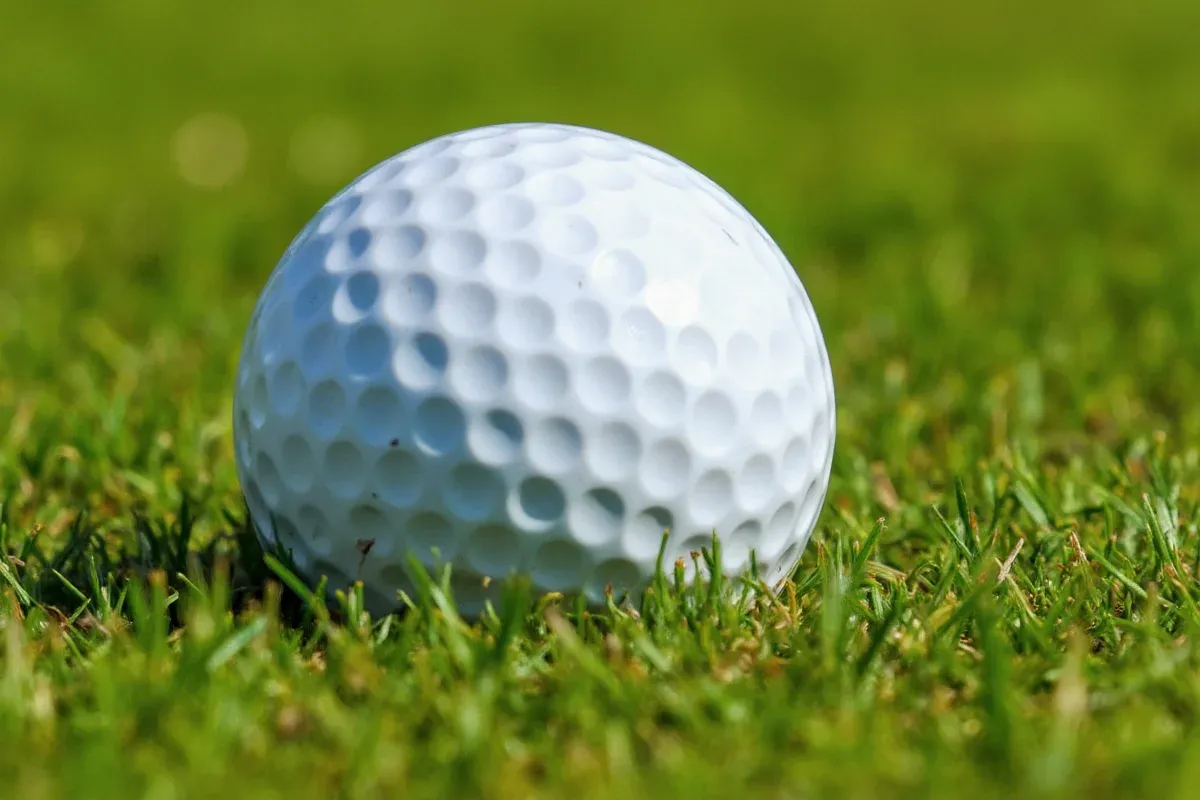
How Many Dimples on a Golf Ball? Average & Range Explained
Most golf balls have between 300 and 500 dimples, with the average being around 336. The exact number varies by brand, model, and design purpose—aerodynamics, flight stability, spin control, and feel all influence dimple count and pattern.
Why Do Golf Balls Have Dimples?
Dimples on a golf ball are not merely decorative; they serve a crucial aerodynamic function. When a golf ball flies through the air, it creates turbulence and drag. Dimples reduce aerodynamic drag and increase lift, allowing the ball to travel farther and more stably than a smooth ball could.
Key Aerodynamic Benefits of Dimples
- Reduce drag by managing airflow separation
- Increase lift through optimized pressure distribution
- Improve flight trajectory and distance
- Enhance stability in crosswinds
How Many Dimples Are on Different Golf Ball Models?
The number of dimples is determined by manufacturers based on performance goals. While 336 is a common standard, variations exist across brands and technologies.
| Golf Ball Model | Dimple Count | Dimple Pattern | Manufacturer |
|---|---|---|---|
| Titleist Pro V1 | 352 | Icosahedral | Acushnet (Titleist) |
| Titleist Pro V1x | 328 | Octahedral | Acushnet (Titleist) |
| Callaway Chrome Soft | 332 | Spherically Tiled | Callaway |
| Bridgestone Tour B XS | 330 | Delta Wing | Bridgestone |
| Srixon Z-Star | 338 | FastLayer Core + Spin Skin | Srixon |
| Volvik Vista iX | 324 | Dual Distance | Volvik |
The data shows that premium golf balls typically fall within the 324–352 dimple range. Titleist's Pro V1 uses a higher dimple count for enhanced flight control, while the Pro V1x trades slight count reduction for a different symmetry pattern aimed at reducing sidespin. Most manufacturers optimize dimple layout using computational fluid dynamics to balance distance and precision.
Factors That Influence Dimple Count and Design
Manufacturers consider several engineering and performance factors when determining dimple specifications.
Design Objectives
- Distance: Deeper dimples may increase lift but also drag; shallower ones promote smoother airflow.
- Spin Control: Symmetrical patterns help reduce unwanted spin off the driver.
- Feel and Feedback: Though subtle, dimple texture can affect short-game feedback.
- Weather Performance: Some patterns perform better in windy or humid conditions.
Geometric Patterns and Symmetry
Common layouts include icosahedral, octahedral, and tetrahedral symmetry. These ensure even distribution and consistent flight behavior regardless of orientation at impact.
History and Evolution of Golf Ball Dimples
The use of dimples dates back to the early 20th century. Golfers noticed that older, nicked balls flew farther than smooth new ones. This led to the development of intentionally dimpled surfaces. The first patented dimpled ball was introduced in 1905 by William Taylor, co-founder of TaylorMade.
Since then, dimple design has evolved from simple uniform impressions to complex multi-depth, asymmetric patterns using advanced simulation software.
Frequently Asked Questions About Golf Ball Dimples
Do all golf balls have the same number of dimples?
No, the number of dimples varies by brand and model. Most range between 300 and 500, with 336 being a common average. Factors like aerodynamics, spin, and manufacturer design goals influence the final count.
Why do dimples make a golf ball fly farther?
Dimples create a thin layer of turbulent air around the ball, which delays airflow separation and reduces wake size. This lowers drag and increases lift, allowing the ball to stay airborne longer and travel further than a smooth ball.
What happens if a golf ball loses a dimple?
Losing a single dimple has minimal effect, but significant damage or missing multiple dimples disrupts airflow symmetry, leading to inconsistent flight, reduced distance, and unpredictable curvature.
Can dimple pattern affect spin rate?
Yes. Symmetrical dimple arrangements help stabilize flight and reduce side spin, especially off drivers. Asymmetrical or specialized patterns can fine-tune launch conditions for specific player types.
Are there regulations on dimple design?
The R&A and USGA regulate overall performance but not dimple count directly. However, any ball used in competition must meet standards for symmetry, weight, diameter, and initial velocity, indirectly constraining dimple design choices.
Conclusion
The number of dimples on a golf ball typically ranges from 300 to 500, with most high-performance models clustering around 336. While the count itself is notable, the real engineering lies in the pattern, depth, and symmetry of the dimples—all designed to optimize aerodynamics for greater distance, accuracy, and control. Whether you're a professional or recreational golfer, understanding dimple science can enhance your appreciation of golf ball technology.
More Articles
 What Do Olympians Get in the Box? Rewards Revealed
 How Much Does a Set of Golf Clubs Cost?
 Who Won the Super Bowl in 2008? Giants Beat Patriots
 Super Bowl LVIII Score: Chiefs 25-22 49ers
 How Long Is a Bowling Alley? Full Dimensions Explained
 How Far Is Olympic Archery? 70 Meters Explained
 When Does College Baseball Start in 2025?
 What Network Will the Super Bowl Be On in 2025?
 How Long Are Rugby Sevens Games? Full Breakdown
 Will Boxing Be in the 2028 Olympics? Yes – Here's Why