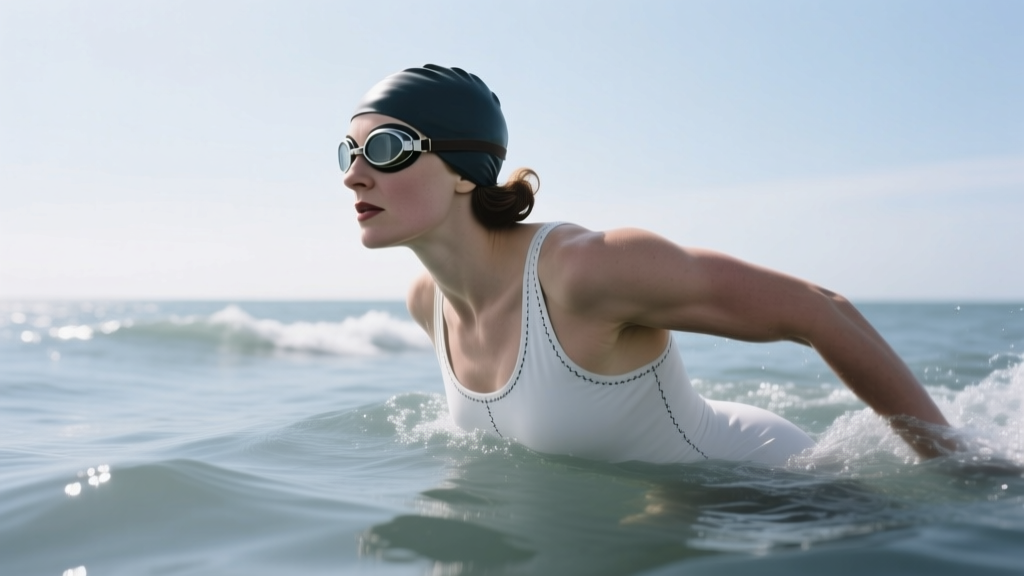
First Woman to Swim English Channel: Gertrude Ederle
The first woman to swim the English Channel was Gertrude Ederle, who accomplished this historic feat on August 6, 1926. At just 19 years old, she not only became the first female to complete the crossing but also broke the men's record at the time, finishing in 14 hours and 31 minutes.
Who Was Gertrude Ederle?
Gertrude Caroline Ederle was born on October 23, 1905, in New York City. An American competitive swimmer and Olympic medalist, Ederle began swimming at an early age and quickly rose to prominence in the sport during the 1920s. She won a bronze medal in the 1924 Paris Olympics as part of the U.S. women’s 4×100-meter freestyle relay team.
Early Life and Swimming Career
- Began formal swimming training at the Women’s Swimming Association of New York
- Set multiple world records in freestyle events as a teenager
- Known for her powerful stroke and endurance, unusual for female athletes of her era
- Trained under coach Jabez Wolffe, who had attempted the Channel himself
The English Channel Swim: Key Details
Crossing the English Channel is one of the most challenging open-water swims in the world, spanning approximately 21 miles (34 km) at its shortest point between Dover, England, and Calais, France. However, tides and currents often extend the actual distance swum.
Challenges Faced During the Swim
- Strong tidal currents that can push swimmers off course
- Cold water temperatures averaging 16–18°C (60–65°F)
- Potential exposure to jellyfish and strong waves
- Mental fatigue from prolonged concentration and isolation
| Swimmer | Date | Time | Direction | Age |
|---|---|---|---|---|
| Matthew Webb | August 25, 1875 | 21:45 | Dover to Calais | 27 |
| Gertrude Ederle | August 6, 1926 | 14:31 | Dover to Calais | 19 |
| Enrique Tirabocchi | August 13, 1928 | 16:30 | Calais to Dover | 30 |
| Mercedes Gleitze | October 7, 1927 | 15:20 | Dover to Calais | 26 |
| Dirk van der Burg | September 3, 1928 | 12:30 | Calais to Dover | 21 |
The data shows that Gertrude Ederle not only succeeded as the first woman to complete the Channel swim but did so faster than any previous male swimmer. Her time of 14 hours and 31 minutes beat Captain Matthew Webb’s 1875 record by over seven hours, despite the physical demands and gender-based skepticism of the era. This performance revolutionized perceptions of women's athletic capabilities.
Impact and Legacy
Ederle's achievement transcended sports. Her swim captured global attention and became a symbol of women's empowerment during the early feminist movement. Upon her return to New York, she was celebrated with a ticker-tape parade—the first woman to receive such an honor.
Societal and Cultural Significance
- Proved women could endure extreme physical challenges
- Inspired future generations of female athletes
- Highlighted the importance of rigorous training and mental resilience
- Contributed to changing attitudes about women in sports and public life
Training and Preparation
Ederle spent months preparing for the swim, training in cold ocean waters off Cape Cod and enduring grueling conditioning regimens. Her regimen included long-distance swims, cold exposure, and dietary planning—innovative for the time.
Key Elements of Her Training
- Daily long-distance swims in open water
- Use of grease to insulate against cold
- Adaptation of the freestyle technique for efficiency
- Psychological preparation for isolation and discomfort
Frequently Asked Questions About the First Woman to Swim the English Channel
Who was the first woman to swim the English Channel?
Gertrude Ederle was the first woman to successfully swim the English Channel, completing the crossing on August 6, 1926.
When did Gertrude Ederle swim the English Channel?
She completed the swim on August 6, 1926, departing from Dover, England, and arriving in Calais, France.
How long did it take Gertrude Ederle to swim the Channel?
Her total swim time was 14 hours and 31 minutes, which was faster than any man had done it before her.
Was Gertrude Ederle the first person to swim the English Channel?
No, the first person was Captain Matthew Webb in 1875. Ederle was the first woman and notably improved the existing time record.
What impact did Ederle’s swim have on women’s sports?
Her achievement challenged prevailing stereotypes about women’s physical limits and inspired greater participation in athletics, contributing to the advancement of women’s rights in public life.
More Articles
 How Long Is a Swimming Pool? Sizes Explained
 How Cold Are Ice Skating Rinks? Expert Breakdown
 How Deep Is a Water Polo Pool? Official Depth Explained
 Who Won the High Jump Today? Mahuchikh & Barshim Claim Gold
 Best Football Cleats for Wide Receivers: 2026 Speed and Agility Guide
 How to Clean Sports Gear by Season
 How High Is an Olympic Hurdle? Official Heights Explained
 Olympic Diving Pool Depth: How Deep Is It?
 Long Jump Technique Breakdown: Approach, Takeoff, Flight & Landing (2026)
 How Much Does a MotoGP Motorcycle Cost in 2025?