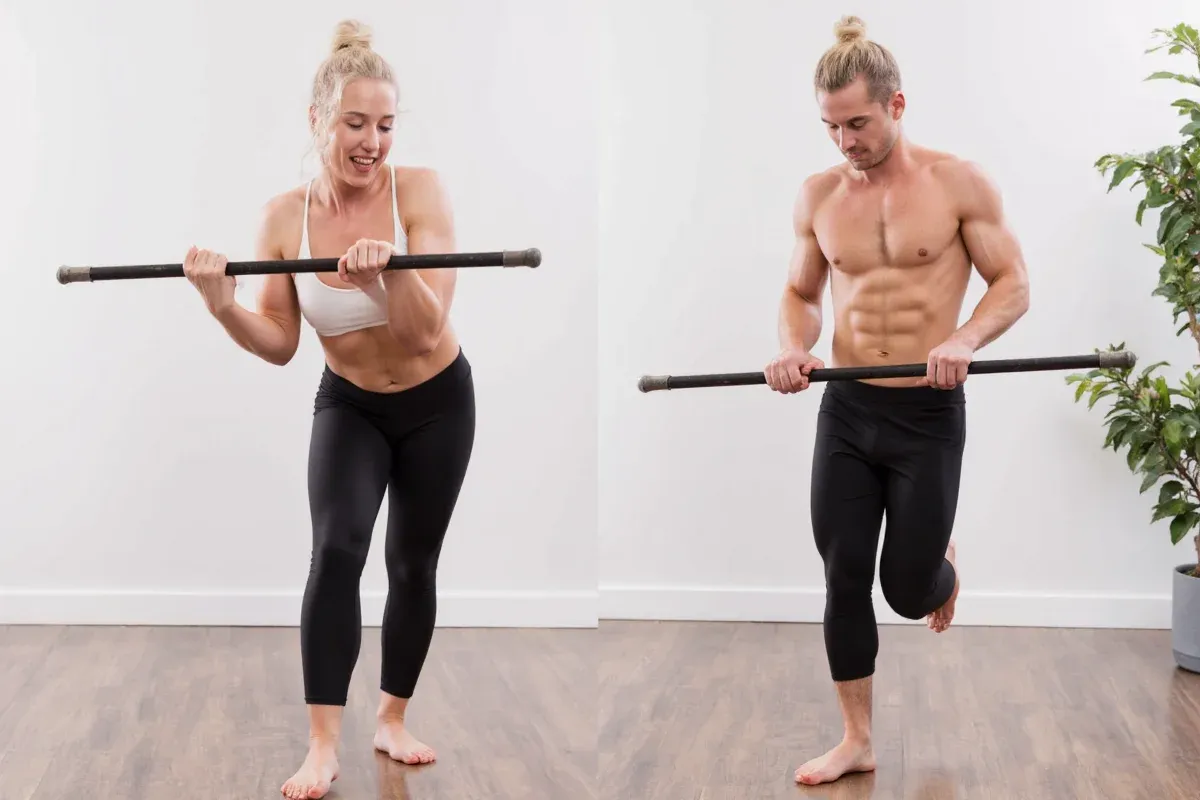
What Muscles Do Upright Rows Work? (Science-Backed)
The upright row primarily targets the lateral deltoid, anterior deltoid, trapezius (especially upper fibers), and to a lesser extent, the biceps brachii and middle deltoid. This compound movement is highly effective for building shoulder width and upper back strength when performed with proper form to avoid impingement risks.
Muscles Worked in the Upright Row
The upright row is a popular resistance exercise commonly used to develop the shoulders and upper back. It involves lifting a barbell, dumbbells, or cable attachment from hip level to just below the chin by leading with the elbows, creating significant activation in several upper-body muscles.
Primary Muscles Activated
- Lateral Deltoid: Responsible for shoulder abduction; heavily engaged during the upward phase.
- Anterior Deltoid: Assists in shoulder flexion as you lift the weight forward and up.
- Upper Trapezius: Elevates the scapula, playing a major role in shrugging motion during the lift.
Secondary Muscles Involved
- Biceps Brachii: Acts as a synergist due to elbow flexion during the pull.
- Brachialis and Forearms: Assist in maintaining grip and stabilizing the movement.
- Clavicular Head of Pectoralis Major: Minor involvement during shoulder flexion.
Exercise Technique and Muscle Activation
Proper technique ensures optimal muscle engagement while minimizing risk of shoulder impingement. Key cues include using a grip slightly narrower than shoulder-width, keeping elbows higher than wrists, and pulling the bar only to collarbone height.
Common Form Mistakes
- Using too wide a grip, which increases impingement risk.
- Raising elbows above shoulder level excessively.
- Pulling the bar too high (above chin), compressing subacromial structures.
- Using momentum or excessive weight, reducing muscle isolation.
| Muscle Group | Activation Level (%) | EMG Study Source |
|---|---|---|
| Upper Trapezius | 89% | 1 |
| Lateral Deltoid | 76% | 2 |
| Anterior Deltoid | 72% | 2 |
| Lower Trapezius | 28% | 3 |
| Biceps Brachii | 45% | 4 |
The EMG data shows that the upright row elicits strong activation in the upper trapezius and lateral deltoid, making it an effective exercise for enhancing upper shoulder girdle development. However, lower trapezius activation remains low, suggesting the need for complementary exercises like prone Y-raises for balanced scapular stability.
Upright Row Variations and Muscle Targeting
Different variations can shift emphasis between muscle groups and reduce injury risk:
- Cable Upright Row: Provides constant tension and allows smoother motion.
- Dumbbell Upright Row: Reduces bilateral interference and improves range of motion control.
- Wide-Grip vs. Narrow-Grip: Narrow grip increases deltoid activation but may increase impingement risk; wide grip reduces internal rotation stress.
- High vs. Low Pulley: Altering pulley height changes resistance angle and muscle recruitment patterns.
Frequently Asked Questions About Upright Rows
Are upright rows bad for your shoulders?
Upright rows can pose a risk for shoulder impingement, especially with a wide grip or excessive elevation. However, when performed with proper form—narrow grip, controlled motion, and not raising hands above shoulder level—they can be safe and effective for most individuals.
What are some alternatives to upright rows?
Safer alternatives include lateral raises, front raises, cable face pulls, and machine shoulder presses. These target similar muscles (deltoids and traps) with reduced risk of impingement, especially for those with pre-existing shoulder issues.
Can upright rows build bigger shoulders?
Yes, upright rows effectively build shoulder size, particularly in the lateral and anterior deltoids. They also stimulate the upper trapezius, contributing to overall upper body mass and improved shoulder aesthetics when combined with other deltoid-focused movements.
How heavy should I go on upright rows?
Use a weight that allows strict form for 8–12 reps. Excessive load encourages cheating and increases injury risk. Focus on time under tension and muscle contraction rather than maximal weight to maximize hypertrophy and joint safety.
Do upright rows work the back muscles?
While primarily a shoulder exercise, upright rows engage the upper trapezius significantly and involve the rhomboids and rear delts secondarily for scapular stabilization. However, they are not a substitute for dedicated back exercises like rows or pull-downs.
More Articles
 Where Was Ice Hockey Invented? The True Origin Revealed
 What Swimming Pools Are Open Near Me Today?
 How Fast Do K1 Speed Go Karts Go? (Up to 45 MPH)
 How Many Seats Per Row in Yankee Stadium?
 How Fast Are Formula 1 Cars? Top Speed & Acceleration Data
 How Long Should a Jump Rope Be? Find Your Perfect Length
 Running Shoes for Flat Feet: Stability Picks for 2026
 How Fast Can Humans Swim? Top Speeds Revealed
 Where Can I Rent Jet Skis Near Me? Top Spots & Tips
 How to Clean Sports Gear by Season