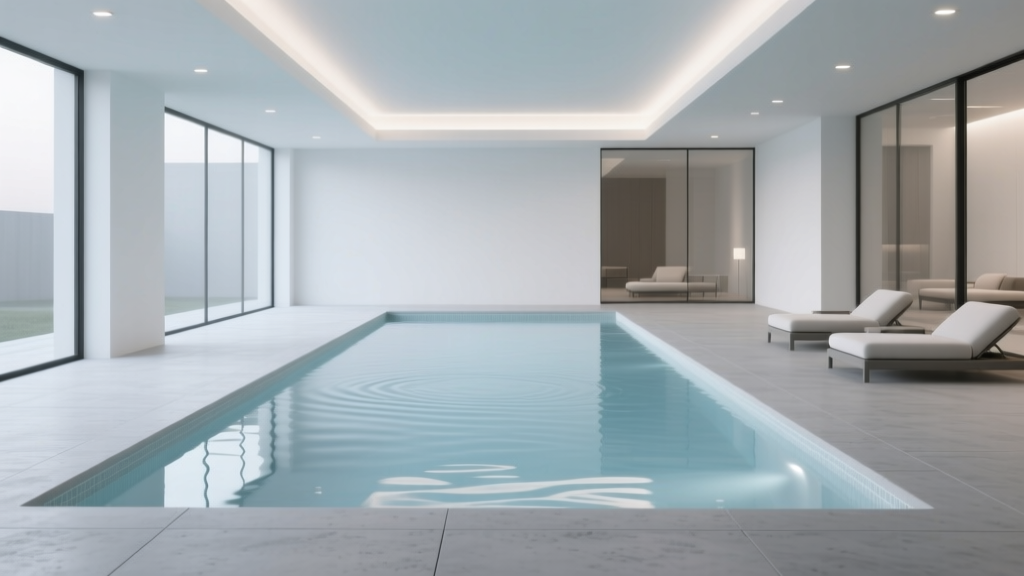
How Long Is a Swimming Pool? Sizes Explained
Standard swimming pool lengths vary by competition level: Olympic pools are 50 meters long, short course pools are 25 meters or 25 yards, and recreational pools range from 12.5 to 30 meters.
Understanding Standard Swimming Pool Lengths
Swimming pools come in various sizes depending on their intended use—whether for competitive events, training, or recreation. The most recognized standard lengths are 50 meters (long course) and 25 meters or 25 yards (short course), but many variations exist globally.
Common Pool Length Classifications
- Olympic-size (Long Course): 50 meters in length, used in the Olympics and World Championships.
- Short Course (Metric): 25 meters, common in European and international competitions.
- Short Course (Yards): 25 yards, standard in U.S. high school and collegiate swimming.
- Recreational Pools: Typically 12.5m to 30m, found in fitness centers and private facilities.
Differences Between Long Course and Short Course Pools
The distinction between long course and short course swimming affects race strategy, times, and records. Swimmers typically achieve faster times in short course due to more turns, which allow for push-off advantages.
Key Differences at a Glance
- Turn frequency: More turns in short course races increase speed through wall pushes.
- Race pacing: Different strategies are required based on pool length.
- World records: Separate record books are maintained for 50m and 25m pools by FINA.
- Training adaptation: Swimmers must adjust stroke count and breathing patterns accordingly.
Pool Dimensions in Competitive Swimming
Fédération Internationale de Natation (FINA), the global governing body for aquatic sports, sets strict regulations for competition pools. These standards ensure fairness and consistency across international events.
| Purpose | Length | Width | Lanes | Depth | Governing Body |
|---|---|---|---|---|---|
| Olympic Games | 50 meters | 25 meters | 10 lanes (8 used) | ≥2.0 meters | FINA |
| World Aquatics Championships | 50 meters | 25 meters | 10 lanes | ≥3.0 meters | FINA |
| NCAA (U.S. College) | 25 yards | 25 yards | 8–10 lanes | ≥2.0 meters | NCAA |
| High School (USA) | 25 yards | Varies | 6–8 lanes | ≥1.8 meters | NFHS |
| European Short Course Champs | 25 meters | 25 meters | 10 lanes | ≥2.0 meters | LEN |
The data shows that while Olympic and World Championship pools maintain uniform dimensions with greater depth for wave reduction, U.S. domestic pools often use imperial units and slightly different specifications. Depth plays a critical role in minimizing turbulence and improving swimmer performance, especially in longer events.
Non-Standard and Recreational Pool Sizes
Beyond competitive venues, many pools serve fitness, therapy, or leisure purposes. These often deviate from regulation sizes.
Examples of Non-Standard Lengths
- Hotel pools: Often 20–30 meters, not designed for lap swimming.
- Home pools: Typically 10–15 meters, ideal for exercise but not competition.
- Endless pools: As short as 2 meters, using counter-current technology for continuous swimming.
- Masters programs: May use local community pools ranging from 20m to 25m.
Frequently Asked Questions About Swimming Pool Lengths
How long is an Olympic swimming pool?
An Olympic swimming pool is exactly 50 meters long, 25 meters wide, and at least 2 meters deep, with 10 lanes marked for competition.
Is a swimming pool always 25 or 50 meters?
No, while 25m and 50m are standard for competition, many recreational and private pools range from 12.5 to 30 meters in length.
What is the difference between 25-yard and 25-meter pools?
A 25-yard pool is approximately 22.86 meters long—about 2.14 meters shorter than a 25-meter pool. This impacts stroke count and pacing in races.
Why are there separate world records for 25m and 50m pools?
Faster times in 25m pools result from more frequent turns and push-offs. To ensure fairness, FINA maintains distinct record categories for long course (50m) and short course (25m).
How many laps in a pool equal 1 mile?
In a 50m pool, 32.18 laps (one lap = two lengths) equals one mile. In a 25m pool, it’s 64.36 laps; in a 25-yard pool, about 70.4 laps.
More Articles
 How Many Laps Is 800 Meters Swimming?
 How Much Water in an Olympic Size Swimming Pool?
 Volleyball Shoe Features That Actually Matter
 Cheap vs Premium Tennis Gear: Real Value Tested
 How Much Is a MotoGP Bike? Cost Breakdown 2025
 Has Anyone Won 3 Super Bowls in a Row? The Answer
 How Fast Can a Jet Ski Go? Top Speeds Revealed
 How Long Is a Water Polo Game? Full Timing Explained
 History of the Olympic Games: From Ancient Greece to Modern Era
 Best Breakdown Channel: Tech Explainers Ranked