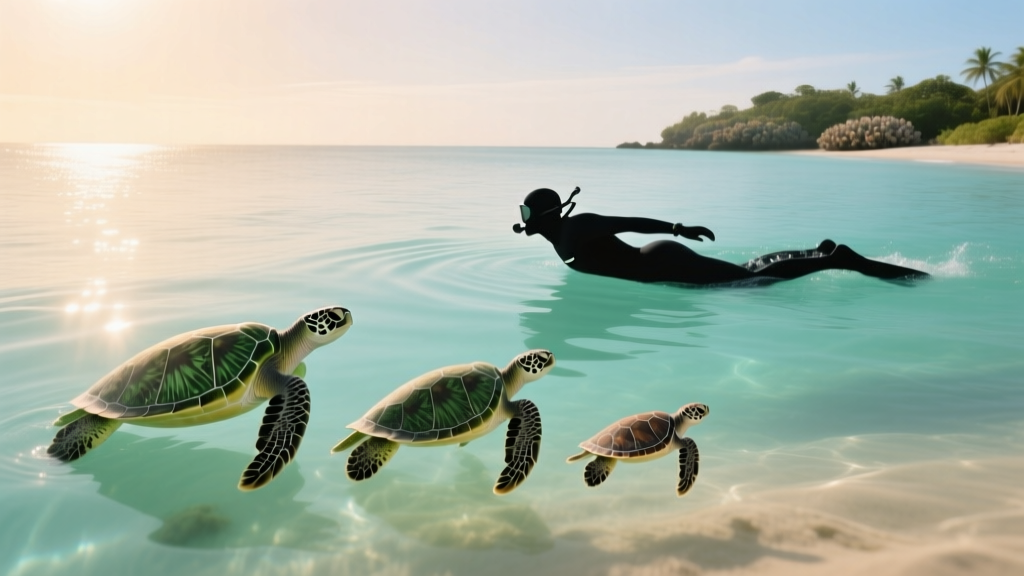
Where to Swim with Sea Turtles Safely & Ethically
If you're wondering where to swim with sea turtles, some of the best destinations include Maui, Hawaii; Akumal, Mexico; the Great Barrier Reef in Australia; Ras Muhammad National Park in Egypt; and the Galápagos Islands in Ecuador. These locations offer protected marine environments, abundant turtle populations, and responsible eco-tourism practices that allow for safe, ethical encounters with green sea turtles, hawksbills, and other species in their natural habitats.
\n\nTop Global Destinations to Swim with Sea Turtles
\nSwimming with sea turtles is a bucket-list experience for many travelers and nature lovers. The best places combine clear waters, healthy coral reefs or seagrass beds, and strong conservation efforts to protect these endangered animals. Below are the top-rated global spots where swimmers consistently report close, respectful interactions with sea turtles.
\n\n1. Maui, Hawaii, USA
\nMolokini Crater and Turtle Town near Makena are two prime snorkeling sites where Hawaiian green sea turtles (Chelonia mydas) frequently rest on reef ledges. These turtles, known locally as honu, are protected under state and federal law, and strict guidelines prohibit touching or chasing them.
\n- \n
- Average water temperature: 75–80°F (24–27°C) \n
- Best time to visit: April–October \n
- Species commonly seen: Green sea turtle \n
- Recommended activity: Snorkeling from shore or boat tours \n
2. Akumal Bay, Mexico
\nMeaning "place of the turtles" in Yucatec Maya, Akumal is one of the most accessible and reliable places to swim with sea turtles. Calm, shallow waters and abundant seagrass attract dozens of green turtles daily. Certified eco-tours ensure minimal disturbance.
\n- \n
- Accessibility: Easy shore entry, suitable for beginners \n
- Conservation status: Protected zone with visitor limits \n
- Guided tours required during peak hours \n
- Threats: Coastal development and overcrowding \n
3. Great Barrier Reef, Australia\n
The Great Barrier Reef hosts six of the world’s seven sea turtle species, including green and hawksbill turtles. Key spots like Heron Island and Lady Elliot Island offer guided snorkel and dive excursions with high sighting success rates.
\n- \n
- Nesting season: November–February \n
- Hatching season: January–March \n
- Species: Green, hawksbill, flatback, loggerhead \n
- Regulations: Strict no-touch, no-flash policies \n
4. Ras Muhammad National Park, Egypt
\nLocated at the southern tip of the Sinai Peninsula, this marine reserve is famed for its vibrant coral reefs and regular turtle sightings. Hawksbill and green turtles glide through deep walls and lagoons, often visible even on beginner snorkel trips.
\n- \n
- Visibility: 60–100 feet (18–30 meters) \n
- Water temp: 68–82°F (20–28°C) \n
- Dive vs. snorkel: Both options available \n
- Marine protection: Established in 1983 \n
5. Galápagos Islands, Ecuador
\nIn the Galápagos, snorkelers can swim alongside green sea turtles while also seeing marine iguanas, penguins, and sea lions. Sites like Tortuga Bay and Devil’s Crown offer unforgettable wildlife interactions in a UNESCO World Heritage Site.
\n- \n
- Unique factor: Year-round turtle presence \n
- Best islands: Santa Cruz, Fernandina, Isabela \n
- Conservation focus: Invasive species control and habitat protection \n
- Tour requirement: Licensed naturalist guides \n
How to Choose the Best Location for Ethical Turtle Encounters
\nNot all turtle-swimming experiences are created equal. To ensure your visit supports conservation and animal welfare, consider the following factors before booking.
\n\nEthical Guidelines for Swimming with Sea Turtles
\n- \n
- Maintain a distance of at least 10 feet (3 meters) \n
- Never touch, feed, or chase turtles \n
- Avoid using sunscreen containing oxybenzone (coral-toxic) \n
- Choose operators certified by eco-labels like Blue Flag or GSTC \n
- Prefer small-group tours with trained naturalists \n
Seasonal Timing and Turtle Behavior
\nTurtle visibility varies by region and species. Nesting seasons attract more turtles to coastal areas, but swimming with nesting females on land is prohibited. Focus on feeding zones during daylight hours for best results.
\n\n| Location | \nAvg. Turtle Sighting Rate | \nBest Season | \nEntry Fee / Permit Cost | \nProtection Status | \n
|---|---|---|---|---|
| Akumal Bay, Mexico | \n95% (daily) | \nYear-round | \n$10–$20 conservation fee | \nFederal Protected Area | \n
| Maui, Hawaii, USA | \n85% | \nMay–September | \nFree (donation suggested) | \nState Marine Life Conservation District | \n
| Great Barrier Reef, Australia | \n90% | \nJune–October | \nAUD $35–$65 (reef tax) | \nUNESCO World Heritage Site | \n
| Ras Muhammad, Egypt | \n80% | \nMarch–May, September–November | \nEGP 300 (~$6) | \nNational Park (since 1983) | \n
| Galápagos Islands, Ecuador | \n95% | \nDecember–May | \n$100 park entry + $20 transit card | \nNational Park & Marine Reserve | \n
The data shows that Akumal Bay and the Galápagos Islands have the highest turtle sighting rates, both exceeding 95%, making them ideal for guaranteed encounters. However, the Galápagos requires a significantly higher entry cost due to strict environmental controls. All listed sites operate under formal protection frameworks, reflecting a global trend toward sustainable wildlife tourism.
\n\nFrequently Asked Questions About Swimming with Sea Turtles
\n\nIs it legal to swim with sea turtles?
\nYes, in most countries, it is legal to swim with sea turtles—but only under specific conditions. Laws typically prohibit touching, feeding, or pursuing turtles. Locations like Hawaii and Mexico require swimmers to maintain a minimum distance (usually 3 meters / 10 feet). Always follow local regulations to avoid fines and protect wildlife.
\nWhat is the best time of year to swim with sea turtles?
\nThe best time depends on the location. In tropical regions like Mexico and Hawaii, turtles can be seen year-round, but calmer seas from May to October improve visibility. In Australia, the Great Barrier Reef offers optimal conditions from June to October. Nesting seasons (typically November–February) increase turtle presence in coastal areas, but nesting females should never be disturbed.
\nCan beginners swim with sea turtles?
\nYes, many turtle habitats—like Akumal Bay and Maui’s Turtle Town—are accessible to beginner snorkelers. These sites feature calm, shallow waters with gentle currents. Guided tours often provide equipment and safety briefings, making them ideal for first-time swimmers and families.
\nAre sea turtles dangerous to humans?
\nNo, sea turtles are not dangerous to humans. They are generally docile and indifferent to swimmers. However, they may bite if provoked or feel threatened. Always observe from a distance and avoid sudden movements to ensure a safe and respectful interaction.
\nHow do I find a responsible tour operator?
\nLook for operators certified by recognized eco-tourism bodies such as the Global Sustainable Tourism Council (GSTC) or those partnering with marine conservation organizations. Read reviews that mention turtle behavior and guide training. Avoid tours that guarantee close contact or allow touching—it’s a red flag for unethical practices.
\nMore Articles
 How Fast Do F1 Cars Go? Top Speed & Acceleration Explained
 Best Sports for Weight Loss: 10 High-Calorie-Burning Activities Ranked
 What Does a Rowing Machine Workout Do?
 Michael Jordan Vertical Jump: 48-Inch Explained
 How Tall Is a Hurdle? Official Heights by Event
 How Much Do Formula 1 Drivers Get Paid in 2025?
 Why Fighting Is Allowed in Ice Hockey Explained
 Where to Go to Swim: Best Pools & Open Water Spots
 Who Invented Ice Hockey? The True Origin Story
 How Big Is a Water Polo Ball? Official Sizes & Specs