
Volleyball Rotation Rules: Complete Guide to Overlaps, Faults & Strategies (2026)
Understanding Volleyball Rotation Basics
Volleyball rotation rules are one of the most confusing aspects of the game for beginners and even experienced players. Every time your team wins the serve back from the opponent (a side-out), all six players must rotate one position clockwise. This system ensures that every player plays every position and prevents teams from stacking their best players in one spot.
The rotation order is set at the beginning of each set and must be maintained throughout. If a team rotates out of order, it results in a rotation fault, and the opposing team is awarded a point and the serve.
The Six Positions on Court
Before diving into rotation mechanics, you need to understand the six court positions:
- Position 1 (Right Back): The serving position. The player here serves the ball to start the rally.
- Position 2 (Right Front): A front-row attacking position, typically occupied by the right-side hitter or opposite.
- Position 3 (Middle Front): The center front position, usually occupied by the middle blocker.
- Position 4 (Left Front): The outside hitter's primary position, one of the main attacking spots.
- Position 5 (Left Back): A back-row defensive position, often covered by the libero in modern volleyball.
- Position 6 (Middle Back): The center back position, crucial for defense against attacks through the middle.
How Rotation Works After a Side-Out
When your team wins back the serve, every player moves one position clockwise:
- Position 2 moves to Position 1 (and serves)
- Position 3 moves to Position 2
- Position 4 moves to Position 3
- Position 5 moves to Position 4
- Position 6 moves to Position 5
- Position 1 moves to Position 6
This rotation happens before the new serve. The server must be in Position 1 when the ball is contacted for the serve.
Overlap Rules: What's Legal and What's Not
At the moment of serve contact, players must not overlap with adjacent positions. The overlap rules are:
- Left-Right: Players in positions 4, 3, and 2 (front row) must be in that left-to-right order. Same for positions 5, 6, and 1 (back row).
- Front-Back: Front-row players must be closer to the net than their corresponding back-row player. Position 4 must be in front of Position 5, Position 3 in front of Position 6, and Position 2 in front of Position 1.
An overlap fault results in a point and serve for the opposing team. Referees watch closely for these violations, especially in competitive play.
The Libero Exception
The libero is a defensive specialist who wears a different colored jersey and has special substitution rules. The libero can replace any back-row player without counting as a regular substitution. However, the libero cannot:
- Serve (in most rule sets, though NCAA and some international rules allow libero serving in one rotation)
- Attack the ball above net height
- Set from the front zone using finger action (overhead set)
- Block or attempt to block
When the libero rotates to the front row, they must be replaced by the player they originally substituted for.
Common Rotation Strategies
5-1 System
The most popular system in competitive volleyball uses one setter who sets from all positions. When the setter is in the back row, they run to the net after the serve to set. This system provides three front-row attackers at all times.
6-2 System
Uses two setters who alternate. The setter always comes from the back row, meaning there are always three front-row attackers. This requires two skilled setter-hitters.
4-2 System
The simplest system with two setters who set from the front row. This leaves only two front-row attackers but is easier for beginners to learn.
Switching After the Serve
Once the server contacts the ball, players are free to move to their preferred positions. This is called "switching" and is how teams optimize their lineup:
- Outside hitters switch to Position 4
- Middle blockers switch to Position 3
- Opposite hitters switch to Position 2
- Setters run to the setting position (usually between Position 2 and 3)
- Liberos stay in the back row for defense
Switches must happen after the serve contact. If a player switches before the serve, it's an overlap fault.
Rotation Fault Penalties
When a rotation fault is called:
- The opposing team receives one point
- The opposing team gains the serve
- The faulty team must correct their rotation immediately
- Any points scored while in the wrong rotation may be canceled (depending on the rule set)
Tips for Beginners
If you're new to volleyball rotation, here are practical tips:
- Write down the rotation order before each set and keep it on the bench
- Watch the server — if you're confused about where to stand, look at who should be serving
- Practice without a ball — walk through rotations with your team until it becomes automatic
- Communicate — call out your position number before each serve
- Don't rush the switch — wait for the serve contact before moving to your preferred spot
Frequently Asked Questions
Does the libero rotate?
Yes, the libero follows the same rotation as other players but stays in the back row. When they would rotate to the front row, they swap with the player they replaced.
What happens if you serve out of order?
Serving out of order is a rotation fault. The opposing team gets a point and the serve, and your team must correct the rotation.
Can a back-row player attack?
Yes, but they must jump from behind the 10-foot (3-meter) attack line. If they jump from in front of the line and attack above net height, it's a back-row attack fault.
More Articles
 How Much Is an In-Ground Swimming Pool? (2025 Prices)
 What Does a Bent Over Row Work? Back Muscles Explained
 How Thick Is Ice Hockey Ice? NHL Standards Explained
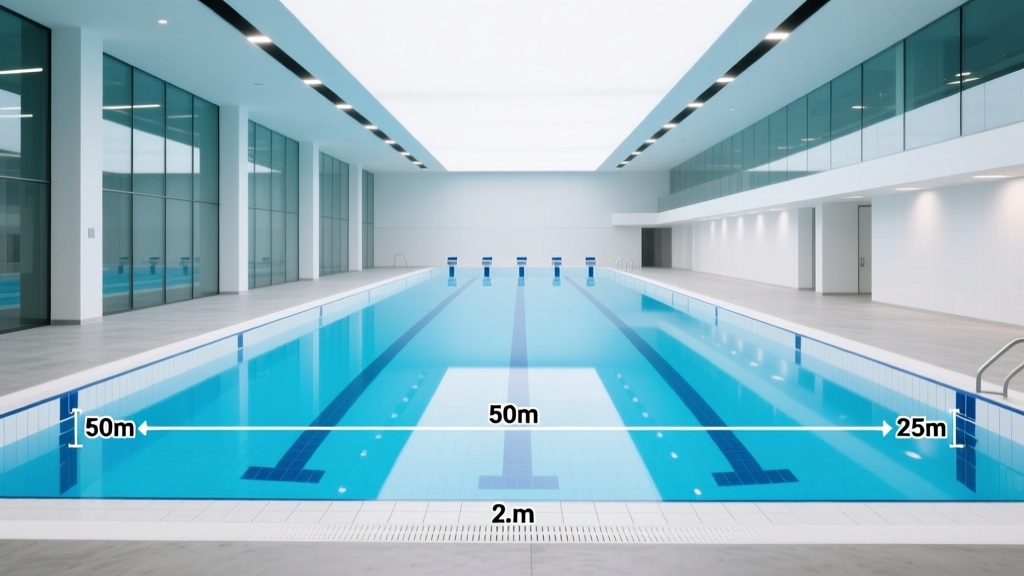 Olympic Swimming Pool Size: Exact Dimensions 2025
 What Muscles Does Swimming Use? Full Breakdown
 How High Can Kangaroos Jump? Up to 10 Feet!
 Where to Buy Go Karts in 2025: Top Retailers & Deals
 Where Can I Ride Go Karts Near Me? Top Local Tracks
 Don Hume Rower: 1936 Olympic Coxswain & Legacy
 Comfortable Water Temp for Swimming: Ideal Range Explained