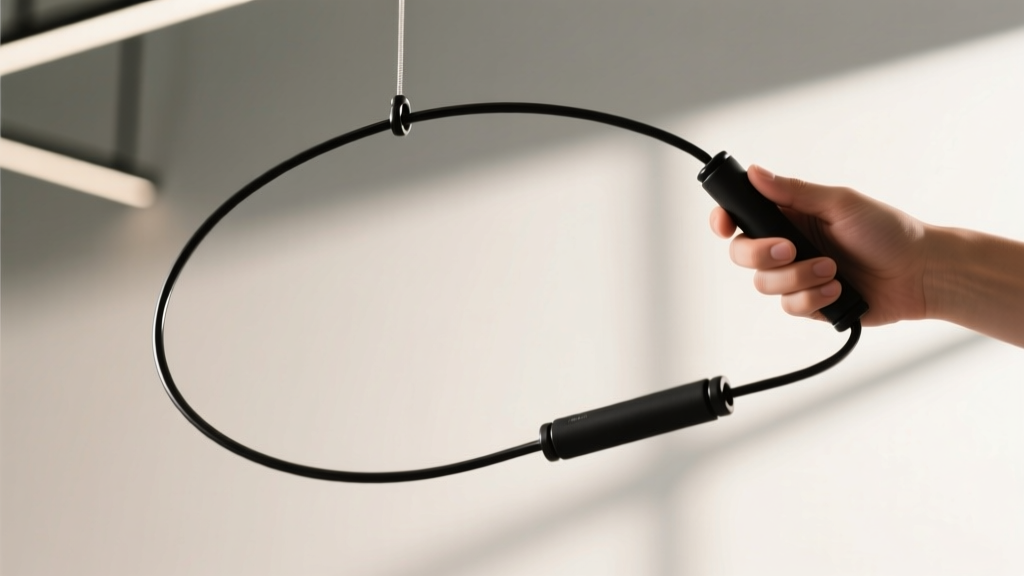
How Long Should a Jump Rope Be? Find Your Perfect Length
If you're wondering how long a jump rope should be, the ideal length depends on your height and skill level. As a general rule, when standing on the center of the rope with one foot, the handles should reach between your armpits and the top of your shoulders for beginners, or just below the armpits for advanced users. Proper jump rope length ensures safety, efficiency, and optimal performance during workouts.
Why Jump Rope Length Matters
Using the correct jump rope length is crucial for effective training and injury prevention. A rope that's too long can tangle easily, reduce rhythm, and increase tripping risk. One that's too short forces you to hunch or jump excessively high, leading to fatigue and poor form.
Key Effects of Incorrect Rope Length
- Too long: Slower rotation, inconsistent timing, higher chance of catching the rope
- Too short: Requires excessive jump height, strains shoulders and wrists, limits speed
- Poor posture: Can lead to back pain or joint stress over time
How to Measure Your Ideal Jump Rope Length
There are two widely accepted methods to determine the right jump rope size based on your height.
Method 1: The Stand-On Method (Most Accurate)
- Stand on the center of the jump rope with both feet.
- Pull the handles straight up toward the ceiling.
- For beginners, the tips of the handles should reach your armpits.
- For intermediate to advanced users, they should reach just below the armpits or mid-chest level.
Method 2: Height-Based Sizing Chart
This method uses your height to recommend standard rope lengths available for purchase.
| Height (ft/in) | Height (cm) | Recommended Rope Length (ft) | Recommended Rope Length (m) |
|---|---|---|---|
| 4'6" – 4'10" | 137 – 147 cm | 7 ft | 2.1 m |
| 4'11" – 5'4" | 150 – 163 cm | 8 ft | 2.4 m |
| 5'5" – 5'10" | 165 – 178 cm | 9 ft | 2.7 m |
| 5'11" – 6'2" | 180 – 188 cm | 10 ft | 3.0 m |
| 6'3" and above | 190+ cm | 11 ft | 3.4 m |
The data shows a clear correlation between user height and optimal rope length, with most manufacturers offering standardized sizes. Taller individuals require longer ropes to maintain proper clearance and rotation arc. Adjustable ropes allow fine-tuning within a range, making them ideal for shared use or skill progression.
Adjustable vs Fixed-Length Ropes
Choosing between adjustable and fixed-length jump ropes impacts how precisely you can match the ideal length.
Advantages of Adjustable Ropes
- Can be customized to exact height and skill level
- Ideal for multiple users or growing athletes
- Allows gradual shortening as technique improves
Benefits of Fixed-Length Ropes
- More durable and consistent swing weight
- Better for speed and double-unders at advanced levels
- Often used in competitive settings
Skill Level and Jump Rope Length
Your experience level significantly influences the best rope length.
Beginner
A slightly longer rope (handles reaching armpit level) gives more clearance, making it easier to time jumps and avoid tripping.
Intermediate
As coordination improves, shorten the rope so handles reach just below the armpits. This increases speed and control.
Advanced
Elite athletes often use shorter ropes (mid-chest level when stepped on) for faster rotations, essential for double-unders and high-intensity intervals.
Frequently Asked Questions About Jump Rope Length
How do I know if my jump rope is too long?
If your jump rope repeatedly hits the ground unevenly, catches on the floor, or forces you to jump very high, it’s likely too long. Visually, if the handles extend above your armpits when stepping on the center, consider shortening it.
Can I use the same jump rope if I’m tall?
Yes, but ensure it’s long enough. Individuals over 6'3" (190 cm) should look for ropes designed for taller users, typically 11 feet (3.4 m). Some brands offer extended sizes or allow custom cuts.
Should kids use shorter jump ropes?
Absolutely. Children should use ropes sized to their height—typically 7 to 8 feet (2.1–2.4 m). Many youth-specific ropes are lightweight and color-coded for easy sizing.
Does jump rope length affect workout intensity?
Yes. A properly sized rope allows efficient movement, increasing cadence and calorie burn. A poorly sized rope wastes energy, reduces jump frequency, and may cause early fatigue or injury.
How often should I adjust my jump rope length?
Adjust only when your skill level changes significantly or if switching users. Once optimized for your height and style, maintain consistency to build muscle memory. Recheck after several months of training if advancing to tricks or double-unders.
More Articles
 Why Is There a Libero in Volleyball? Rules, Purpose & History Explained (2026)
 How Rowing Changes Your Body: Real Results & Timeline
 How High Did Simone Biles Jump? Up to 11.5 Feet
 What Muscles Does a Rowing Machine Work? Full Breakdown
 How Many F1 Teams Are There in 2025? Full List & Facts
 The Last Common Mistakes: Critical Oversights That Sabotage Projects, Campaigns, and Operations
 Where Was Ice Hockey Invented? The True Origin
 How Much Is a Small Inground Swimming Pool?
 Premium Alternatives: Mind, Body, Connection
 How Thick Is Ice Skating Rink Ice? Expert Breakdown