How High Is an Olympic Hurdle? Official Heights Explained
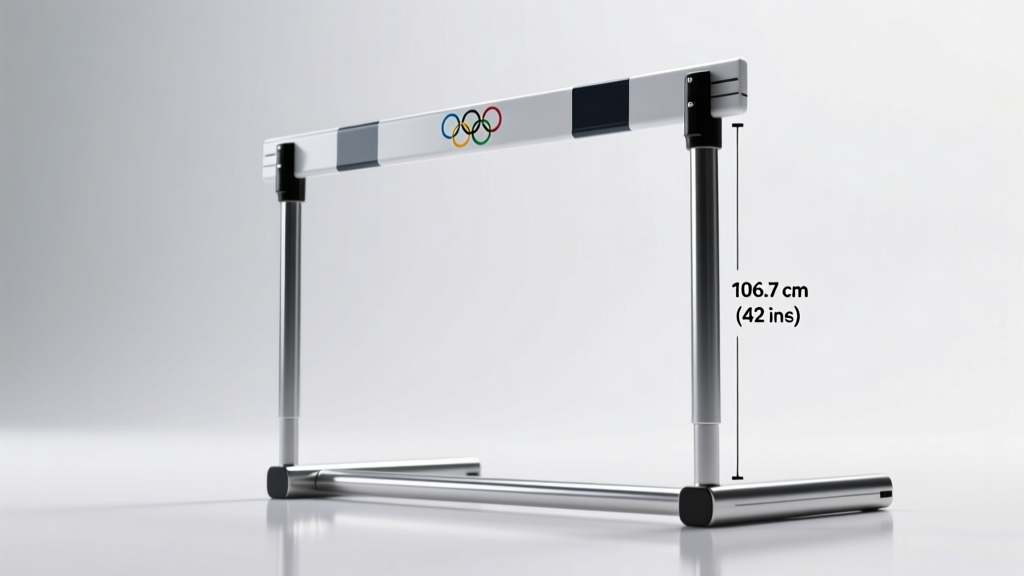
The height of an Olympic hurdle depends on the event and gender. For men's 110m hurdles, the standard height is 1.067 meters (42 inches), while women's 100m hurdles are set at 0.838 meters (33 inches). These precise measurements are standardized by World Athletics and used consistently in Olympic competitions to ensure fairness and uniformity across all races.
Olympic Hurdle Heights: A Complete Overview
Understanding the exact specifications of Olympic hurdles is essential for athletes, coaches, and fans alike. The height of the hurdles varies based on the race distance, athlete gender, and competition level. In Olympic track and field, two primary sprint hurdle events dominate: the men’s 110-meter hurdles and the women’s 100-meter hurdles. Each uses a different hurdle height designed to balance athletic challenge with safety and performance.
Key Factors Influencing Hurdle Height
- Race distance (100m, 110m, or 400m)
- Athlete gender (men vs. women)
- Competition level (Olympic, World Championships, collegiate)
- Rules set by World Athletics (formerly IAAF)
Standard Hurdle Heights Across Events
While the most visible hurdle events at the Olympics are the 100m and 110m sprints, other races such as the 400m hurdles also play a critical role. Each event has specific hurdle dimensions to maintain consistency in training and competition.
| Event | Gender | Hurdle Height (meters) | Hurdle Height (inches) | Number of Hurdles | Distance Between Hurdles |
|---|---|---|---|---|---|
| 100m Hurdles | Women | 0.838 | 33 | 10 | 8.5m |
| 110m Hurdles | Men | 1.067 | 42 | 10 | 9.14m |
| 400m Hurdles | Women | 0.762 | 30 | 10 | 35m |
| 400m Hurdles | Men | 0.914 | 36 | 10 | 35m |
The data shows a clear distinction between men’s and women’s hurdle heights, reflecting biomechanical differences and historical standards. Men’s sprint hurdles (110m) are significantly taller at 1.067 meters compared to women’s 100m hurdles at 0.838 meters. The 400m events use lower hurdles to allow for sustained speed and stride efficiency over longer distances. Consistent spacing between hurdles ensures standardized technique development across elite competitions.
Design and Safety Features of Olympic Hurdles
Modern Olympic hurdles are engineered for both performance and safety. They are constructed from lightweight materials such as aluminum or composite polymers and are designed to tip forward if struck with sufficient force. This minimizes injury risk and discourages athletes from jumping excessively high, promoting efficient hurdling technique.
Key Design Specifications
- Base width: 1.18–1.20 meters for stability
- Weight: Approximately 10–12 kg (22–26 lbs)
- Tipping mechanism: Designed to fall forward when hit
- Color: Usually red and white or blue and white for visibility
Historical Evolution of Hurdle Heights
Hurdle heights have evolved significantly since the early 20th century. When the 110m hurdles was introduced in the 1896 Olympics, the height was set at 1 meter. It wasn’t until 1935 that the current 42-inch (1.067m) standard was adopted. Women’s 80m hurdles, introduced in 1932, originally used 76.2 cm (30 inch) hurdles before transitioning to the current 83.8 cm (33 inch) standard with the switch to the 100m distance in 1972.
Training Implications of Hurdle Height
Athletes must adapt their stride patterns, takeoff points, and lead-leg mechanics based on hurdle height. Sprint hurdlers spend years refining clearance techniques to minimize air time and maintain forward momentum. Coaches use video analysis and stride calculators to optimize approach steps and rhythm between barriers.
Common Training Adjustments
- Using adjustable hurdles to simulate race conditions
- Practicing trail-leg drive to reduce drag
- Drills for consistent lead-leg extension
- Strength training for explosive takeoffs
Frequently Asked Questions About Olympic Hurdle Height
How high is an Olympic men’s 110m hurdle?
The Olympic men’s 110-meter hurdle stands at exactly 1.067 meters (42 inches) tall. This height has been standardized by World Athletics and is used in all major international competitions, including the Olympic Games.
How high is an Olympic women’s 100m hurdle?
The Olympic women’s 100-meter hurdle is set at 0.838 meters (33 inches). This height balances technical difficulty with physiological considerations for female sprint hurdlers.
Why are men’s hurdles higher than women’s?
Men’s hurdles are higher due to average differences in height, stride length, and muscle mass. The design allows male athletes to clear the barrier efficiently while maintaining speed, reflecting decades of biomechanical research and competitive standardization.
Are 400m hurdles lower than sprint hurdles?
Yes, 400m hurdles are lower than sprint hurdles. Men’s 400m hurdles are 91.4 cm (36 inches) and women’s are 76.2 cm (30 inches). Lower height allows athletes to maintain rhythm over the longer distance with 10 hurdles spaced 35 meters apart.
Can hurdle height be adjusted in training?
Yes, during training, coaches often adjust hurdle heights to suit skill level or focus on specific techniques. Beginners may use lower hurdles, while elite athletes sometimes practice with slightly higher barriers to improve form before returning to regulation height.
More Articles
 What Does Icing Mean in Hockey? Explained
 How Many Pushups in a Row Is Good? By Age & Fitness Level
 How Many Calories Does Rowing Burn? (By Weight & Intensity)
 Which Florida Springs Can I Swim In? Top 6 Spots
 Where Is Ice Skating Near Me? Find Rinks & Times
 How Deep Are Olympic Diving Pools? 5m Minimum
 Where to Buy Go Karts: Best Sites & Tips (2025)
 Pre-Competition Checklist: Final Tips
 Will Swimming Make You Taller? Science-Based Answer
 How Many Players on a Hockey Team on the Ice?