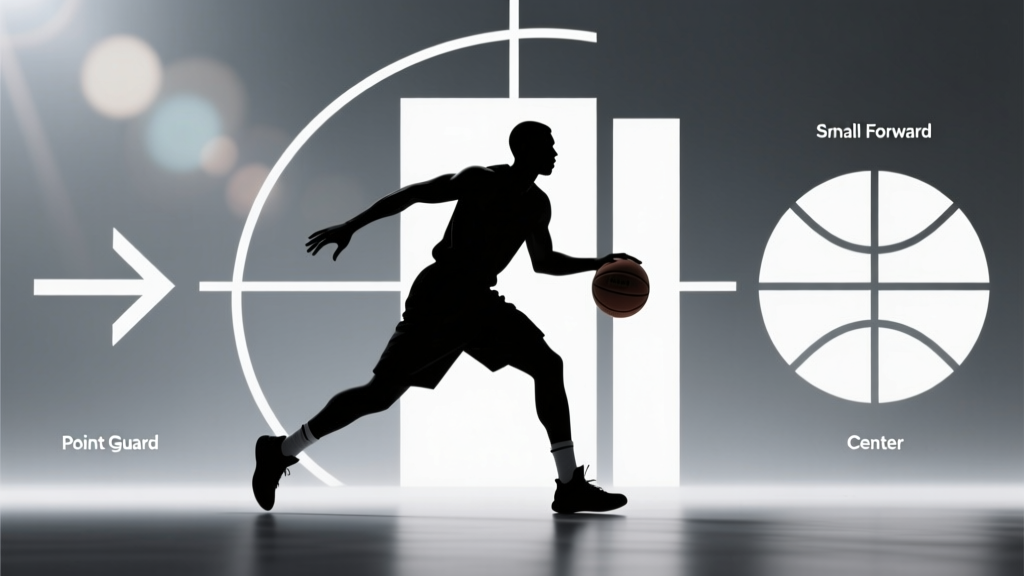
All Basketball Positions Explained
Basketball features five primary positions: point guard, shooting guard, small forward, power forward, and center—each with distinct roles in offense, defense, and team strategy.
Understanding the Five Main Positions in Basketball
In basketball, player positions define responsibilities, skill sets, and on-court movement. The five standard positions are essential for balanced team performance. Each role contributes uniquely to offensive execution, defensive alignment, and transition play.
Point Guard (PG)
Often called the “commander” of the floor, the point guard is primarily responsible for ball handling, setting up plays, and facilitating offense.
- Primary ball-handler and playmaker
- Excels in passing, court vision, and decision-making
- Typically among the quickest players on the team
- Defends opposing guards and applies pressure on ball screens
Modern point guards like Stephen Curry and Chris Paul combine scoring ability with elite distribution skills.
Shooting Guard (SG)
The shooting guard is typically one of the team's top scorers, especially from long range.
- Specializes in perimeter shooting and off-ball movement
- Capable of creating their own shot and driving to the basket
- Defends multiple backcourt positions
- Supports the point guard in ball-handling duties
Players like James Harden and Klay Thompson exemplify high-volume scoring SGs with strong defensive capabilities.
Small Forward (SF)
Considered the most versatile position, the small forward blends size, speed, and scoring ability.
- Can score inside and outside, often a primary offensive option
- Matches up against various positions defensively
- Contributes in rebounding, passing, and transition play
- Often possesses athleticism ideal for fast breaks
Legends like LeBron James and Kobe Bryant thrived at this position due to their all-around game.
Power Forward (PF)
Traditionally a physical interior presence, the modern power forward has evolved into a stretch big who can shoot from beyond the arc.
- Rebounds aggressively on both ends
- Plays near the paint but may step out to shoot threes
- Provides interior defense and screens
- Matches up against both traditional bigs and agile forwards
Giannis Antetokounmpo and Kevin Love represent contrasting PF styles—one emphasizing athleticism and drive, the other spacing and shooting.
Center (C)
The last line of defense and anchor of the paint, centers dominate near the basket.
- Protects the rim and alters shots
- Secures rebounds and sets hard screens
- Scores through post moves and putbacks
- Commands defensive rotations and pick-and-roll coverages
Nikola Jokić and Rudy Gobert showcase different center archetypes—one as a pass-first hub, the other as a defensive powerhouse.
Detailed Breakdown of Positional Roles and Statistics
Each basketball position requires specific physical attributes and statistical contributions. Below is a comparison of average stats by position based on the 2023-2024 NBA season data.
| Position | Avg Height | Avg Weight (lbs) | PPG | APG | RPG | BPG | SPG |
|---|---|---|---|---|---|---|---|
| Point Guard | 6'3" | 190 | 18.5 | 7.8 | 4.2 | 0.3 | 1.3 |
| Shooting Guard | 6'5" | 210 | 20.1 | 4.7 | 4.8 | 0.5 | 1.1 |
| Small Forward | 6'7" | 220 | 17.6 | 3.9 | 6.1 | 0.7 | 1.0 |
| Power Forward | 6'9" | 235 | 15.3 | 3.0 | 7.9 | 1.1 | 0.8 |
| Center | 6'11" | 250 | 14.7 | 2.8 | 9.5 | 2.0 | 0.7 |
The data shows clear trends: centers lead in rebounding and shot-blocking, reflecting their interior dominance. Point guards record the highest assists, underscoring their role as primary playmakers. Shooting guards average the most points per game, highlighting their scoring emphasis. These metrics validate the specialized functions each position serves within team dynamics.
Frequently Asked Questions About Basketball Positions
What are all the positions in basketball?
The five official positions in basketball are point guard, shooting guard, small forward, power forward, and center. Each has unique offensive and defensive responsibilities critical to team success.
Can players play multiple positions?
Yes, many modern players are versatile and can play multiple positions. For example, wings like Kawhi Leonard can function as both a shooting guard and small forward, while stretch bigs like Draymond Green shift between power forward and center.
Which position requires the most leadership?
The point guard typically assumes the greatest leadership role, directing plays, managing tempo, and communicating with coaches. However, centers and small forwards often lead through defensive organization and experience.
How have basketball positions evolved over time?
Positions have become more fluid, especially with the rise of positionless basketball. Traditional roles like the non-shooting center or low-post-only power forward are declining. Today’s players are expected to shoot, pass, and defend across multiple matchups.
Which basketball position scores the most points?
On average, shooting guards score the most points per game. Their skill set emphasizes shooting efficiency, off-ball movement, and isolation scoring, making them primary offensive weapons for many teams.
More Articles
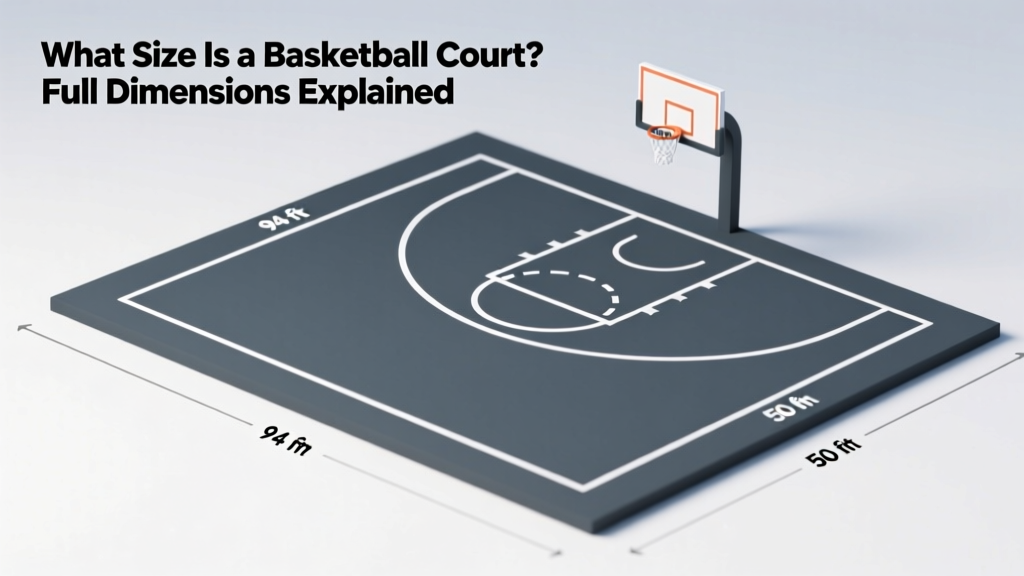 What Size Is a Basketball Court? Full Dimensions Explained
 Baseball Match Analysis: Guide for Coaches
 Where to Watch UK Basketball Live & Online (2025)
 Why Is the UK So Bad at Basketball? Key Reasons Explained
 Shortest NBA Player Ever: Muggsy Bogues at 5'3"
 How Long Are College Basketball Games? Full Breakdown
 Who Is Playing Basketball Today? Top Players & Stats
 Who Is the Best Basketball Player Ever in the NBA?
 What Does GP Mean in Basketball? Explained
 Will There Be a College Basketball Video Game in 2025?