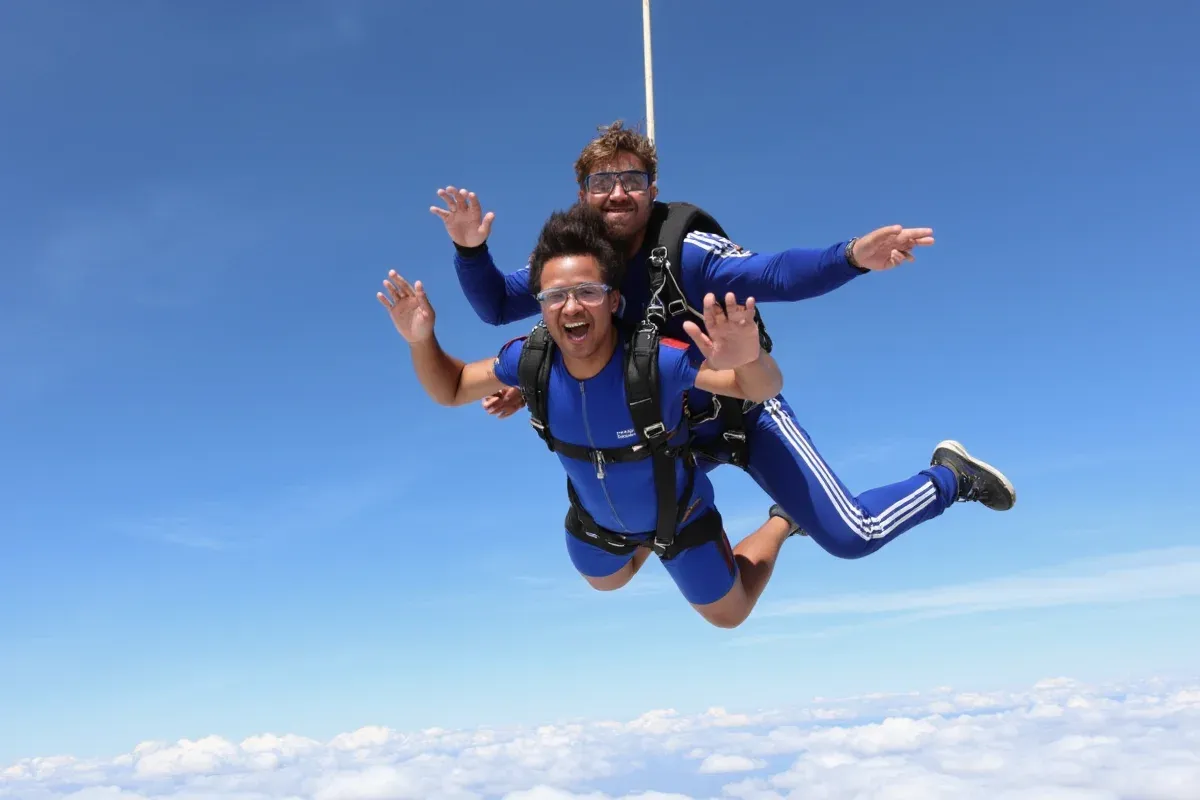
What Does Skydiving Feel Like? Real Sensations Explained
Skydiving feels like a powerful mix of freefall adrenaline and peaceful parachute glide—an intense rush followed by serene aerial views.
What Does Skydiving Feel Like?
Skydiving combines extreme sensory experiences: the heart-pounding moment of jumping from an aircraft, the sensation of flying during freefall, and the calm float under the parachute. Most first-time jumpers report feelings of exhilaration, weightlessness, and mental clarity. Unlike roller coasters, skydiving delivers prolonged exposure to speed, altitude, and silence—especially during canopy flight.
Key Sensations During a Skydive
- Freefall (120 mph): A sensation of flying, not falling—wind pressure supports your body.
- Exit from the Plane: A sudden rush of cold air and overwhelming visuals.
- Parachute Deployment: A sharp upward tug followed by immediate quiet and reduced speed.
- Canopy Flight: Peaceful gliding with 360-degree views; you can even steer the parachute.
- Landing: Soft and controlled, often compared to stepping off a small ledge.
Stages of a Typical Skydive
A standard tandem skydive from 15,000 feet lasts about 5–7 minutes from jump to landing, including 60 seconds of freefall. Each phase introduces unique physical and emotional responses.
1. The Ascent (10–15 Minutes)
Riding in the plane offers growing anticipation. Altitude increases, temperature drops (~2°F per 1,000 ft), and the ground shrinks. This phase builds mental focus and excitement.
2. Exit and Freefall (Approx. 60 Seconds)
At ~120 mph, you experience near-weightlessness. Your body is supported by air molecules. Many describe it as flying through water or floating on wind. Adrenaline peaks, but breathing is normal with effort.
3. Parachute Deployment (2,500–3,000 ft)
The canopy opens with a strong deceleration force (~3–4 Gs). Noise drops dramatically. You transition from high-speed descent to silent glide, allowing conversation and photo-taking.
4. Canopy Descent (4–5 Minutes)
Flying under a modern ram-air parachute feels smooth and controllable. Instructors often let jumpers take the controls. Scenery is panoramic, especially over coastal or mountainous regions.
5. Touchdown
With proper flare technique, landings are soft—often on your feet or with a slight slide. Modern parachutes allow precision landings within meters of target zones.
| Altitude (ft) | Phase | Duration (avg) | Speed (mph) | Sensation Description |
|---|---|---|---|---|
| 15,000 | Exit | Instant | 0 → 120 | Sudden rush, loud wind, visual overload |
| 15,000–5,000 | Freefall | 60 sec | 120 | Weightless, flying sensation, adrenaline surge |
| 5,000–3,000 | Parachute Deploy | 5 sec | 120 → 12 | Sharp upward jerk, sudden quiet |
| 3,000–0 | Canopy Flight | 4–5 min | 12–20 | Peaceful, scenic, controllable flight |
| Ground Level | Landing | Instant | 0 | Soft impact, relief, euphoria |
The table illustrates how sensory input shifts dramatically across phases. Freefall dominates the experience in intensity, while canopy flight provides cognitive recovery and scenic enjoyment. Notably, the rapid deceleration at deployment is brief but memorable, contrasting sharply with the preceding freefall.
Common Questions About What Skydiving Feels Like
Is skydiving scary?
Initial anxiety is common, especially before the jump, but most people report that fear vanishes after exiting the plane. The structured training and professional staff help reduce stress. Once in freefall, the experience shifts from fear to exhilaration for the vast majority of first-time jumpers.
Do you feel like you're falling during skydiving?
No—most say it feels like floating or flying, not plummeting. Without nearby reference points, there's little sense of downward motion. Wind resistance creates a stable, cushioned sensation, similar to being on a hovercraft.
Can you breathe during freefall?
Yes, but you must make a conscious effort to breathe steadily. The wind is strong, so shallow breaths may feel restricted. Instructors advise taking slow, deep breaths through your mouth, just like during vigorous exercise.
Does your stomach drop when skydiving?
Unlike elevators or roller coasters, skydiving doesn't cause a 'stomach drop' sensation. That feeling comes from sudden acceleration changes while grounded. In freefall, you accelerate smoothly with no support beneath you, so the internal organs don't shift dramatically.
How long does the freefall last?
From 15,000 feet, freefall lasts about 60 seconds. Jumps from 10,000 feet yield ~30 seconds. Higher altitudes extend freefall but require oxygen use above 15,000 ft. Tandem jumps typically range between 30–60 seconds of freefall.
More Articles
 How Much Is a California Fishing License in 2025?
 How Many Deaths from Skydiving Per Year? (2025 Data)
 How Many Calories Do I Burn in Pilates? (By Type & Weight)
 How to Improve Your Long Jump: 5 Technique Tips That Actually Work
 Who Made CrossFit? The Founder and His Legacy
 How Many Feet Per Mile Is Steep Hiking?
 How Long Are NFL Training Camps? 2025 Schedule Explained
 Where Can I Go Hiking Near Me? Find Trails Fast
 Why Reverse Lunges Outshine Forward Lunges
 How to Improve Your Vertical Jump: Science-Based Training Program