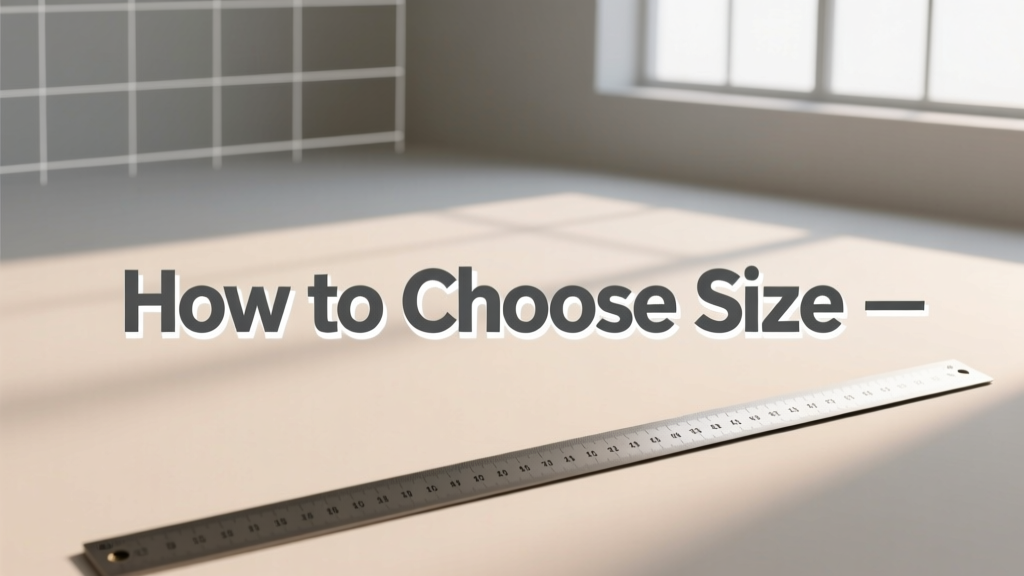
Sports Gear Sizing: Measurement Guide
Selecting the correct size isn’t about memorizing labels—it’s about measuring your body, understanding how brands scale their patterns, and accounting for fabric behavior. Over 68% of online apparel returns stem from sizing mismatches (2023 Shopify Retail Report), and footwear errors cost U.S. consumers an estimated $1.2 billion annually in unused shoes (NPD Group). This guide cuts through marketing fluff with concrete steps: how to measure accurately, what numbers actually matter for specific categories, and how to interpret size charts from brands like Patagonia, Nike, Zara, and IKEA. You’ll learn why a men’s size 32 waist isn’t always 32 inches, why EU 42 ≠ US 9.5 across brands, and how to adjust for stretch, drape, and fit intent—all using tools you already own.
Why Standard Sizes Don’t Exist
The myth of universal sizing persists because it’s convenient—not accurate. The U.S. Department of Commerce discontinued its national body measurement survey in 1988. Since then, apparel sizing has diverged wildly due to shifting demographics, manufacturing economics, and marketing tactics. A 2022 study by the Cornell University Fiber Science Lab found that the average women’s size increased from 12 to 16 between 1992 and 2020—but garment measurements for ‘size 12’ shrank by 1.7 inches at the bust and 2.3 inches at the waist across 12 major retailers. This phenomenon—‘vanity sizing’—means a size 8 at Old Navy measures nearly identical to a size 12 at J.Crew. Men’s sizing is equally inconsistent: Levi’s 501 Original Fit jeans in size 34×32 have a measured waist of 35.5 inches and inseam of 32.25 inches; the same labeled size in Uniqlo Slim Fit jeans measures 34.75″ waist and 31.75″ inseam. These discrepancies aren’t errors—they’re deliberate design choices reflecting fit philosophy.
The Real Meaning Behind Size Labels
Size labels are shorthand—not specifications. A ‘Medium’ t-shirt signals relative volume, not absolute dimensions. In menswear, ‘S/M/L’ often maps to chest circumference bands: S = 34–36″, M = 38–40″, L = 42–44″. But that assumes standard shoulder slope and torso length—variables rarely accounted for. Women’s ‘Small’ may indicate bust-waist-hip ratios (e.g., 34–26–36″), yet few brands publish those exact proportions. Instead, they use grade rules—mathematical formulas that incrementally scale pattern pieces. A 1″ increase in bust doesn’t mean a 1″ increase in sleeve length or back width. That’s why cross-brand comparison fails without raw measurements.
Step-by-Step: How to Measure Yourself Accurately
Forget tape-measure approximations. Precision requires consistency: use a flexible, non-stretch cloth tape (not metal), stand barefoot in fitted clothing or underwear, and keep the tape parallel to the floor—not tight, not loose. Breathe normally. Record all numbers in inches and centimeters. Repeat each measurement twice; if readings differ by more than 0.25″, recheck posture and tape placement.
Key Measurements by Category
Upper Body: Bust (fullest part, under arms), waist (natural crease above hip bone, ~1 inch above navel), shoulders (across back, from acromion to acromion), sleeve length (from acromion to wrist bone, arm slightly bent). Lower Body: Hip (fullest part of buttocks, usually 7–9″ below waist), inseam (crotch to ankle bone, standing straight), thigh (mid-thigh, leg relaxed), rise (front: pubic bone to top of waistband; back: top of glute crease to waistband). Footwear: Heel-to-toe length (barefoot, weight distributed evenly), foot width (widest point, usually across ball of foot), arch height (distance from floor to highest point of instep).
For footwear, use a Brannock Device if possible—or trace your foot on paper while standing, then measure the outline. Do this at end of day when feet are largest. According to the American Academy of Podiatric Medicine, feet swell up to 5% in volume during prolonged activity, making afternoon measurements most reliable.
Clothing: Matching Your Numbers to Brand Charts
Never assume your usual size applies across categories or brands. A size Medium dress shirt from Brooks Brothers (cut for broad shoulders and tailored waist) will fit very differently than a Medium from ASOS Design (designed for higher armholes and relaxed sleeves). Always consult the brand’s official size chart—and verify it’s for the specific style, not the generic line. Patagonia publishes detailed fit notes: their ‘Slim Fit’ shirts run 1.5″ narrower at the chest than ‘Regular Fit’ in the same size. Their women’s Nano Puff jacket size M has a chest measurement of 40.5″, while the same size in their Tres 3-in-1 jacket measures 42″ due to added insulation layering.
When comparing, prioritize the measurement closest to your body’s largest dimension. For tops, that’s usually bust or hip (if wearing tunic-length styles); for bottoms, it’s hip or waist—whichever is larger. If your waist is 29″ and hips are 39″, and a pair of trousers lists waist 29″/hip 38″, go up one size—even if the waist feels loose—because hip restriction causes gapping at the waistband and strain at the seams.
Denim Decoded: Waist, Inseam, and Rise
Jeans use three-number labeling: waist × inseam × rise (e.g., 32×34×10.5″). But beware—the ‘32’ refers to the laid-flat waistband measurement × 2. So a 32″ labeled waist actually measures 16″ flat. Multiply by two only after confirming the brand uses true waist labeling. Some fast-fashion brands (e.g., Boohoo, Shein) list ‘approximate’ waist sizes that run 1–2″ small. A Shein ‘size 5’ denim label may state ‘27″ waist’ but measure just 25.5″ flat. Always check customer reviews for phrases like ‘runs small’ or ‘order two sizes up’—and filter for reviewers with your stated measurements.
Nike’s men’s running shorts use numeric sizing (XS–XL) but also list inseam: 5″, 7″, or 9″. Their size Medium has a 7″ inseam—but the actual leg opening circumference is 22.5″, critical for knee mobility during stride. Compare that to Lululemon’s Align Pant size 6, which has a 27″ inseam and 9.5″ rise—meaning it sits mid-hip, not natural waist. Fit intent matters: performance gear prioritizes mobility; suiting prioritizes drape and structure.
Footwear: Beyond Length—Width, Volume, and Last Shape
Shoe sizing is the most volatile category. The Brannock Device measures length, width (AAA to EEE), and arch length—but most online retailers only show length. Worse, Mondopoint (millimeter-based, used by Adidas and New Balance) and UK sizing (based on barleycorns: 1/3 inch) aren’t directly convertible. A US men’s 10 equals UK 9, EU 43, and Mondopoint 280mm—but only for standard width. New Balance’s 990v6 in size 10D measures 10.375″ long and 4.125″ wide at the ball; the same size in ‘2E’ width adds 0.25″ to width but keeps length identical. Ignoring width causes bunions, neuromas, and heel slippage.
Volume—the shoe’s internal space—is equally vital. Hokas have high-volume lasts (deep toe box, generous forefoot), while Allen Edmonds oxfords use low-volume, narrow lasts. A runner with medium-width feet may need Hoka Bondi size 10 but Allen Edmonds Park Avenue size 9.5—same length, different architecture. Brands like Altra and Topo Athletic build zero-drop, foot-shaped lasts: their size 10 measures 10.5″ long and 4.5″ wide, accommodating natural splay. That’s 0.375″ wider than Brooks Ghost 15 size 10.
When to Size Up or Down
• Running shoes: Size up ½ to full size from street shoe size. Feet swell 3–5mm during runs (ASICS Biomechanics Lab). A US 9 street shoe becomes US 9.5 for daily trainers.
• Dress shoes: Stick to your measured length—but choose width first. Allen Edmonds recommends ordering your measured width (D=medium, E=wide) even if length falls between sizes.
• Slip-ons and loafers: Size down ½ if leather—stretch occurs over 10–15 wears. Crocs Classic Clog runs true to size; their Literide Clog runs ½ large due to softer foam compression.
Home & Lifestyle Goods: Where ‘One Size Fits All’ Is a Red Flag
Home goods sizing is rarely standardized—and ‘one size’ often means ‘fits 60% of users’. IKEA’s popular POÄNG armchair lists ‘seat depth: 20.5″, seat height: 17.75″’, but its weight capacity is 375 lbs and recommended user height is 5′4″–6′2″. Users under 5′4″ report knee overlap; those over 6′2″ find thigh support inadequate. Similarly, Dyson V11 vacuum’s ‘up to 60 minutes runtime’ assumes eco mode—not max power, which drops runtime to 9 minutes. Always check technical specs—not marketing claims.
Desk chairs follow ergonomic standards: ANSI/BIFMA X5.1 mandates seat height adjustment range of 15–21″. Herman Miller Aeron in size ‘C’ supports users 5′10″–6′4″, with seat depth 17.25–18.5″. Its size ‘B’ fits 5′4″–5′10″ with 16–17.25″ depth. Choosing wrong size compromises lumbar support—even with perfect height adjustment.
Outdoor Gear: Layering and Mobility Margins
Backpacks, sleeping bags, and jackets require functional sizing—not just body dimensions. A 65L backpack like the Osprey Atmos AG 65 lists ‘torso length: 18–22″’. Measure from C7 vertebra (bony bump at base of neck) to iliac crest (top of hip bone). If yours is 20.5″, the Atmos fits—but if you wear a 30L pack for day hikes, the 65L’s hip belt may sit too low without load-lifter straps adjusted. Sleeping bags use ‘shoulder girth’ and ‘hip girth’, not temperature ratings, to determine comfort. REI Co-op Trailbreak 20° mummy bag size Regular has 61″ shoulder girth and 59″ hip girth. A person with 42″ shoulders needs at least 62″ girth for arm mobility—making Long size (63″ shoulder) mandatory, even if torso is standard length.
Building Your Personal Size Database
Create a living document—not a static list. Use a spreadsheet with columns: Item Type, Brand, Style Name, Your Measured Size, Purchased Size, Fit Notes (e.g., ‘ran 1″ short in sleeve’, ‘hip girth 2″ tight’), and Date. Update after every fitting. Over time, patterns emerge: ‘Everlane blouses run 0.5″ narrow at shoulder’, ‘Arc’teryx Beta AR jacket runs large in chest but true in sleeve’. According to a 2023 McKinsey Consumer Survey, shoppers who maintain such databases reduce return rates by 41% year-over-year.
Supplement with third-party tools: TrueFit (used by Nordstrom, Macy’s) analyzes your inputs against 10M+ fit outcomes. It flagged that 72% of customers who bought Uniqlo Ultra Light Down Jacket size M returned it for L—due to compressive quilting reducing perceived volume. TrueFit now recommends +1 size for that style. Similarly, the app ‘Sizebay’ cross-references 200+ brands using AI-trained on 4.2M verified fit reports.
Red Flags and When to Skip Sizing Altogether
Some products defy reliable sizing—and smart buyers avoid them entirely. Avoid ‘free-size’ garments unless explicitly labeled ‘one-size-fits-most (5′2″–5′10″, 110–150 lbs)’. Free-size hoodies from SHEIN or Romwe regularly measure 24″ pit-to-pit—fitting only XS–S frames. ‘Adjustable’ belts with infinite holes often lack structural integrity past hole #8; Fossil’s 1.25″ leather belt fails at >32″ waist due to buckle stress points.
Tables help visualize risk:
| Product Category | High-Risk Sizing Trait | Verified Failure Rate* | Smart Alternative |
|---|---|---|---|
| Fast-Fashion Dresses | No waist definition, single seam allowance | 57% return rate (Retail Dive 2023) | Choose structured styles with princess seams (e.g., Boden) |
| Yoga Pants | Sub-10% spandex content, no gusset | 44% report thigh binding (Athleisure Trade, 2022) | Prioritize ≥15% spandex + diamond gusset (e.g., Lululemon Wunder Train) |
| Sleeping Bags | ‘Unisex’ labeling, no girth specs | 68% of women report foot coldness (REI Fit Survey) | Choose women’s-specific (wider hip, narrower shoulders, longer torso) |
*Failure rate = % of customers reporting unusable fit within 7 days.
Finally, recognize when custom is cheaper than compromise. Tailoring a $120 suit jacket costs $45–$75 and extends wear life by 3–5 years (Apparel Industry Magazine). Custom shirt makers like Proper Cloth start at $129 and use 22-point measurements—including collar tilt and sleeve pitch—to eliminate guesswork. For $15 more than a Zara shirt, you get precise cuff circumference and yoke width—details that prevent gaping and rolling.
Putting It All Together: Your Action Plan
Don’t shop until you’ve done these four things:
1. Measure now: Capture bust, waist, hip, inseam, foot length/width, and torso length. Use a mirror to verify tape placement.
2. Check the chart—not the label: Go directly to the product page’s ‘Size & Fit’ tab. Ignore ‘What size am I?’ quizzes—they use outdated algorithms.
3. Compare to known fits: If you own a Patagonia Torrentshell in size M that fits perfectly, note its chest (41″) and compare to new styles.
4. Read fit-focused reviews: Sort by ‘most recent’ and search ‘measurements’ or ‘inseam’. A reviewer stating ‘I’m 5′7″, 135 lbs, 32B, and this hits mid-calf’ is worth 10 star ratings.
Remember: size is contextual. A ‘Large’ in outdoor shell layers must accommodate mid-layers; the same size in a summer linen shirt prioritizes airflow over volume. Your body doesn’t change—but how you apply measurements does. Keep a laminated cheat sheet in your closet: ‘My key numbers: Bust 36.5″, Waist 28.25″, Hip 38.75″, Inseam 31.5″, Foot 10″ × 4.25″’. Re-measure every 6 months—weight fluctuation, muscle gain, or pregnancy alters dimensions measurably. According to Mayo Clinic data, average adult waist circumference increases 0.3″ per year after age 35 without targeted intervention.
Brands that publish granular specs earn loyalty. TenTree’s organic cotton tees list chest, sleeve, and body length for every size. Cotopaxi’s Del Día backpacks include packed volume (30L), strap drop (18″), and laptop sleeve dimensions (16″ × 11″)—not just ‘fits 15″ laptops’. When specs are absent, assume inconsistency. When they’re present, trust the numbers—not the label. Your time, money, and comfort depend on it.
Start today: grab that tape, record six numbers, and open one brand’s size chart. Not tomorrow. Not after ‘just one more scroll’. Right now—because precision isn’t perfection. It’s preparation.
Final data point: Customers who measure before purchasing spend 22% less on returns (2024 Narvar Logistics Report) and report 3.8× higher satisfaction with first-wear fit. That’s not luck. It’s arithmetic.
Build your system. Trust your numbers. Stop guessing.
Size isn’t assigned. It’s calculated.
You don’t grow into a size. You measure into it.
And once you do, you stop shopping for labels—and start shopping for function.
That shift—from passive consumer to active specifier—is where confidence begins.
It starts with a number. And ends with a perfect fit.
Now go measure.
More Articles
 When Is the Fishing Opener in Minnesota 2026?
 Ironman Distance: How Many Miles? (2026)
 Next On A Budget: How to Watch Premium Streaming Without Paying Premium Prices
 How Many Calories Does Snow Skiing Burn? (By Weight & Type)
 Hockey Stick Taping: Blade and Knob Methods
 Soccer Passing Drills for Accuracy: 8 Exercises to Improve Your Distribution
 Who Owns Deer Valley Ski Resort? (2025 Update)
 Who Invented Yoga Pants? The True Origin Story
 What Size Ski Boot Do I Need? Find Your Perfect Fit
 Why Weightlifters Get Nosebleeds When Lifting