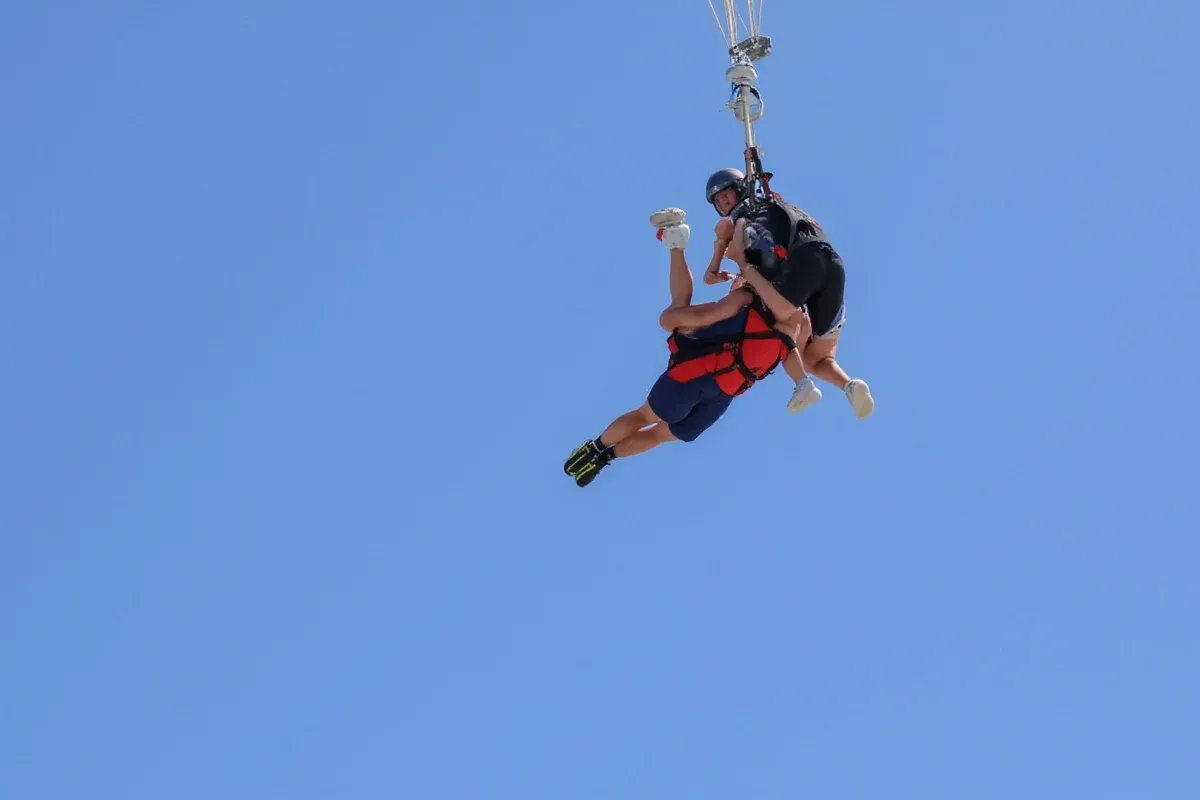
How Safe Is Skydiving? Real Data & Risk Analysis
Skydiving is statistically very safe, with a fatality rate of just 0.39 per 100,000 jumps in the United States, according to the United States Parachute Association (USPA). For tandem skydives—the most common experience for first-time jumpers—the risk is even lower, with only one fatality per 500,000 jumps over the past decade. Modern equipment, strict regulations, and professional training significantly reduce risks, making skydiving safer than many everyday activities like driving.
Understanding Skydiving Safety Statistics
Skydiving safety has improved dramatically over the decades due to advancements in technology, equipment reliability, and standardized training protocols. While it's considered an extreme sport, the actual risk of injury or fatality is quite low when proper procedures are followed.
Key Factors Influencing Skydiving Risk
- Experience level: First-time tandem jumpers face significantly lower risks compared to solo or experienced jumpers performing complex maneuvers.
- Type of jump: Tandem jumps are much safer than static-line or accelerated freefall (AFF) training jumps.
- Weather conditions: Jumps are canceled during high winds, rain, or poor visibility, reducing environmental hazards.
- Equipment maintenance: Rigorous inspection and regular packing of parachutes minimize mechanical failure.
- Instructor certification: USPA-certified instructors must meet strict training and experience requirements.
Fatality and Injury Rates: A Data-Driven Perspective
To put skydiving risk into context, it's essential to examine real-world data from reliable sources. The USPA collects annual statistics on all reported skydiving incidents in the U.S., offering one of the most comprehensive datasets globally.
| Year | Total Jumps (Est.) | Fatalities | Fatalities per 100,000 Jumps | Tandem Jumps | Tandem Fatalities |
|---|---|---|---|---|---|
| 2023 | 3.58 million | 11 | 0.31 | 1.6 million | 0 |
| 2022 | 3.47 million | 12 | 0.35 | 1.5 million | 0 |
| 2021 | 3.15 million | 10 | 0.32 | 1.3 million | 0 |
| 2020 | 2.8 million | 11 | 0.39 | 1.1 million | 0 |
| 2019 | 3.3 million | 15 | 0.45 | 1.4 million | 1 |
The data shows a consistent decline in fatality rates over time, with no tandem fatalities recorded between 2020 and 2023. The overall fatality rate averages below 0.35 per 100,000 jumps in recent years, indicating enhanced safety measures and operational discipline within the industry.
Why Tandem Skydiving Is Extremely Safe
Tandem skydiving, where a novice jumper is securely attached to a certified instructor, accounts for the majority of first-time jumps and has an exceptional safety record.
Safety Mechanisms in Tandem Jumps
- Dual-parachute system: Every rig includes a main and reserve parachute, both inspected and packed by FAA-certified riggers.
- Automatic activation device (AAD): A Cypres device automatically deploys the reserve parachute if the main fails to open at a preset altitude.
- Pre-jump briefing: Instructors provide clear, standardized instructions covering body position, exit, freefall, and landing.
- Medical screening: Participants must disclose health conditions that could affect safety, such as heart problems or recent injuries.
Risks and How They Are Managed
While skydiving is safe overall, it is not risk-free. Understanding potential dangers and how they are mitigated helps participants make informed decisions.
Common Risks and Mitigation Strategies
| Risk Factor | Likelihood | Mitigation Strategy |
|---|---|---|
| Main parachute malfunction | 1 in 1,000 jumps | Reserve parachute + AAD backup |
| Landing injury (ankle/knee) | 1 in 1,000 jumps | Proper flare technique, spotter guidance, weight limits |
| Mid-air collision | Rare (increased in formation jumps) | Air traffic coordination, jump run separation |
| Altitude awareness error | Low (mostly in student jumps) | Altimeter use, verbal cues, AAD |
Comparing Skydiving Risk to Everyday Activities
Contextualizing skydiving risk helps dispel misconceptions. Despite its reputation as a high-risk activity, it is safer than several routine tasks.
- Driving a car: 1 fatality per 8,000 people annually in the U.S. (~1.25 fatalities per 100,000 people).
- Swimming: ~10 drowning deaths per 100,000 recreational swimmers annually.
- Skiing: ~0.78 fatalities per 100,000 skier days.
- Skydiving: ~0.35 fatalities per 100,000 jumps.
This comparison shows that while skydiving involves inherent risk, it is relatively low compared to common recreational and daily activities.
Frequently Asked Questions About Skydiving Safety
How safe is skydiving for first-time jumpers?
Tandem skydiving is extremely safe for beginners, with a fatality rate of less than one per 500,000 jumps. All first-time jumpers are harnessed to a USPA-certified instructor who controls the entire jump, including parachute deployment and landing.
What causes skydiving accidents?
Most skydiving accidents result from human error, such as poor decision-making at high altitudes or incorrect body positioning during landing. Equipment malfunctions are rare due to rigorous maintenance and redundant safety systems like reserve parachutes and AADs.
Do parachutes ever fail?
Main parachute failures occur in about 1 in 1,000 jumps, but this is not catastrophic. Every skydiver carries a reserve parachute inspected and repacked every 180 days. An Automatic Activation Device (AAD) will deploy the reserve if needed, making complete failure extremely unlikely.
Can you die from skydiving?
Yes, though the odds are very low—about 0.35 fatalities per 100,000 jumps. Over 3.5 million jumps were made in 2023 with only 11 fatalities. Strict safety protocols, modern gear, and professional oversight make fatal outcomes exceptionally rare.
Is skydiving safer than driving?
Per event, yes. The fatality rate for skydiving is approximately 0.35 per 100,000 jumps, while driving has a rate of about 127 fatalities per 100,000 people annually in the U.S. However, people drive far more frequently than they skydive, so cumulative risk differs.
More Articles
 Where Did Skiing Originate? Ancient Roots and Evolution
 Best Basketball For Last: Durability, Grip, and Real-World Performance Tested
 5K Training Program: Start Running Today!
 Can Lifting Weights Stunt Growth? Science Says No
 A and B Cycle Training Explained
 Swim Goggle Anti-Fog: 7 Working Tips
 How to Repair Tennis Equipment
 Stop Swim Goggles From Fogging: 5 Fixes
 Who Made Skateboards? The Inventors and Evolution
 When Was a Skateboard Invented? 1958 Origins & Evolution