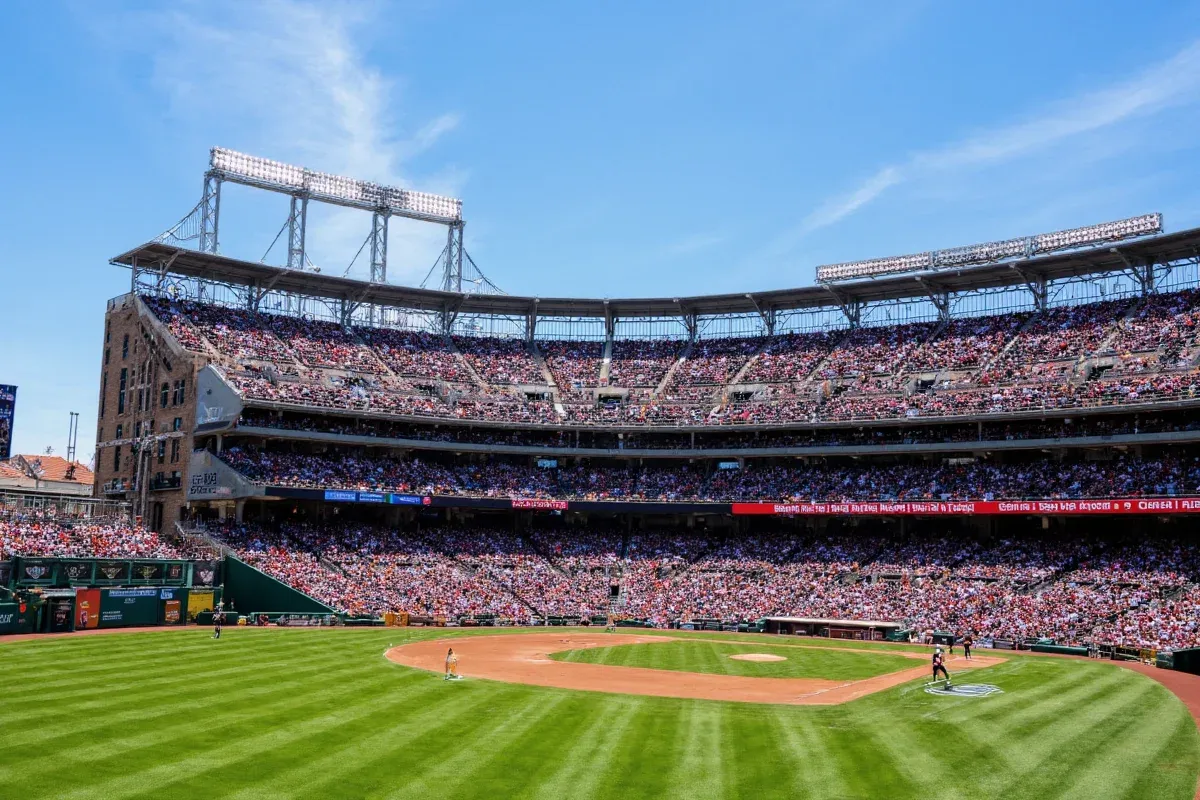
Why Chicago Has Two Baseball Teams Explained
Chicago has two Major League Baseball teams—the Cubs and the White Sox—due to its large population, historical significance in baseball, and geographic size, which supports dual franchises in the same city.
Why Chicago Supports Two MLB Teams
Chicago is one of the few U.S. cities with two Major League Baseball (MLB) teams: the Chicago Cubs (National League) and the Chicago White Sox (American League). This unique arrangement stems from the city's early prominence in professional baseball, its substantial population, and its geographic spread across multiple neighborhoods and boroughs.
Unlike most cities that gained MLB teams through expansion or relocation in the late 20th century, Chicago was a foundational hub for baseball in the 1870s. Its central location, strong rail infrastructure, and passionate fan base made it an ideal market for multiple teams even before the modern league structure existed.
Historical Origins of Chicago's Dual Teams
Early Baseball Development
Baseball took root in Chicago shortly after the Civil War. The city hosted some of the first professional games, and the Chicago White Stockings—founded in 1870 and later renamed the Cubs—were among the National Association's founding members.
League Division and Franchise Stability
- The Cubs joined the National League in 1876 as a charter member.
- The White Sox were established in 1901 as a charter franchise of the American League.
- Both teams have remained in Chicago without relocation, maintaining deep generational ties.
This early establishment meant that when the American League broke away from the National Agreement to form a competing major league, Chicago was a natural choice for an AL franchise due to its size and baseball culture.
Geographic and Cultural Factors
Chicago's vast urban footprint—spanning over 230 square miles—allows for distinct fan bases in different regions:
- North Side: Traditionally supports the Cubs, centered around Wrigleyville near Wrigley Field.
- South Side: Home to White Sox fans, with U.S. Cellular Field (now Guaranteed Rate Field) in the Armour Square neighborhood.
The cultural divide between the North and South Sides reinforces team loyalty and reduces direct competition for fans. Additionally, the Cubs' long-standing presence on the North Side and the White Sox's community roots on the South Side have fostered separate identities.
Economic and Market Viability
With a metropolitan population exceeding 9.5 million, Chicago ranks as the third-largest media market in the United States. This provides sufficient consumer demand to support two MLB franchises through:
- Ticket sales and season memberships
- Local TV broadcasting rights
- Merchandising and sponsorship deals
- Stadium naming rights and concessions
| Team | First Season | Home Stadium | Average Attendance (2023) | World Series Titles | Estimated Team Value (2024) |
|---|---|---|---|---|---|
| Chicago Cubs | 1876 | Wrigley Field | 34,862 | 3 | $4.0 billion |
| Chicago White Sox | 1901 | Guaranteed Rate Field | 19,708 | 3 | $2.5 billion |
The attendance and valuation data show a significant disparity between the two teams, with the Cubs drawing nearly double the average crowd and commanding a higher franchise value. This reflects broader national popularity, amplified by Wrigley Field's iconic status and consistent national television exposure. However, the White Sox remain financially viable due to loyal regional support and ongoing stadium investment plans.
Comparison with Other Dual-Team Cities
Chicago is not alone in hosting two MLB teams, though it stands out for longevity:
- New York: Yankees (AL) and Mets (NL)—established 1903 and 1962 respectively.
- Los Angeles: Dodgers (NL) and Angels (AL)—both relocated from elsewhere (Brooklyn and Minneapolis).
- Chicago: Only city where both teams originated and remained locally based since their founding.
This historical continuity strengthens fan identity and institutional stability, making Chicago unique among dual-franchise markets.
Frequently Asked Questions About Chicago's Baseball Teams
Why does Chicago have two baseball teams while most cities only have one?
Chicago has two teams because of its early adoption of professional baseball, large population, and geographic size. As a major transportation and cultural hub in the late 19th century, it was able to sustain multiple franchises before the modern MLB structure solidified.
What is the difference between the Chicago Cubs and White Sox?
The Cubs play in the National League and call Wrigley Field home on the North Side. The White Sox are in the American League and play at Guaranteed Rate Field on the South Side. They differ in history, fan base, uniforms, and playoff structures.
Which Chicago team has won more World Series titles?
Both teams have won three World Series championships. The Cubs won in 1907, 1908, and 2016. The White Sox won in 1906, 1917, and 2005.
Do the Cubs and White Sox ever play each other?
Yes, they meet annually during the regular season in the Chicago Crosstown Classic, a series of interleague games that generate significant local interest and rivalry.
Has either Chicago team moved stadiums or cities?
No. Both the Cubs and White Sox have played in Chicago since their founding. The Cubs have called Wrigley Field home since 1916, and the White Sox have played at Guaranteed Rate Field (formerly Comiskey Park II) since 1991, following 87 years at the original Comiskey Park.
More Articles
 How Much Does a Volleyball Weigh? Official Weight by Type
 Where Was Tennis Created? The True Origin Revealed
 When Does Little League Baseball Start? 2025 Season Guide
 Has Tiger Woods Retired From Golf? (2025 Update)
 2026 Alamo Bowl: Date, Time, Teams, How to Watch
 How Many Rounds in a Boxing Match? Explained
 What Size Golf Grip Do I Need? Find Your Fit
 Super Bowl 2025 Start Time: What Time Does It Begin?
 Who Got Super Bowl MVP? Patrick Mahomes Wins LVII Honor
 Where Was Cricket Invented? Origins and History