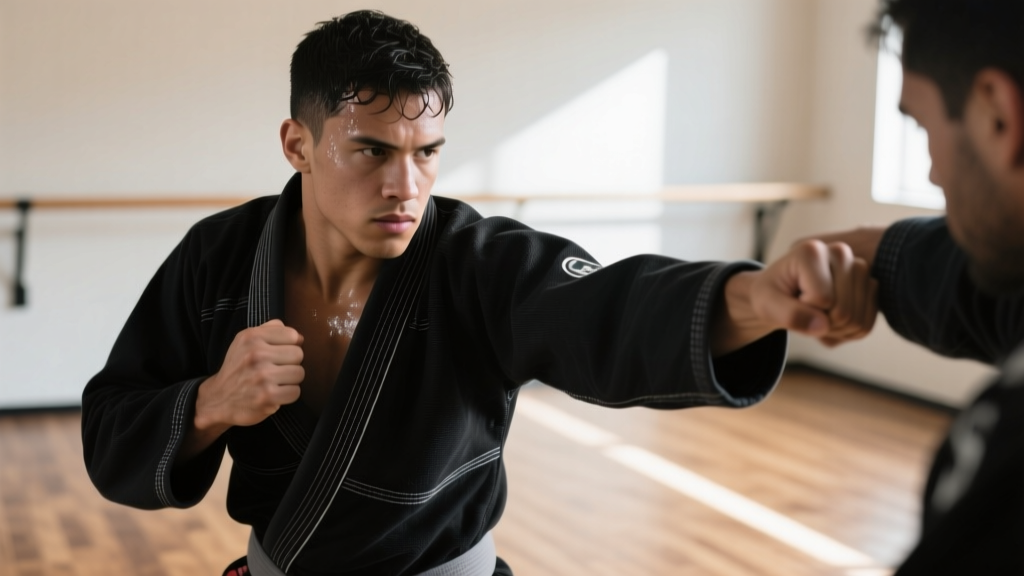
How Long to Get Black Belt in BJJ? Realistic Timeline
On average, it takes 8 to 12 years of consistent training to earn a black belt in Brazilian Jiu-Jitsu (BJJ), with most practitioners requiring over 10,000 hours of mat time. The journey varies significantly based on age, training frequency, natural aptitude, and instructor standards.
Understanding the BJJ Belt System
The Brazilian Jiu-Jitsu ranking system is structured to reflect technical knowledge, practical skill, and personal development. Unlike many martial arts, promotions in BJJ are considered highly subjective and are awarded at the discretion of certified instructors.
Belt Progression in Adult BJJ
- White Belt: Beginner level, focuses on fundamentals and survival
- Blue Belt: First major milestone, demonstrates technical proficiency
- Purple Belt: Advanced skill level, capable of teaching beginners
- Brown Belt: Near-expert level, refines techniques and strategies
- Black Belt: Mastery level, recognized as an expert and instructor
Factors That Influence Black Belt Timeline
Several key elements affect how long it takes to achieve a black belt in BJJ:
Training Frequency
Practitioners who train 4–6 times per week progress significantly faster than those attending 1–2 classes weekly. Consistency and mat time are critical for skill retention and adaptation.
Age and Physical Condition
Younger athletes often advance quicker due to higher recovery rates and flexibility. However, older practitioners may compensate with superior technique and strategy.
Instructor and Academy Standards
Some schools promote more liberally, while others—especially those under top-line affiliations like Gracie Barra or Alliance—maintain strict criteria, extending the timeline.
Natural Aptitude and Competition Involvement
Athletes who compete regularly test their skills under pressure, accelerating learning. Natural coordination and prior grappling experience (e.g., wrestling) can shorten the path.
| Belt | Average Time to Achieve (Years) | Minimum IBJJF Requirements | Avg. Hours Trained |
|---|---|---|---|
| Blue | 2 | 2 minimum, age 16+ | 1,000–2,000 |
| Purple | 4 | 18 months after blue | 3,000–5,000 |
| Brown | 6 | 18 months after purple | 6,000–8,000 |
| Black | 10 | 1 year after brown, age 19+ | 10,000+ |
The data shows that progression slows at higher belts, with each rank demanding deeper technical mastery and longer minimum time-in-grade. The IBJJF sets baseline requirements, but most top academies exceed these standards. Reaching black belt typically requires over a decade of dedicated practice, aligning with the 10,000-hour rule of expertise.
Real-World Examples of BJJ Black Belt Journeys
While averages provide guidance, individual paths vary widely:
- Andreas Gustafsson: Promoted in just under 7 years—considered exceptionally fast.
- Female Practitioners: Often take slightly longer due to fewer competitors and less frequent competition opportunities.
- Masters Division Athletes: Those starting after age 30 may take 12+ years, balancing training with career and family.
How to Accelerate Your Path to Black Belt
Although there’s no shortcut, these strategies can optimize progress:
- Train consistently (minimum 3–4 times per week)
- Focus on positional control over tapping partners
- Spar with higher-ranked and larger opponents
- Review technique videos and competition footage
- Maintain physical conditioning and injury prevention routines
- Compete regularly to test skills under pressure
Frequently Asked Questions About BJJ Black Belt Timelines
How long does it take to get a black belt in BJJ?
On average, it takes 8 to 12 years of consistent training to earn a black belt in Brazilian Jiu-Jitsu. This timeline assumes regular attendance, active sparring, and steady technical improvement under a qualified instructor.
Can you get a black belt in BJJ faster than 8 years?
Yes, though rare. Exceptional athletes training intensely (5+ times per week) with elite coaches have achieved black belts in 6–7 years. The International Brazilian Jiu-Jitsu Federation (IBJJF) requires a minimum of 10 years from white belt for adult male practitioners, but exceptions exist for prodigies.
Is a BJJ black belt achievable for beginners over 30?
Absolutely. While it may take 12–15 years due to reduced recovery and training frequency, many adults over 30 earn black belts. The key is consistency, smart training, and longevity rather than speed.
Does competing shorten the time to black belt?
Yes, competition accelerates learning by exposing gaps in technique and mental toughness. Active competitors often receive faster promotions due to demonstrated performance under pressure, a key criterion for advancement.
What percentage of BJJ students reach black belt?
Estimates suggest only 1% to 3% of those who start BJJ achieve a black belt. High attrition rates stem from the sport’s physical demands, time commitment, and the lengthy progression curve.
More Articles
 Did Bruce Lee Do Wrestling? The Truth Revealed
 Who Played in the 2014 Super Bowl? Full Recap & Stats
 Standard Size of a Table Tennis Table
 Who Won the 2004 Super Bowl? Patriots vs Panthers
 Beginner's Guide to Tennis Scoring: Points, Games, Sets, and Match Rules
 Who Won Super Bowl XLVI? Giants Beat Colts 21-17
 Why Does Mike Tyson Bite His Boxing Glove?
 Has Tiger Woods Retired From Golf? (2025 Update)
 How Long Is 9 Holes of Golf? Time Explained
 How Many Players on a Baseball Team on the Field?