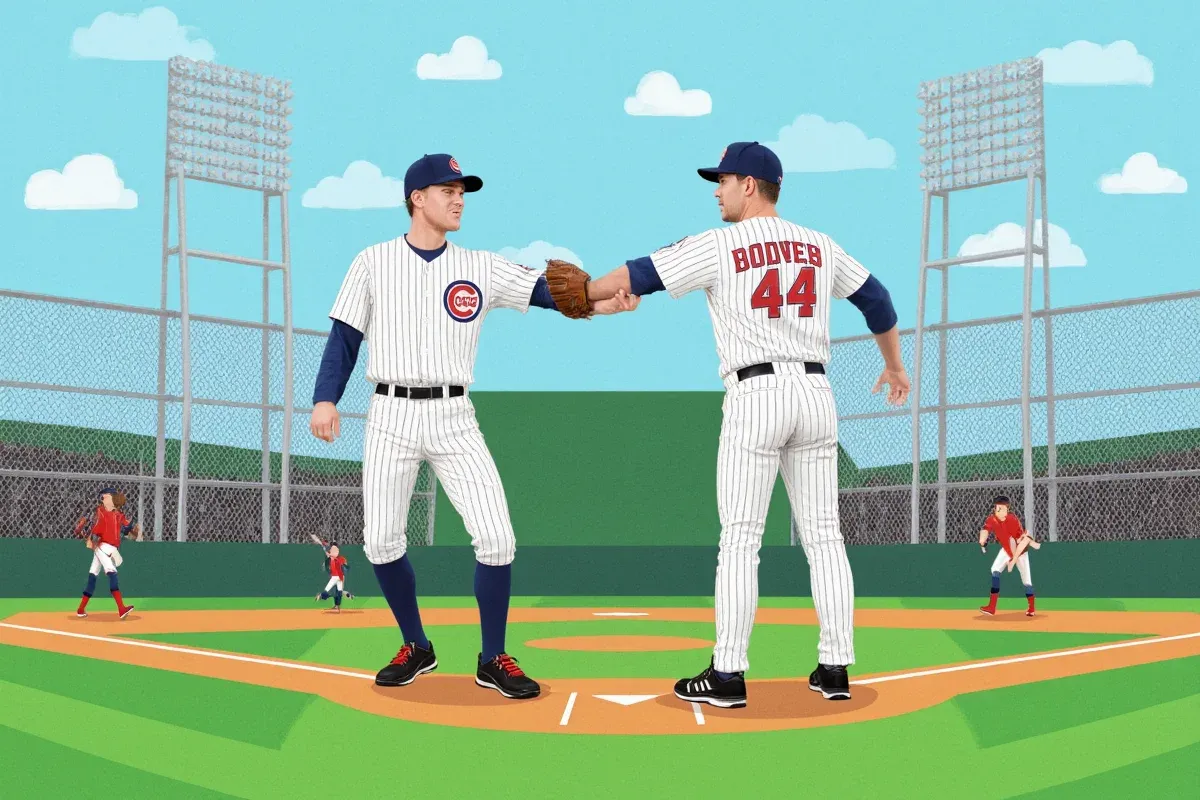
How Does WAR Work in Baseball? Explained
WAR (Wins Above Replacement) in baseball is a sabermetric statistic that measures a player's total contributions to their team in terms of wins compared to a replacement-level player, typically valued at around 0 WAR. It combines offensive, defensive, and baserunning performance for position players and pitching effectiveness for pitchers into a single number. A higher WAR indicates a more valuable player—generally, a 5+ WAR season is All-Star caliber, while 8+ WAR suggests MVP-level performance.
Understanding the Concept of WAR in Baseball
WAR, or Wins Above Replacement, is one of the most comprehensive metrics used to evaluate a player's overall value to a team. It answers the fundamental question: How many more wins would a team have if a given player were replaced by a readily available minor league or bench-level player?
Core Principles Behind WAR
- Measures a player's total contribution across all facets of the game.
- Compares performance against a "replacement-level" baseline.
- Expressed in wins, making it intuitive for evaluating impact on team success.
- Used for comparing players across positions and roles (e.g., pitcher vs. hitter).
How WAR is Calculated
While different organizations like FanGraphs and Baseball-Reference use slightly different methodologies, the general formula breaks down into key components based on player type.
For Position Players
- Offense: Measured using runs above average via statistics like wOBA (weighted On-Base Average) and wRC+ (weighted Runs Created Plus).
- Defense: Evaluated through defensive runs saved (DRS), ultimate zone rating (UZR), or fielding independent metrics.
- Baserunning: Includes stolen bases, advancement on hits, and avoidance of outs on the basepaths.
- Positional Adjustment: Accounts for the difficulty of each defensive position (e.g., shortstop is harder than first base).
- League and Park Adjustments: Normalizes data across leagues and ballparks.
For Pitchers
- FanGraphs WAR (fWAR): Based on FIP (Fielding Independent Pitching), which focuses on strikeouts, walks, and home runs.
- Baseball-Reference WAR (bWAR): Uses RA9 (runs allowed per nine innings), adjusted for defense and ballpark.
| Player | Year | hfWAR | Team | Primary Role | |
|---|---|---|---|---|---|
| Mike Trout | 2012 | 10.8 | 10.0 | LAA | CF |
| Barry Bonds | 2001 | 11.9 | 11.8 | SFG | LF |
| Shohei Ohtani | 2023 | 9.6 | 9.5 | LAA | DH/SP |
| Aaron Judge | 2022 | 11.0 | 10.6 | NYY | RF |
| Justin Verlander | 2011 | 7.8 | 7.9 | DET | SP |
The table illustrates elite WAR performances across recent history. Barry Bonds' 2001 season holds the highest recorded bWAR and fWAR among modern players, reflecting his historic offensive output. Mike Trout and Aaron Judge show how strong all-around play and power hitting contribute to high WAR. Shohei Ohtani's 2023 season highlights the unique value of a two-way player. The close alignment between bWAR and fWAR for most players indicates consistency in valuation despite methodological differences.
Interpreting WAR Values
Understanding what different WAR values mean helps contextualize player performance throughout a season.
General WAR Benchmarks (Per Season)
- 0–1 WAR: Replacement-level player, typically a bench or Triple-A call-up.
- 2–3 WAR: Solid regular contributor.
- 4–5 WAR: All-Star level performance.
- 6+ WAR: MVP candidate.
- 8+ WAR: Historic, season-defining performance.
Limitations and Criticisms of WAR
Despite its popularity, WAR is not without controversy and limitations.
- Different calculations: bWAR and fWAR often yield different results due to methodology variance.
- Defensive metrics uncertainty: Fielding data can be noisy and inconsistent year-to-year.
- Park and era adjustments: Can skew comparisons across time periods.
- Replacement level definition: Arbitrary thresholds may not reflect real-world roster construction.
- Not predictive: WAR is descriptive, not forward-looking.
Frequently Asked Questions About WAR in Baseball
What does a 6.0 WAR mean in baseball?
A 6.0 WAR means a player contributed approximately six additional wins to their team compared to a replacement-level player over the course of a season. This is considered an MVP-caliber performance and typically places the player among the league leaders in value.
Is higher WAR better in baseball?
Yes, a higher WAR indicates greater player value. A positive WAR means the player performed better than a replacement-level player, while negative WAR suggests below-replacement performance, often seen with injured or underperforming players.
What is a good WAR for a season?
A WAR of 4–5 is considered very good and typically reflects an All-Star level season. Players with 5+ WAR are viewed as core contributors, and those exceeding 6 WAR are often in the MVP conversation.
Why are there two types of WAR (bWAR and fWAR)?
bWAR (Baseball-Reference WAR) and fWAR (FanGraphs WAR) use different methodologies—especially in measuring pitchers and defense. bWAR uses runs allowed, while fWAR relies on FIP for pitchers. Both aim to measure the same concept but offer slightly different perspectives.
Can a player have negative WAR?
Yes, a player can have negative WAR if their performance is worse than that of a replacement-level player. This can happen due to poor offense, defense, injury, or excessive errors, indicating the team would have been better off using a minor leaguer or bench player.
More Articles
 Where Is the Rose Bowl Game Played? Venue Details
 Who Are the Current Heavyweight Boxing Champions?
 How Much Longer Is the Super Bowl? Full Duration Explained
 How Long Does a Major League Baseball Game Last?
 Who Invented Billiards? Origins and Evolution Explained
 How Much Does a Boxer Make? Earnings Explained
 Which Team Has Most Super Bowl Wins? (2025 Stats)
 Volleyball Rotation Rules: Complete 2026 Guide
 What Channel Is the Senior Bowl On? 2025 Broadcast Info
 Types of Squash: Variants Explained