Where Was Rugby Made? Origin & History Explained
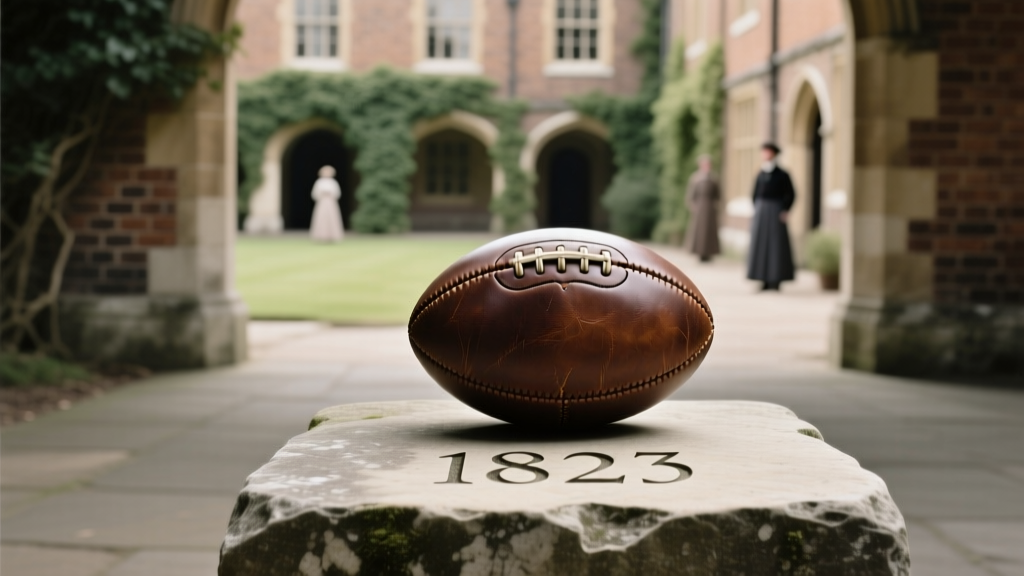
Rugby was made in Rugby, England, at Rugby School in the early 19th century, where the sport's defining moment—William Webb Ellis picking up the ball and running with it—is said to have occurred in 1823.
The Origins of Rugby: A Sport Born in England
The story of rugby begins in the town of Rugby, Warwickshire, in central England. The sport emerged from traditional forms of football played at English public schools, where rules varied widely between institutions. Rugby School, founded in 1567, became the birthplace of the game we now know as rugby football.
The Legend of William Webb Ellis
According to popular legend, in 1823, a student named William Webb Ellis broke from the standard rules of football by picking up the ball during a match and running with it. Though this account is based more on tradition than verified fact, it has been officially recognized by the World Rugby Museum and remains central to the sport’s origin narrative.
- William Webb Ellis was a pupil at Rugby School from 1816 to 1825
- The first written account of the incident appeared in 1876, over 50 years later
- In 1900, a plaque was erected at Rugby School commemorating Ellis
- The Rugby World Cup trophy is named after William Webb Ellis
Early Development and Codification of Rules
While the Ellis story captures the imagination, the formal development of rugby as a structured sport came through the efforts of students and staff at Rugby School who began documenting and standardizing the rules of play.
Key Milestones in Rule Formation
By the 1840s, Rugby School had codified its own set of rules, distinguishing its version of football from others. These included:
- Handling the ball was permitted
- Running with the ball was allowed
- Try scoring required grounding the ball behind the goal line
- Tackling was regulated to prevent dangerous play
The Spread of Rugby Across the Globe
From its origins in a single English school, rugby rapidly spread through the British Empire via students, soldiers, and colonial administrators.
How Rugby Expanded Internationally
- 1863: The Football Association (FA) was formed in England, leading to a split between rugby-style handling games and association football (soccer)
- 1871: The Rugby Football Union (RFU) was established in England to govern the sport
- 1870s–1890s: Rugby reached countries such as Australia, New Zealand, South Africa, and France
- 1895: A major schism led to the creation of rugby league in Northern England, separating from rugby union
| Country | First Recorded Match | Governing Body Founded | First International Appearance |
|---|---|---|---|
| England | 1845 (Rugby School) | 1871 (RFU) | 1871 vs Scotland |
| Scotland | 1857 | 1873 (SRU) | 1871 vs England |
| New Zealand | 1870 | 1892 (NZRU) | 1893 vs New South Wales |
| South Africa | 1862 | 1889 (SARFU) | 1891 vs British Lions |
| France | 1872 | 1892 (FFR) | 1906 vs New Zealand Māoris |
The data shows that rugby developed quickly after its codification in England, with international matches occurring within decades. England and Scotland were pioneers, playing the first official international match in 1871. By the late 19th century, the sport had taken root in key British colonies and European nations, setting the stage for global competition.
Rugby’s Evolution into Modern Sport
Over time, rugby evolved into two distinct codes: rugby union and rugby league. Both retain core elements from the original game played at Rugby School but differ in rules, structure, and popularity across regions.
Differences Between Rugby Union and League
- Rugby Union: 15 players per side, scrums with eight forwards, global reach, governed by World Rugby
- Rugby League: 13 players per side, faster pace, dominant in parts of England and Australia, governed by International Rugby League
Today, rugby union is the more widely played version internationally, featuring major tournaments like the Six Nations, The Rugby Championship, and the Rugby World Cup, held every four years since 1987.
Frequently Asked Questions About Where Rugby Was Made
Where exactly was rugby invented?
Rugby was invented at Rugby School in Rugby, Warwickshire, England. The school's playing fields are considered the birthplace of the sport, where the foundational rules were first developed in the early 1800s.
Who invented rugby and when?
While no single person “invented” rugby, the legendary moment attributed to William Webb Ellis in 1823 is traditionally seen as the spark. However, the sport was formally shaped by students and staff at Rugby School throughout the 19th century.
Why is the sport called rugby?
The sport is named after Rugby School, where it originated. As the game spread, it became known as “rugby football” to distinguish it from other forms of football, eventually shortening to just “rugby.”
Is there a monument or museum dedicated to rugby’s origins?
Yes, the World Rugby Museum is located at Twickenham Stadium in London, preserving the sport’s history. Additionally, Rugby School maintains archives and a commemorative plaque honoring William Webb Ellis.
How did rugby spread from England to other countries?
Rugby spread through British influence—via students, military personnel, and colonists—who introduced the game to countries like Australia, New Zealand, South Africa, and France in the late 19th century, leading to rapid international adoption.
More Articles
 How Much Are Baseball Tickets in 2025?
 Who Is Boxing Today? Full Fight Schedule & Results
 How Is Wrestling Scored? Point System Explained
 Why Golf Has 18 Holes: History & Standard Explained
 What Season Is Volleyball? Key Dates by Level & Region
 Sports Gear Care and Maintenance Guide
 When Was the Last Time 49ers Went to Super Bowl?
 How Much Do MMA Fighters Earn? (2025 Data)
 How Much Is a Nolan Ryan Baseball Card Worth?
 How Many Red Belts Are There in BJJ? (2025 Data)