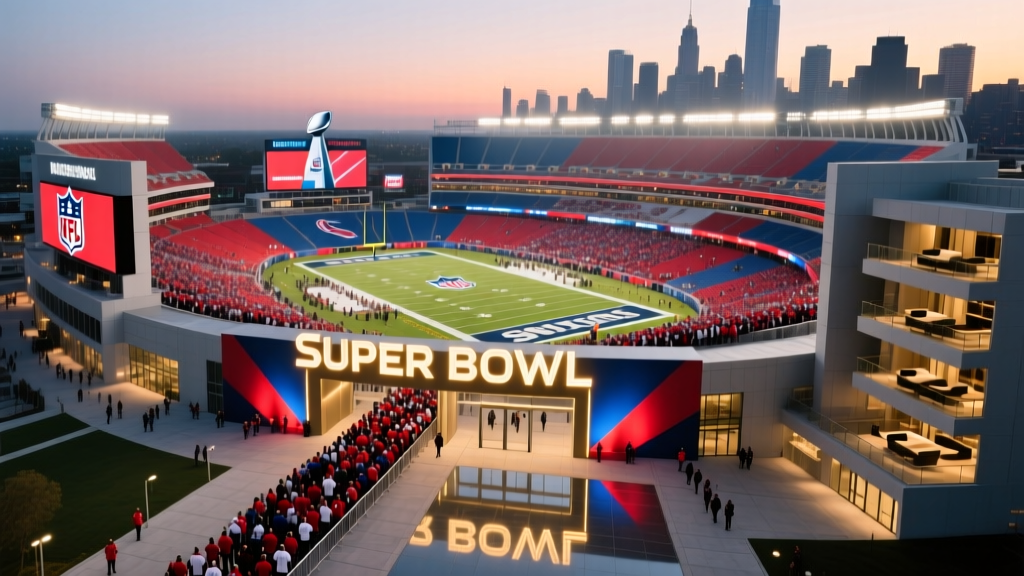
Super Bowl Host Cities & Stadiums (2026)
The Super Bowl is played at a predetermined neutral-site stadium, selected years in advance by the NFL. The location rotates among cities with suitable stadiums, favorable weather, and infrastructure to host the massive event.
How the Super Bowl Host City Is Chosen
The NFL selects the Super Bowl venue through a competitive bidding process. Cities submit proposals showcasing their stadium, accommodations, transportation, and tourism appeal. The league evaluates bids based on several key factors:
- Climate (preferably warm or indoor)
- Stadium quality and capacity (minimum 70,000 seats preferred)
- Hotel availability and proximity
- Public transportation and airport access
- Local government support and funding incentives
- Proven experience hosting large events
Selection Timeline
The NFL typically chooses the Super Bowl site three to five years in advance. The decision is made by team owners during a league meeting. While any city can bid, most hosts are from metropolitan areas with NFL franchises and modern, multipurpose stadiums.
Recent and Upcoming Super Bowl Locations
In recent years, the Super Bowl has increasingly been hosted in warm-weather cities or domed stadiums. Major markets like Los Angeles, Miami, New Orleans, and Las Vegas have become frequent hosts due to their infrastructure and tourist appeal.
| Year | Super Bowl | Stadium | City | Capacity | Attendance |
|---|---|---|---|---|---|
| 2022 | LVI | SoFi Stadium | Inglewood, CA | 70,240 | 69,839 |
| 2023 | LVII | State Farm Stadium | Glendale, AZ | 63,400 | 67,625 |
| 2024 | LVIII | Allegiant Stadium | Las Vegas, NV | 65,000 | 62,125 |
| 2025 | LIX | Caesars Superdome | New Orleans, LA | 73,208 | TBD |
| 2026 | LX | Levi's Stadium | Santa Clara, CA | 68,500 | TBD |
The data shows a clear preference for large-capacity stadiums in major metropolitan areas. Recent selections include both warm-weather sites and domed facilities to avoid winter conditions. Attendance consistently exceeds 60,000, reflecting strong demand and effective venue planning.
Why Neutral Sites Are Used
The Super Bowl is held at a neutral site to ensure fairness between the competing teams, neither of which has home-field advantage. This tradition enhances the game’s prestige and allows the NFL to maximize economic impact and media exposure across different regions.
- Promotes national interest and broad fan engagement
- Enables extensive media and entertainment events around the game
- Provides significant economic boost to host cities (often exceeding $500 million)
- Allows for centralized logistics and security planning
Future Trends in Super Bowl Venues
Looking ahead, the NFL continues to favor state-of-the-art stadiums with retractable roofs, luxury amenities, and integrated entertainment districts. Cities like Las Vegas and Phoenix have emerged as top contenders due to their growing infrastructure and year-round appeal.
Additionally, sustainability and technology integration are becoming more important in venue selection. Future Super Bowls may emphasize green building practices, cashless transactions, and immersive fan experiences powered by augmented reality.
Frequently Asked Questions About Super Bowl Locations
Can a cold-weather city host the Super Bowl?
Yes, but only if the stadium is domed or has a retractable roof. Outdoor stadiums in cold climates are generally avoided unless they can guarantee playable conditions. For example, MetLife Stadium in New Jersey hosted Super Bowl XLVIII in 2014, the first outdoor cold-weather venue in the modern era.
How many times has the Super Bowl been held in the same city?
Miami has hosted the Super Bowl 11 times, the most of any city. New Orleans follows with 8, and Los Angeles and Tampa have each hosted 8 and 5 times respectively. Repeat hosts typically offer excellent facilities and tourism infrastructure.
Does the home team ever play the Super Bowl in their own stadium?
Rarely, but it has happened. In 2021, the Tampa Bay Buccaneers became the first team to play—and win—the Super Bowl in their home stadium, Raymond James Stadium. The NFL does not prohibit this, though it remains uncommon due to the rotating selection process.
What makes a stadium eligible to host the Super Bowl?
A stadium must meet NFL standards for size (minimum 70,000 seats recommended), press facilities, luxury suites, video boards, and fan amenities. It must also be part of a bid supported by local authorities offering financial incentives and logistical support.
How far in advance is the Super Bowl location announced?
The NFL typically announces the Super Bowl host city 3 to 5 years in advance. For example, New Orleans was selected to host Super Bowl LIX in 2025 during a vote in 2022. This allows ample time for planning and infrastructure development.
More Articles
 Where to Watch the Baseball Game in 2025
 How Much Does a Major League Baseball Cost?
 How Many Baseball Games in a Regular Season? 162 Explained
 How Much Do High School Baseball Coaches Make?
 When Is the Super Bowl Played? Date, Time & Details
 What Do Attributes Do in Volleyball Legends?
 What Channel Is the Boxing Match On Tonight? (Oct 2025)
 How Much Room Do You Need for a Golf Simulator?
 Has Anyone Ever Not Scored in the Super Bowl?
 What Bowl Game Is the National Championship?