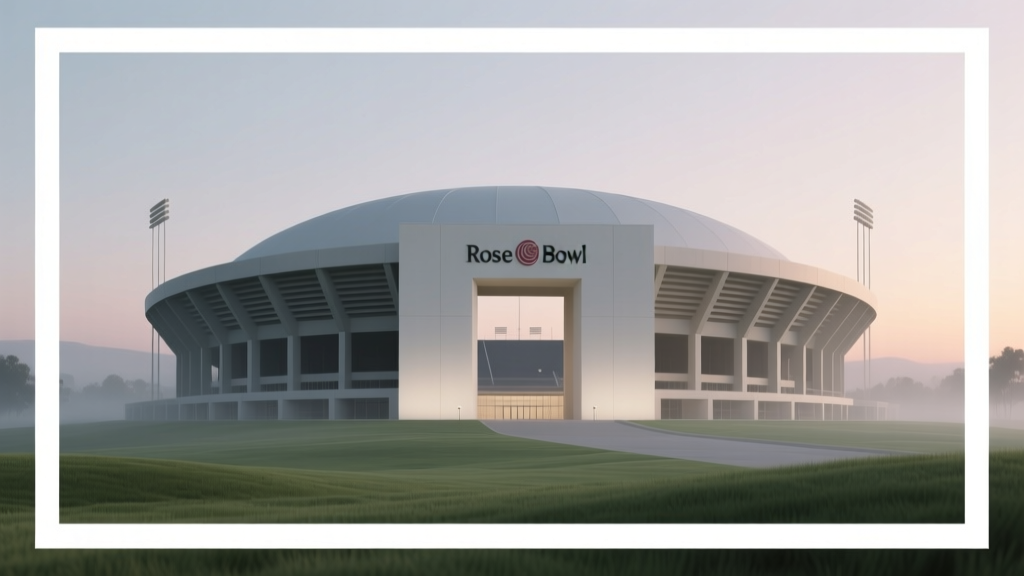
When Was the Rose Bowl Built? | Complete History
The Rose Bowl was built in 1922 and officially opened on October 28, 1922, in Pasadena, California. It is one of the oldest and most iconic outdoor stadiums in the United States, primarily known for hosting the annual Rose Bowl Game, a premier college football bowl game, as well as major soccer matches, concerts, and other large-scale events.
History and Origins of the Rose Bowl
The idea for the Rose Bowl Stadium emerged from the growing popularity of the Tournament of Roses Parade and the need for a dedicated venue to host post-parade athletic events. Originally, football games were played at Tournament Park, but overcrowding and inadequate facilities prompted city leaders to design a larger, permanent stadium.
Initial Planning and Construction
- Construction began in 1921 after the City of Pasadena approved funding and selected a site in Arroyo Seco.
- The architectural firm Myron Hunt & Elmer Grey designed the stadium, drawing inspiration from the Yale Bowl, the first bowl-shaped stadium in the U.S.
- The construction used reinforced concrete and featured a distinctive horseshoe shape initially, later expanded into a complete oval.
- The stadium officially opened on October 28, 1922, with a capacity of approximately 57,000 spectators.
Architectural Evolution and Major Renovations
Over the decades, the Rose Bowl has undergone several renovations to improve safety, accessibility, and spectator experience while preserving its historic character.
Key Upgrades Over Time
- 1928: The north end zone was enclosed, transforming the stadium into a complete bowl and increasing seating capacity.
- 1956: Lights were installed to allow night events, though they were rarely used until later decades.
- 1987: A major renovation added luxury boxes and upgraded restrooms and concessions.
- 2011–2012: A $152 million restoration preserved the stadium’s classic appearance while modernizing infrastructure, including new video boards, sound systems, and seismic retrofitting.
The Rose Bowl's Role in Sports History
Beyond college football, the Rose Bowl has hosted numerous landmark events in American and international sports.
Notable Events Hosted
- Rose Bowl Game (annual since 1902, at current venue since 1923)
- FIFA World Cup matches (1994 Men's Final, where Brazil defeated Italy)
- Olympic Soccer (1984 Summer Olympics)
- NCAA Men's College Cup (multiple years)
- Concerts by major artists such as The Rolling Stones, Madonna, and Beyoncé
| Event | Year | Audience / Attendance | Significance |
|---|---|---|---|
| Rose Bowl Game | 1923 | 43,000 | First game held at the new stadium |
| Rose Bowl Game | 1956 | 103,000 | All-time attendance record set |
| FIFA World Cup Final | 1994 | 94,194 | Largest crowd for a World Cup final at the time |
| U.S. vs Mexico Soccer Match | 2002 | 91,254 | Highest-attended CONCACAF qualifier in U.S. history |
| UCLA Football Season Average | 2023 | 57,779 | UCLA's home attendance average |
The data shows the enduring popularity of the Rose Bowl across different eras and sports. Its peak attendance in 1956 reflects the golden age of college football enthusiasm, while the 1994 FIFA World Cup Final highlights its global significance. Even today, it remains a key venue for major collegiate and international events.
About the Management and Operations
The Rose Bowl is owned by the City of Pasadena and operated by the Rose Bowl Operating Company, a joint effort between the city, UCLA, and the Pasadena Tournament of Roses Association. UCLA Bruins football has called the stadium home since 1982.
- Current Capacity: 91,136 (after 2011–2012 renovations)
- Surface: FieldTurf (installed in 2008, replaced in 2021)
- Elevation: 886 feet above sea level
- Address: 1001 Rose Bowl Dr, Pasadena, CA 91103
Frequently Asked Questions About the Rose Bowl
When was the Rose Bowl built?
The Rose Bowl was constructed in 1921–1922 and officially opened on October 28, 1922.
Why is it called the Rose Bowl?
The name comes from the Tournament of Roses, an annual parade dating back to 1890. The stadium was built to host the post-parade football game, which became known as the "Rose Bowl Game." The term "bowl" also references its bowl-like architectural design.
What year did the first Rose Bowl Game take place at the current stadium?
The first Rose Bowl Game at the current Rose Bowl Stadium was played on January 1, 1923, when the USC Trojans defeated Penn State 14–3.
Has the Rose Bowl hosted World Cup games?
Yes, the Rose Bowl hosted seven matches during the 1994 FIFA Men's World Cup, including the final where Brazil defeated Italy in a penalty shootout. It was the largest crowd for a World Cup final at the time, with 94,194 attendees.
Is the Rose Bowl still used today?
Yes, the Rose Bowl is still actively used. It hosts the annual Rose Bowl Game, UCLA Bruins football games, major concerts, soccer matches, and community events. It underwent a major renovation between 2011 and 2012 to ensure long-term viability.
More Articles
 How Many Super Bowls Have the Chiefs Been To?
 Can Baseball Games End in a Tie? Explained
 Who Won the 2011 Super Bowl? Packers Beat Steelers 31-25
 When Was Archery Invented? Origins & History
 Where Does Karate Originate? History & Origins Explained
 Sports Like Fencing with Bigger Weapons Explored
 When Is Indian Wells Tennis 2025? Dates & Schedule
 Where Is The Masters Golf Tournament Played?
 How Many Super Bowls Has Mahomes Been In? Full Breakdown
 Fastest Baseball Pitch Ever: 105.1 MPH by Chapman