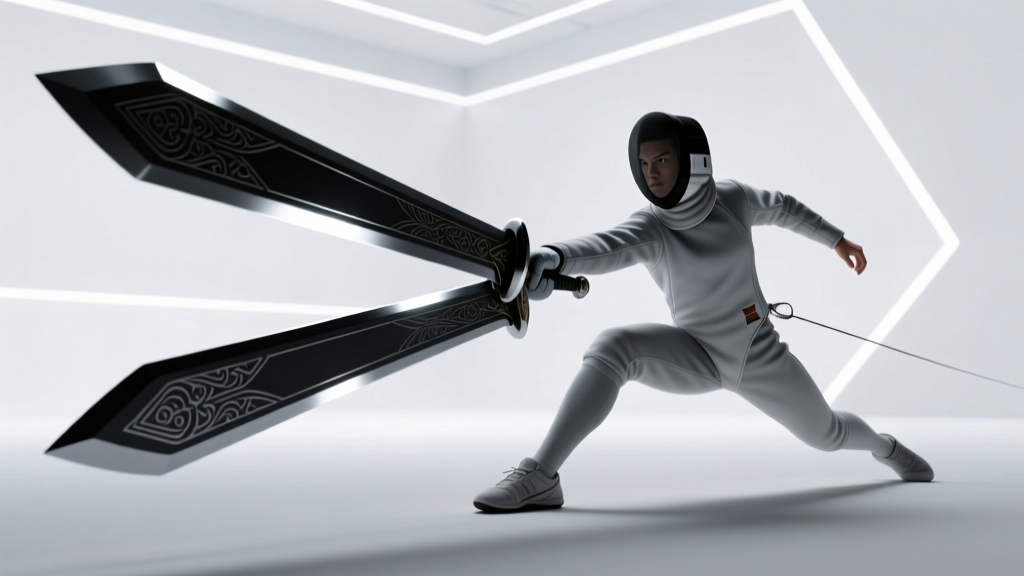
Sports Like Fencing with Bigger Weapons Explored
Are There Sports Like Fencing but with Bigger Weapons?
Yes, there are several combat sports similar to fencing that use larger weapons, including Historical European Martial Arts (HEMA), kendo, singlestick, and stage combat. While modern fencing uses lightweight foils, épées, and sabres, these alternative disciplines employ longer, heavier weapons such as longswords, bamboo shinai, or wooden wasters, often emphasizing historical accuracy, full-contact sparring, or theatrical performance.
What Is Fencing and Why Do People Seek Alternatives with Larger Weapons?
Modern fencing is an Olympic sport rooted in Western swordsmanship traditions. It features three weapons: foil, épée, and sabre—all relatively light and designed for speed and precision. Athletes score points via electric scoring systems during fast-paced bouts.
Despite its sophistication, many practitioners and enthusiasts seek more physically immersive or historically authentic experiences. This has led to growing interest in martial arts using bigger, heavier weapons that simulate real battlefield conditions or historical dueling practices.
Common Reasons for Seeking Larger Weapon Sports
- Desire for historical authenticity and connection to medieval or samurai combat
- Preference for full-body engagement and physical intensity over finesse-only techniques
- Interest in武术-like training with two-handed swords or polearms
- Appeal of visual drama and theatricality in performance-based forms
- Frustration with the highly technical, rule-bound nature of Olympic fencing
Historical European Martial Arts (HEMA): The Longsword Alternative
HEMA reconstructs lost European fighting systems from manuscripts dating back to the 14th–17th centuries. Unlike fencing, HEMA commonly uses replicas of large weapons like the two-handed longsword, messer, rapier & dagger, and polearms.
Key Features of HEMA
- Uses blunted steel or nylon longsword replicas (typically 110–130 cm long, weighing 1.2–1.8 kg)
- Full-force strikes allowed; head, torso, limbs are valid targets
- Protective gear includes masks, gorgets, jackets, and gloves
- Competitions involve both sparring and cutting tests on tatami mats
Kendo: Japanese Sword Fighting with Bamboo Shinai
Kendo, meaning "way of the sword," is a modern Japanese martial art based on samurai traditions. It uses a shinai—a four-piece bamboo sword—and protective armor called bōgu.
Why Kendo Fits the Criteria
- The shinai is approximately 120 cm long and mimics the katana’s reach and handling
- Bouts require loud vocalization (kiai) and precise striking to designated areas
- Scoring is judged by referees, not electronic systems
- Strong emphasis on discipline, etiquette, and mental focus
Other Combat Disciplines Using Larger Weapons
Beyond HEMA and kendo, several lesser-known but legitimate sports and training systems incorporate oversized or historically significant weapons.
Singlestick – The Forgotten British Art
A 17th–19th century English martial art simulating backsword combat using a wooden stick about 90–100 cm long. Though largely obsolete today, it's preserved within HEMA circles.
Stage Combat and Theatrical Swordplay
Used in film and theater (e.g., Shakespearean plays, Game of Thrones), this form uses prop weapons like broadswords and greatswords for dramatic effect. Safety and illusion are prioritized over actual combat effectiveness.
Schwingen and Traditional Folk Styles
In parts of Switzerland and Eastern Europe, folk wrestling and weapon dances sometimes include mock combat with staffs or swords, though not formalized as competitive sports.
| Sport | Average Weapon Length | Average Weapon Weight | Combat Style | Global Practitioners (Est.) |
|---|---|---|---|---|
| Modern Fencing (Épée) | 110 cm | 0.775 kg | Thrust-only, electric scoring | 500,000+ |
| HEMA (Longsword) | 115–130 cm | 1.2–1.8 kg | Thrust & cut, full contact | 30,000–50,000 |
| Kendo (Shinai) | 120 cm | 0.5–0.7 kg | Strike-based, armored | 1.5 million |
| Singlestick | 90–100 cm | 0.6–0.8 kg | One-handed cut simulation | <1,000 |
| Stage Combat (Prop Sword) | 100–140 cm | 0.8–1.5 kg | Choreographed, non-contact | 10,000+ (actors/trainees) |
The data shows that while modern fencing remains the most widespread, HEMA and kendo involve significantly heavier or longer weapons and emphasize different combat philosophies. Kendo has the largest global following among alternatives, with over 1.5 million practitioners, primarily in Japan and South Korea. HEMA, though smaller, is rapidly growing across North America and Europe due to increased access to historical texts and replica equipment.
Frequently Asked Questions About Sports Similar to Fencing with Bigger Weapons
Is kendo safer than fencing?
Kendo involves high-impact strikes delivered with bamboo shinai, but participants wear heavy armor (bōgu) that protects the head, chest, hands, and body. While both kendo and fencing have low injury rates, kendo may carry slightly higher impact forces. However, strict rules and discipline keep injuries rare. Fencing uses lighter weapons and electronic scoring, making it less physically intense overall.
Can I transition from fencing to HEMA or kendo?
Absolutely. Fencers have a strong foundation in footwork, timing, and distance control, which are transferable skills. However, HEMA requires adaptation to heavier weapons and two-handed techniques, while kendo demands new stances, vocalization, and armor use. Many former fencers find these transitions rewarding and physically engaging.
What is the heaviest weapon used in competitive sword sports?
In regulated martial sports, the two-handed longsword used in HEMA is typically the heaviest, averaging between 1.2 and 1.8 kg. This is more than double the weight of an épée (0.775 kg). Some historical reenactment events feature even heavier weapons, but these are not standardized for competition.
Are there Olympic plans for HEMA or kendo?
Kendo has been under consideration by the IOC for future inclusion but is not currently an Olympic sport. HEMA is not yet recognized by the IOC, though organizations like the International Technical Committee for HEMA (ITC) are working toward standardization. Neither is expected to debut before 2032.
Where can I train in longsword or big weapon martial arts?
You can find HEMA schools through national federations or the HEMA Alliance (thehemaalliance.org). Kendo clubs are often affiliated with universities or cultural centers and listed via national federations (e.g., United States Kendo Federation). Major cities worldwide now host dedicated schools offering beginner classes with rental gear.
More Articles
 Who Has the Most Grand Slams in Tennis? | 2025 Record Holder
 Where Was Boxing Invented? Origins & Evolution
 Hardest Golf Course in the World: Ocean Course at Kiawah
 NFL Teams That Have Never Been to the Super Bowl
 How Long Is a Tennis Game? Match Duration Explained
 Jake Paul Boxing Weight: Current Weight & Class Details
 When Does the College Baseball World Series Start in 2025?
 Who Won Today in Boxing? Crawford Defeats Madrimov
 Why You Can't Help But Be Romantic About Baseball
 How Much Does a Boxer Weigh? Weight Classes & Facts