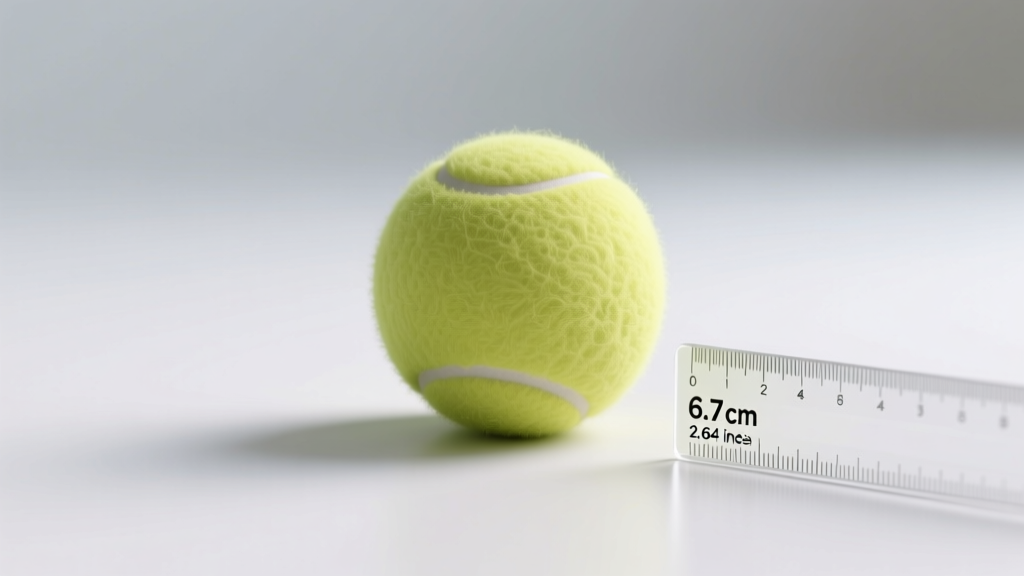
What Size Is a Tennis Ball? Official Dimensions Explained
A tennis ball must have a diameter between 2.575 and 2.700 inches (6.54–6.86 cm) and weigh between 1.975 and 2.095 ounces (56.0–59.4 g), as standardized by the International Tennis Federation (ITF) for official play.
Understanding Official Tennis Ball Dimensions
The size of a tennis ball is strictly regulated to ensure consistency in professional and amateur play. According to the International Tennis Federation (ITF), which governs the rules of tennis worldwide, a regulation tennis ball must meet specific dimensional and weight criteria. These standards are critical for maintaining fairness, performance, and uniformity across all levels of competition.
Key Size Specifications
- Diameter: 2.575 to 2.700 inches (6.54 to 6.86 cm)
- Circumference: Approximately 8.09 to 8.48 inches (20.55 to 21.54 cm)
- Weight: 1.975 to 2.095 ounces (56.0 to 59.4 grams)
- Bounce height: Must rebound between 53 and 58 inches (135–147 cm) when dropped from 100 inches (254 cm) onto a concrete surface
Tennis Ball Sizes Across Different Types
While the ITF standard applies to most competitive play, variations exist for training, junior players, and recreational use. These modified balls help players at different skill levels develop proper technique without compromising on safety or control.
Types of Tennis Balls and Their Uses
- Standard Yellow Balls: Used in professional and adult amateur matches; meet full ITF specifications.
- Red Level (Stage 3): Larger and softer, designed for young beginners (ages 5–8); lower bounce and reduced speed.
- Orange Level (Stage 2): Intermediate stage for ages 9–10; played on smaller courts with slower pace.
- Green Dot Balls: Slightly lower compression than standard balls; used for players aged 11–12 transitioning to full-sized courts.
- Foam or Practice Balls: Very soft, low-bounce options ideal for indoor training or learning fundamentals.
| Ball Type | Diameter (inches) | Weight (ounces) | Bounce Height (inches) | Recommended Age |
|---|---|---|---|---|
| Standard (ITF Approved) | 2.575–2.700 | 1.975–2.095 | 53–58 | 13+ |
| Green Dot | 2.550–2.675 | 1.900–2.025 | 48–52 | 11–12 |
| Orange Level | 2.600–2.725 | 1.850–1.975 | 35–42 | 9–10 |
| Red Level (Foam) | 2.700–2.850 | 1.600–1.750 | 20–28 | 5–8 |
| Foam Practice Ball | 2.750–2.900 | 1.500–1.650 | 15–22 | All Ages |
The data shows a clear progression in ball size, weight, and bounce characteristics tailored to player development. Junior balls are generally lighter and larger with reduced bounce, allowing younger players to maintain better control and build confidence. As players advance, they transition toward ITF-standard dimensions, ensuring smooth adaptation to full-speed tennis.
Why Tennis Ball Size Matters
Precise ball dimensions directly impact gameplay dynamics including speed, spin, and aerodynamics. Even minor deviations can alter how a ball behaves during serves, rallies, and volleys. Consistent sizing ensures fair competition and allows athletes to refine their timing and stroke mechanics reliably.
Impact on Performance
- Inconsistent size or weight can lead to unpredictable bounces and inaccurate shot placement.
- Proper compression and diameter affect how much spin a player can generate using modern racket technologies.
- Regulation size ensures compatibility with automated ball machines and training tools calibrated to standard metrics.
How Tennis Balls Are Tested for Compliance
The ITF conducts rigorous testing on tennis balls before approving them for tournament use. Tests include measurements of diameter, weight, deformation under pressure, and rebound height. Only balls that pass all criteria receive ITF certification and appear on the official list of approved tennis balls.
Testing Procedures Include:
- Diameter Measurement: Using precision calipers to verify spherical consistency.
- Weight Check: Measured on digital scales accurate to 0.01 gram.
- Rebound Test: Dropped from 100 inches onto concrete; measured rebound must be 53–58 inches.
- Deformation Test: Measures how much the ball compresses under fixed pressure, affecting feel and response.
Frequently Asked Questions About Tennis Ball Size
What is the exact diameter of a regulation tennis ball?
A regulation tennis ball has a diameter between 2.575 and 2.700 inches (6.54–6.86 cm), as defined by the International Tennis Federation (ITF).
Do all tennis balls weigh the same?
No, while most fall within a narrow range, official tennis balls must weigh between 1.975 and 2.095 ounces (56.0–59.4 g). Slight variations exist due to felt material and humidity absorption.
Are junior tennis balls smaller than adult balls?
Juvenile red and orange level balls may appear larger but are designed with lower density and bounce. Green dot balls are close in size to standard balls but slightly lighter and softer.
Can altitude affect tennis ball size and performance?
Altitude doesn't change the physical size, but high-altitude balls are pressurized differently to compensate for thinner air, resulting in more predictable bounce and flight compared to sea-level balls.
Are there different sizes for indoor and outdoor tennis balls?
No, the size remains consistent. However, outdoor balls often have slightly more durable felt to withstand abrasive court surfaces, while indoor balls prioritize smoother glide on synthetic flooring.
More Articles
 What Does K Mean in Baseball? Strikeout Explained
 When Is the Super Bowl 2025? Date, Time, Location
 How Old Is Nadal Tennis Player? Age & Career Facts
 Why Is Billiards Called Pool? Origin Explained
 Shoes for Golf: Performance, Rules Compliance, and Fit Science Explained
 How Many Super Bowls Did Peyton Manning Play In?
 How Old Is Phil Mickelson? Age, Career & Stats in 2025
 Who Played in Super Bowl 52? Eagles vs Patriots
 Will Gordon Golf: Career Stats & Updates 2025
 How Much Does a Tennis Court Cost to Build?