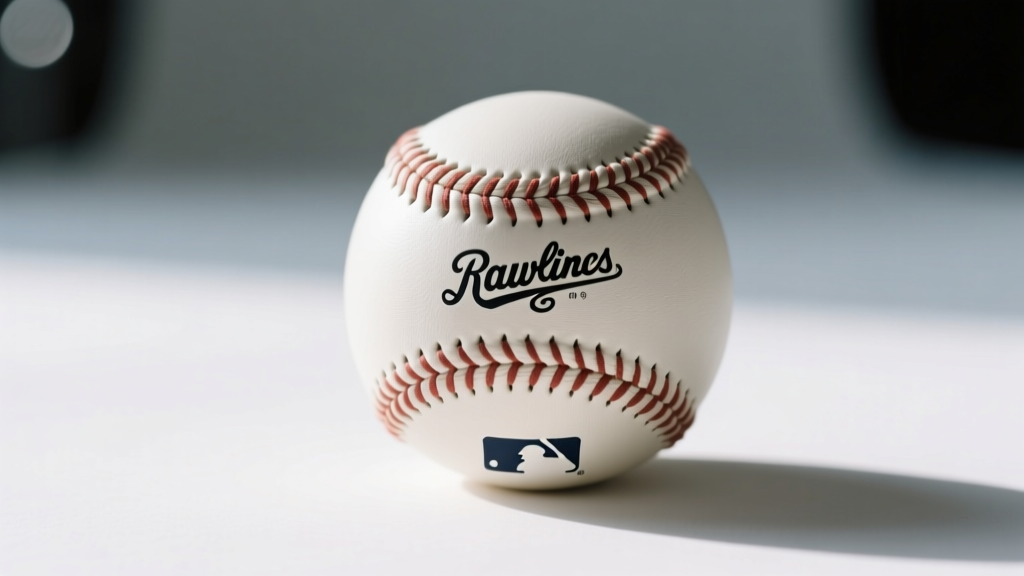
Who Makes MLB Baseballs? Rawlings Facts
Major League Baseball (MLB) baseballs are manufactured by Rawlings, the official ball supplier of MLB since 1977. Each ball is hand-stitched in Costa Rica using high-quality cowhide sourced from U.S. cattle, meeting strict specifications for weight, size, and performance.
History of MLB Baseball Manufacturing
The production of Major League Baseballs has evolved over time, but consistency in quality and performance remains paramount. Rawlings has held the exclusive contract since 1977, taking over from Spalding, which produced the balls for decades prior.
Key Milestones in MLB Ball Production
- Pre-1977: Spalding was the primary manufacturer of MLB baseballs.
- 1977: Rawlings became the official supplier after winning a competitive bid.
- 2000: Production shifted entirely to Costa Rica for tighter quality control.
- 2021: MLB briefly tested changes to the ball’s drag coefficient amid home run fluctuations.
- 2023: Rawlings renewed its contract with MLB through 2029.
How MLB Baseballs Are Made
Each baseball is crafted through a precise, multi-step process designed to ensure uniformity across all 870,000+ balls used annually in the league.
Step-by-Step Manufacturing Process
- Cork center is wrapped with rubber layers.
- Three layers of wool yarn are hand-wound around the core.
- Polyester-cotton blend yarn adds durability.
- Leather cover (cowhide) is stitched with 108 stitches of red cotton thread.
- Balls are machine-rolled and inspected for roundness and seam height.
Rawlings: The Official Supplier
Rawlings, headquartered in St. Louis, Missouri, is a subsidiary of Sporting Goods Properties, LLC, which acquired the brand in 2018. Despite ownership changes, Rawlings maintains rigorous standards for MLB balls.
Why Rawlings Was Chosen
- Consistent performance across batches
- Superior leather quality and stitching precision
- Longstanding reputation in professional sports
- Commitment to innovation and testing
| Specification | Value |
|---|---|
| Diameter | 2.86–2.94 inches (7.3–7.5 cm) |
| Circumference | 9.00–9.25 inches (22.9–23.5 cm) |
| Weight | 5.00–5.25 ounces (142–149 g) |
| Stitches | 108 |
| Leather Type | Grade-A Cowhide (U.S.-sourced) |
| Yarn Layers | Wool + Polyester-Cotton Blend |
| Annual Production | ~870,000 |
| Manufacturing Location | Costa Rica |
The data confirms tight tolerances in size and weight, essential for consistent play. The use of U.S. cowhide ensures durability under high-speed impacts. Over 800,000 balls produced annually support spring training, regular season, and postseason games.
Quality Control and Testing
Every batch undergoes rigorous lab testing for coefficient of restitution (COR), seam height, and compression. MLB conducts independent audits to verify compliance.
Testing Parameters
- COR (Bounce Test): Measures resilience when hit at 85 ft/s against a wooden surface.
- Seam Height: Must be between 0.044" and 0.051" to affect aerodynamics.
- Weight Uniformity: No more than 0.05 oz variation per batch.
Frequently Asked Questions About MLB Baseballs
Who currently makes baseballs for Major League Baseball?
Rawlings is the exclusive manufacturer of baseballs for Major League Baseball under an official partnership that extends through 2029.
Where are MLB baseballs made?
All MLB baseballs are hand-stitched and assembled in Costa Rica at a Rawlings facility dedicated solely to MLB production.
Why did MLB switch from Spalding to Rawlings?
MLB switched in 1977 after a competitive bidding process; Rawlings offered superior consistency, materials, and quality control, leading to its selection as the official supplier.
How many stitches are on an MLB baseball?
Each MLB baseball has exactly 108 stitches, hand-sewn using red cotton thread for visibility and durability.
Are all MLB baseballs the same?
Yes, all MLB baseballs must meet identical specifications for size, weight, and performance. Minor variations exist due to handmade construction, but they fall within strict tolerance ranges.
More Articles
 When Is the World Series in Baseball?
 Why Are There 18 Holes in Golf? History & Facts
 Who Owns WWE Wrestling? Current Ownership Explained
 What Does Suspended Mean in Tennis? Explained
 How Much Does a Boxer Weigh? Weight Classes & Facts
 How Many Super Bowl Rings Does Gronkowski Have? (4 Total)
 How Many Quarters in the Super Bowl? Full Breakdown
 What Time Does Cricket Open? Match Start Times Explained
 Cheapest Super Bowl Tickets: How Much Do They Cost?
 What Does Scrambling Mean in Golf? Explained