Arm Wrestling Muscles: Key Muscles Used (2026)
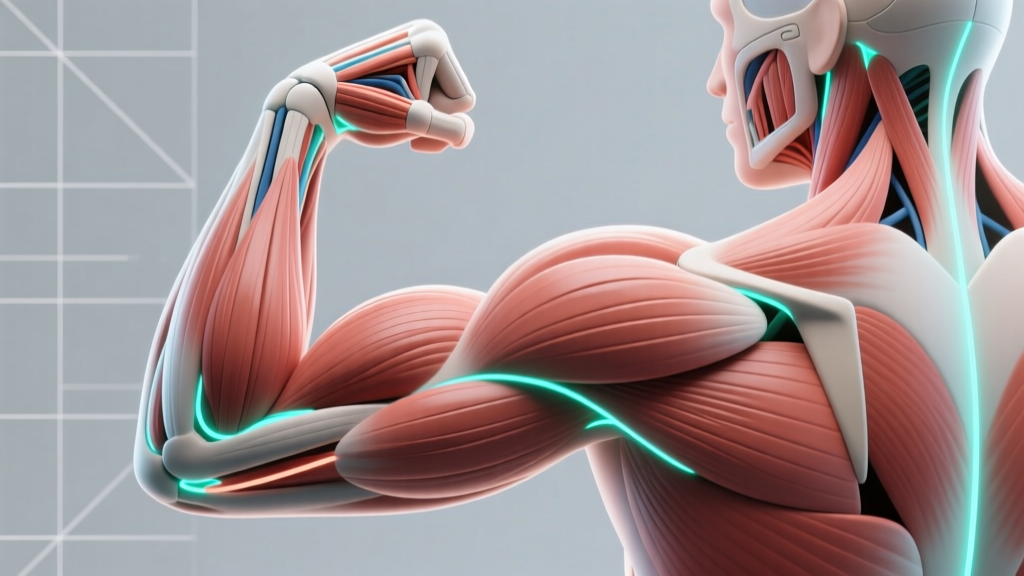
Arm wrestling primarily engages the forearm muscles, especially the pronator teres and flexor carpi ulnaris, along with significant contributions from the biceps brachii, brachioradialis, and finger flexors for grip strength and force generation.
The Primary Muscles Used in Arm Wrestling
Arm wrestling is a dynamic contest of strength that relies heavily on specific muscle groups to generate force, maintain control, and resist an opponent’s push. While it may appear to be a simple test of arm power, it involves a complex synergy of multiple upper-body muscles working in coordination.
Key Muscle Groups Involved
- Pronator Teres: Crucial for rotating the forearm into a pronated (palm-down) position during the match.
- Flexor Carpi Ulnaris: Assists in wrist flexion and adduction, helping stabilize the wrist under load. \li>Brachioradialis: A major elbow flexor, especially active when the forearm is in a neutral position.
- Biceps Brachii: Provides powerful supination and elbow flexion force, particularly important at the start of a match.
- Finger and Hand Flexors (e.g., Flexor Digitorum Profundus): Essential for maintaining a strong grip on the opponent’s hand.
- Deltoids and Pectorals: Stabilize shoulder position and contribute to overall body torque.
Biomechanics of Force Generation
Success in arm wrestling depends not only on raw muscle size but also on mechanical advantage and technique. Proper positioning allows athletes to maximize leverage while minimizing energy expenditure.
Common Techniques and Their Muscle Emphasis
- Hooking: Involves curling the fingers around the opponent’s hand; emphasizes finger flexors and brachioradialis.
- Top-Rolling: Uses rapid forearm pronation; heavily recruits the pronator teres.
- Shoulder Driving: Leans into the match using torso rotation; activates pectorals and anterior deltoids.
| Muscle | Primary Function | Activation Level (0–10) | Role in Arm Wrestling |
|---|---|---|---|
| Pronator Teres | Forearm Pronation | 9.5 | Critical for top-rolling technique and maintaining palm-down position |
| Flexor Carpi Ulnaris | Wrist Flexion & Adduction | 9.0 | Prevents wrist breakdown under pressure |
| Brachioradialis | Elbow Flexion (Neutral Grip) | 8.7 | Key in hooking and sustaining pull |
| Biceps Brachii | Elbow Flexion, Forearm Supination | 8.0 | Strong initial lift, especially in non-hook matches |
| Flexor Digitorum Profundus | Finger Flexion | 9.3 | Essential for grip integrity during prolonged strain |
| Anterior Deltoid | Shoulder Flexion | 7.5 | Supports forward drive and body positioning |
| Pectoralis Major | Horizontal Adduction | 7.0 | Aids in generating forward momentum |
The data shows that forearm-specific muscles such as the pronator teres and finger flexors exhibit the highest activation levels during competitive arm wrestling, surpassing even larger upper-arm muscles. This highlights the importance of targeted forearm training for performance enhancement.
Training Recommendations for Competitive Arm Wrestlers
To excel in arm wrestling, athletes must focus on both strength and endurance in the critical muscle groups identified above.
Effective Exercises by Muscle Group
- Pronator Teres: Barbell or dumbbell pronation drills with resistance bands or cables.
- Forearm Flexors: Reverse curls, wrist rollers, and fingertip grip training.
- Brachioradialis: Hammer curls and Zottman curls.
- Grip Strength: Captains of Crush grippers and towel pull-ups.
- Stabilizers: Shoulder presses and scapular stabilization exercises to support sustained posture.
Frequently Asked Questions About Arm Wrestling Muscles
What are the main muscles used in arm wrestling?
The primary muscles include the pronator teres, flexor carpi ulnaris, brachioradialis, biceps brachii, and finger flexors. These work together to produce force, stabilize the wrist, and maintain grip throughout the match.
Does arm wrestling build biceps?
While the biceps are engaged, especially during the initial phase of the match, arm wrestling primarily develops forearm and wrist flexors more than biceps size. For optimal biceps growth, dedicated resistance training is more effective.
Can weak forearms affect arm wrestling performance?
Yes, weak forearms significantly impair performance. Since the forearm muscles control grip strength and wrist stability, deficiencies here can lead to early fatigue or structural failure under pressure, even if larger muscles like the biceps are strong.
Is arm wrestling dangerous for muscles or joints?
When performed improperly or without conditioning, arm wrestling can cause injuries such as humerus fractures, ligament tears, or nerve compression. Using proper form, adequate warm-up, and progressive training reduces these risks substantially.
How can I train specifically for arm wrestling?
Train with sport-specific movements including static holds, eccentric loading, and isometric contractions. Focus on pronation strength, grip endurance, and wrist stability using tools like wrist trainers, resistance bands, and partner drills that simulate real match conditions.
More Articles
 Who Won the Super Bowl in 2024? Chiefs Beat 49ers in OT
 When Was Boxing Invented? Origins & Key Milestones
 Where Was Super Bowl 58 Held? Full Details & Results
 How Long Has John Cena Been Wrestling? Career Breakdown
 How Many D1 Baseball Teams Are There in 2025?
 Has Any Team Not Scored in the Super Bowl?
 When Is the Volleyball Season? 2025 Schedule Guide
 Wrestling Season Start Date: 2026 Schedule by Level
 How Much Do Golf Balls Weigh? Official Weight Explained
 Lions Super Bowl History: Have They Ever Made It?