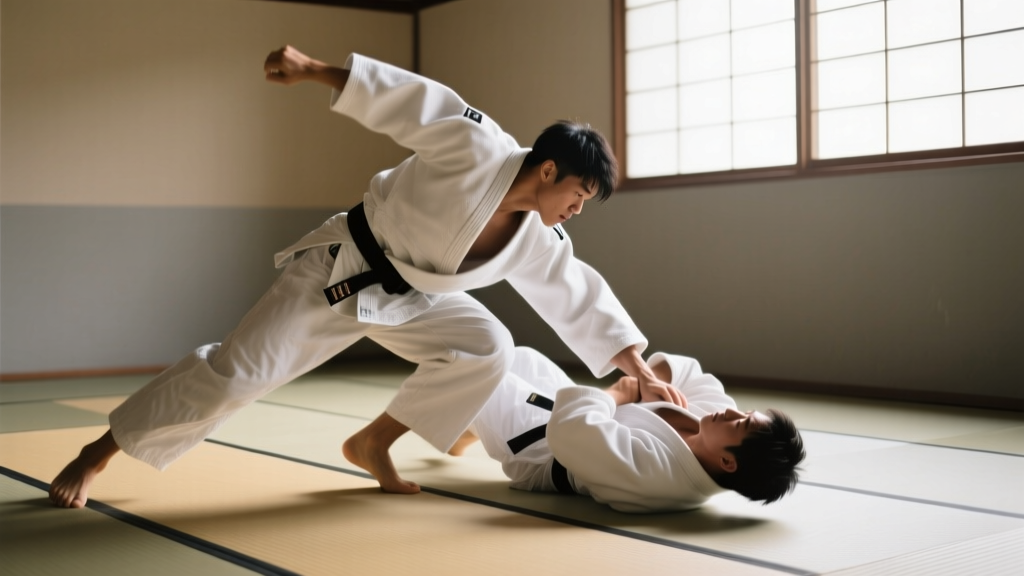
How Long to Get a Black Belt in Judo?
On average, it takes 5 to 8 years of consistent training to earn a black belt (1st dan) in judo, depending on frequency of practice, competition experience, technical proficiency, and the standards of the national or regional judo federation.
Understanding the Judo Black Belt Timeline
Earning a black belt in judo is a significant achievement that reflects not only technical mastery but also discipline, perseverance, and understanding of the sport’s principles. Unlike some martial arts with rigid time requirements, judo progression is based on skill, knowledge, and performance. The journey typically spans several years of dedicated training.
Factors That Influence Black Belt Attainment
- Training Frequency: Practicing 3–5 times per week accelerates progress.
- Competition Experience: Active competitors often advance faster due to real-time application of techniques.
- Instructor and Dojo Standards: Some schools have stricter promotion criteria than others.
- National Federation Guidelines: Organizations like USA Judo, British Judo Association, or Kodokan set minimum age and time-in-grade rules.
- Athlete Age and Physical Condition: Younger students may progress more quickly due to adaptability and recovery.
Judo Ranking System Overview
Judo uses a kyu-dan system. Beginners start with higher-numbered kyu ranks (e.g., 6th kyu) and progress toward 1st kyu, then test for 1st dan (shodan), the first black belt level. Advancement requires mastering throws, groundwork, breakfalls, and demonstrating sportsmanship.
Kyu and Dan Ranks in Judo
| Belt Color | Rank | Description |
|---|---|---|
| White | 6th kyu | Beginner level |
| Yellow | 5th kyu | Basic technique introduction |
| Orange | 4th kyu | Intermediate skills development |
| Green | 3rd kyu | Advanced kyu techniques |
| Blue | 2nd kyu | Near-black belt proficiency |
| Brown | 1st kyu | Final stage before black belt |
| Black | 1st dan | Shodan – entry-level black belt |
Typical Timeframes by Country and Organization
The time required varies significantly across countries due to differing regulations. For example, the Kodokan in Japan requires a minimum of five years from white belt to black belt, while some Western programs may allow advancement in as little as three years under exceptional circumstances.
| Country/Organization | Minimum Age for Black Belt | Average Time to 1st Dan | Notes |
|---|---|---|---|
| Japan (Kodokan) | 16 | 5–8 years | Strict technical and theoretical standards |
| United States (USA Judo) | 13 | 5–7 years | Junior black belts available at lower ages |
| United Kingdom (British Judo) | 15 | 6–8 years | Emphasis on graded syllabi and safety |
| France (FFJDA) | 15 | 5–6 years | Highly competitive national structure |
| Brazil (CBJ) | 16 | 6–9 years | Influenced by both Japanese and local standards |
Data shows that while minimum age restrictions are consistent globally, the average time to achieve a black belt ranges from 5 to 9 years. Countries with strong competitive circuits, such as France and Japan, tend to maintain higher technical expectations, contributing to longer training periods. Additionally, federations emphasizing safety and gradual development, like the UK, often see slightly extended timelines.
Accelerated vs. Traditional Paths
Some dojos offer accelerated programs for adults or athletes with prior grappling experience (e.g., wrestling, Brazilian jiu-jitsu). However, these are rare and still require adherence to federation rules regarding minimum time-in-grade between promotions.
Ways to Optimize Progression
- Train consistently at least 3 times per week
- Participate in local and regional competitions
- Study judo theory and kata (forms)
- Focus on mastering core throws (e.g., ippon seoi nage, o soto gari)
- Maintain excellent ukemi (breakfall) technique
Frequently Asked Questions About Earning a Black Belt in Judo
How long does it take to get a black belt in judo?
It typically takes 5 to 8 years of regular training to earn a black belt in judo. This timeline assumes consistent attendance, active participation in randori (sparring), and successful completion of grading requirements set by the national judo federation.
Can you get a black belt in judo faster if you train every day?
Training daily can improve skill and fitness, but most national federations enforce minimum time-in-grade requirements between belts, preventing extremely rapid advancement. Even with daily training, earning a black belt usually takes at least 5 years due to these regulatory safeguards.
Is a judo black belt harder to get than in other martial arts?
Yes, judo black belts are generally considered more difficult to achieve than in many traditional martial arts because of the emphasis on live sparring, competition, and practical effectiveness. Promotions require demonstrated ability under pressure, not just forms or kata.
What does a judo black belt test involve?
A black belt test typically includes demonstrating proficiency in nage-waza (throwing techniques), ne-waza (groundwork), kata, breakfalls, and sometimes a written or oral exam on judo history and rules. Candidates may also need competition experience or approval from senior instructors.
Do children receive full black belts in judo?
Many federations award “junior black belts” to students under 15–16, but these are provisional. Full recognition as 1st dan usually requires reaching the minimum age and meeting additional maturity and skill benchmarks.
More Articles
 How Old Is Golfer Fred Couples in 2025?
 Longest Professional Baseball Game Ever Played
 When Does LSU Play Baseball in 2025? Schedule & Game Times
 What Number Was Michael Jordan in Baseball? Answer: 45
 How Many Super Bowls Do Chiefs Have? 4 Titles Explained
 Who Owns Callaway Golf? Current Owner Revealed
 How Many Super Bowl MVPs Does Tom Brady Have?
 What Year Did Tampa Bay Win the Super Bowl?
 Where Is Rugby Most Popular? Top Countries & Stats
 Where Did Tennis Start? Origins & History Explained