How Long Is an Olympic Rugby Game? Full Timing Explained
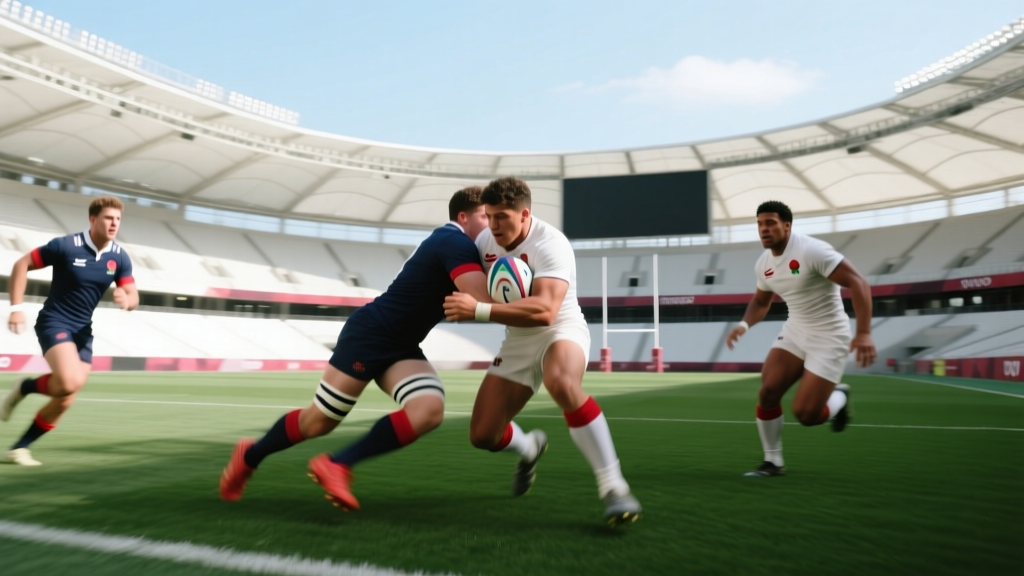
An Olympic rugby game, specifically rugby sevens, lasts 14 minutes total — two halves of 7 minutes each, with a 2-minute halftime. Medal matches extend to 10-minute halves. This fast-paced format distinguishes it from the traditional 80-minute rugby union games.
Understanding Olympic Rugby Sevens Duration
Rugby sevens is the variant played in the Olympic Games, introduced in Rio 2016. Unlike the 15-a-side rugby union seen in the World Cup, Olympic rugby features seven players per team and a significantly shorter match duration to accommodate tournament scheduling and maintain high-intensity action.
Standard Match Length
- Two halves of 7 minutes each
- Halftime break: 2 minutes
- Total playing time: 14 minutes
- Clock often stops near the end to ensure full play duration
Finals and Medal Matches
In knockout stages, particularly gold medal matches, the game length increases:
- Two halves of 10 minutes each
- Same 2-minute halftime interval
- Total: 20 minutes of regulation play
Why Is Olympic Rugby Shorter?
The abbreviated format enhances speed, fitness demands, and spectator engagement. With fewer players and less downtime, the game emphasizes open-field running, quick transitions, and scoring opportunities.
Key Factors Behind the 7-Minute Half
- Pace of Play: Higher intensity over shorter bursts
- Tournament Format: Teams may play multiple games in a single day
- Global Appeal: Compact games suit TV broadcasts and casual viewers
- Injury Management: Reduced exposure lowers physical toll during multi-day events
Comparison With Other Rugby Formats
Olympic rugby sevens differs dramatically from other forms of the sport in both structure and timing. Understanding these differences helps clarify why the Olympic version is uniquely formatted.
| Format | Players per Team | Half Duration | Total Regulation Time | Overtime Rules |
|---|---|---|---|---|
| Rugby Sevens (Olympic) | 7 | 7 min (10 min in finals) | 14 min (20 min in finals) | Sudden death: first score wins |
| Rugby Union (15s) | 15 | 40 min | 80 min | Extra time: two 10-min halves, then sudden death |
| Rugby League | 13 | 40 min | 80 min | Golden point system |
| Rugby Tens | 10 | 10–15 min | 20–30 min | Varies by tournament |
The data highlights how Olympic rugby sevens prioritizes brevity and intensity. With only 14 minutes of regulation play, teams must adapt strategies for rapid decision-making and sustained sprinting. The compressed timeline reduces recovery time between plays, increasing cardiovascular demands on athletes.
Game Clock and Stoppage Time
While each half is 7 or 10 minutes, the actual time spent on the field exceeds this due to stoppages and referee decisions.
How the Clock Works
- Clock runs continuously during regular play but can be stopped in final minutes
- Referees add time for injuries, substitutions, or video reviews
- In finals, clocks are strictly managed to ensure full 20 minutes of action
- Visible countdown clocks help players and fans track remaining time
Tournament Structure and Match Frequency
The condensed game length enables packed competition schedules. Over three days, teams may play up to six matches.
Typical Olympic Tournament Schedule
- Day 1: Pool stage – 3 matches possible
- Day 2: Quarterfinals, semifinals – 2 matches
- Day 3: Classification and medal matches – 1–2 matches
- Total potential match time: ~90 minutes across all games
Frequently Asked Questions About Olympic Rugby Game Length
How long is a women's Olympic rugby sevens match?
Identical to the men's format: 14 minutes total (two 7-minute halves) for pool and knockout games, with finals lasting 20 minutes (two 10-minute halves).
Do rugby sevens games go into overtime?
Yes. If tied at the end of regulation, teams play sudden-death extra time. The first team to score wins, regardless of point type (try, conversion, penalty).
Why are Olympic rugby games so short?
The 7-minute halves allow multiple games per day, reduce injury risk, and emphasize explosive athleticism. This format suits the Olympics' compact schedule and global broadcast needs.
Is there stoppage time in Olympic rugby?
Yes. Referees can add time for injuries, video reviews (TMO), or deliberate delays. In close games, the clock may stop during the final minute to ensure full play duration.
How does rugby sevens differ from rugby union?
Rugby sevens has 7 players per side (vs. 15), 14-minute games (vs. 80), faster restarts, and more open space. It rewards speed, agility, and endurance over set-piece strength.
More Articles
 Who Was the First Wrestler in WWE? | WWE Origins
 How Many Players Are on the Field in Baseball?
 Which City Has Hosted the Most Super Bowls?
 How Many Different Pitches Are in Baseball? 12 Explained
 How Much Is Cricket a Month? Full Cost Breakdown
 How Long Is a Boxing Match Round?
 How Much Is a Billiard Table? (2025 Prices)
 How Many Calories Does Golf Burn? (By Weight & Activity)
 How Many Pins Are in Bowling? (10-Pin Standard Explained)
 How Big Is a Baseball Field? Dimensions & Sizes by Level