How Many Players Are on the Field in Baseball?
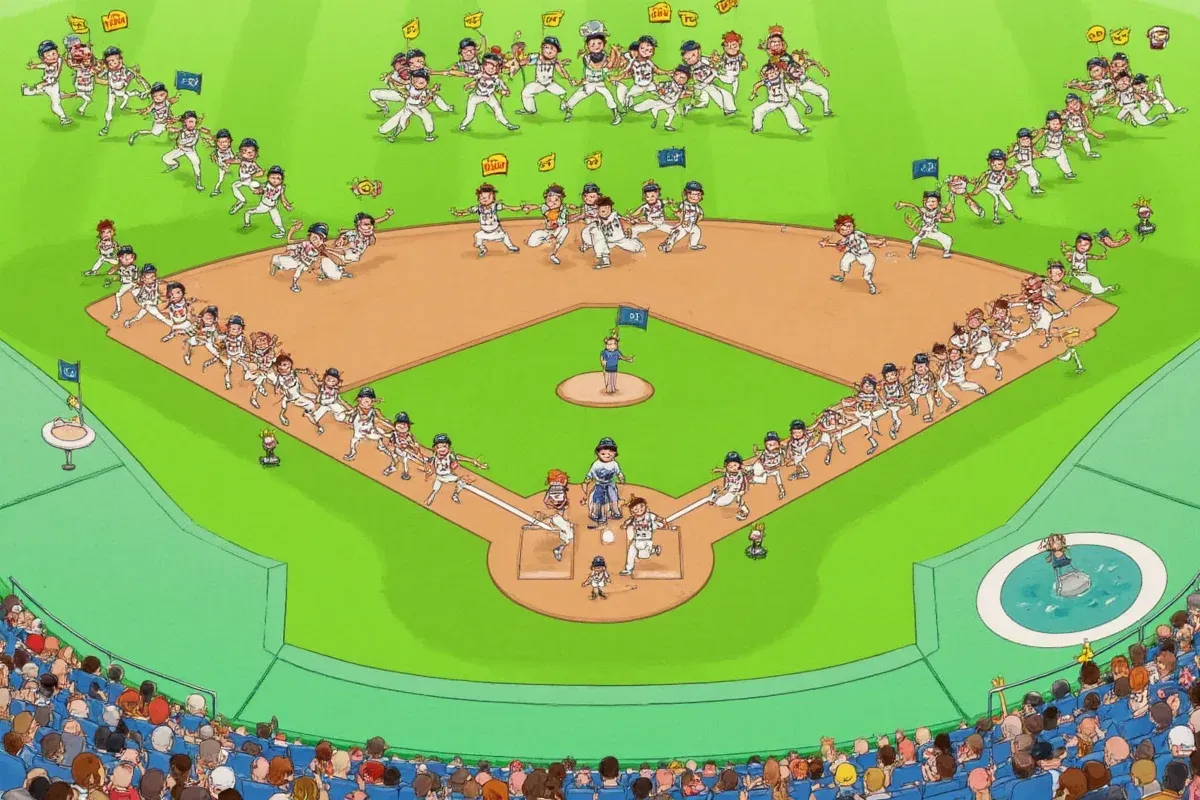
There are 9 players on the field for each team during a baseball game. This standard number applies to both Major League Baseball (MLB) and most levels of organized play, including college, high school, and youth leagues.
The 9 Standard Positions in Baseball
Each of the nine players on the field occupies a specific defensive position. These positions are strategically placed to cover all areas of the diamond and outfield.
Infield Positions
- Pitcher (1): Throws the ball from the mound to the catcher.
- Catcher (2): Receives pitches and guards home plate. \li>
- First Baseman (3): Covers first base and fields balls hit near that base.
- Second Baseman (4): Covers second base and handles grounders between first and second.
- Third Baseman (5): Defends third base, often dealing with hard-hit balls down the line.
- Shortstop (6): Positioned between second and third, typically one of the most agile defenders.
Outfield Positions
- Left Fielder (7): Covers the left portion of the outfield.
- Center Fielder (8): The central outfielder, usually the fastest player, covering the largest area.
- Right Fielder (9): Handles the right side of the outfield, often with a strong throwing arm to prevent runners from advancing.
Variations in Player Count by Level of Play
While nine is the standard, some youth or recreational leagues may use modified rules. For example, Little League sometimes allows extra players such as a designated hitter (DH) or even an additional outfielder in certain divisions, but only 9 are on the field at once.
| League/Level | Players on Field per Team | Notes |
|---|---|---|
| MLB | 9 | Standard rules, DH used in AL |
| NCAA College Baseball | 9 | DH rule commonly used |
| High School (NFHS) | 9 | Some flexibility in substitution |
| Little League (Ages 9–12) | 9 | Occasionally 10 with extra hitter, but only 9 field |
| Softball (Fastpitch) | 9 | Same structure, different field dimensions |
The data confirms that across all major levels of competition, nine players per team on the field is the universal standard. Variations in rules, such as the designated hitter, affect batting order but not the number of players actively defending at any time.
Why Nine Players? Historical and Strategic Context
The origin of nine players dates back to the early formation of baseball rules in the 19th century. The Knickerbocker Rules of 1845 formalized the game's structure, and nine players became standard by 1857. The number balances offensive action with defensive coverage, ensuring enough fielders to manage the diamond and outfield without overcrowding.
Frequently Asked Questions About Baseball Players on the Field
How many players are on the field in a baseball game?
There are 9 players on the field for each team during a baseball game, making 18 players total on the field at once.
Can a baseball team play with fewer than 9 players?
Yes, though rare, a team can continue with fewer than 9 due to injuries or ejections, but must forfeit if unable to field at least 9 total players including substitutes.
Does the designated hitter count as a player on the field?
No, the designated hitter bats in place of the pitcher but does not play a defensive position, so they are not on the field during defense.
Are there ever more than 9 players on the field in baseball?
No, only 9 defensive players from each team are allowed on the field at one time. Extra players like coaches or batboys are not considered active participants.
How many players are on a baseball roster during a game?
In MLB, teams can have up to 26 active roster players during a game (as of 2025), but only 9 are on the field at any given moment.
More Articles
 How Many Red Belts Are There in BJJ? (2025 Data)
 What Age Is Little League Baseball For?
 How Long Is a Volleyball Game? Match Duration Explained
 Who Buys Used Golf Clubs Near Me? Top Buyers & Values
 Super Bowl 2025 Time in California: Kickoff at 3:30 PM PT
 Where to Watch MMA Fights Live & On-Demand (2025)
 How Much Does a Pro Volleyball Player Earn? (2025 Data)
 Super Bowl Start Time: What Time Does the Game Begin?
 How Long Are Baseball Games? Average Duration Explained
 NFL Teams That Have Never Been to the Super Bowl