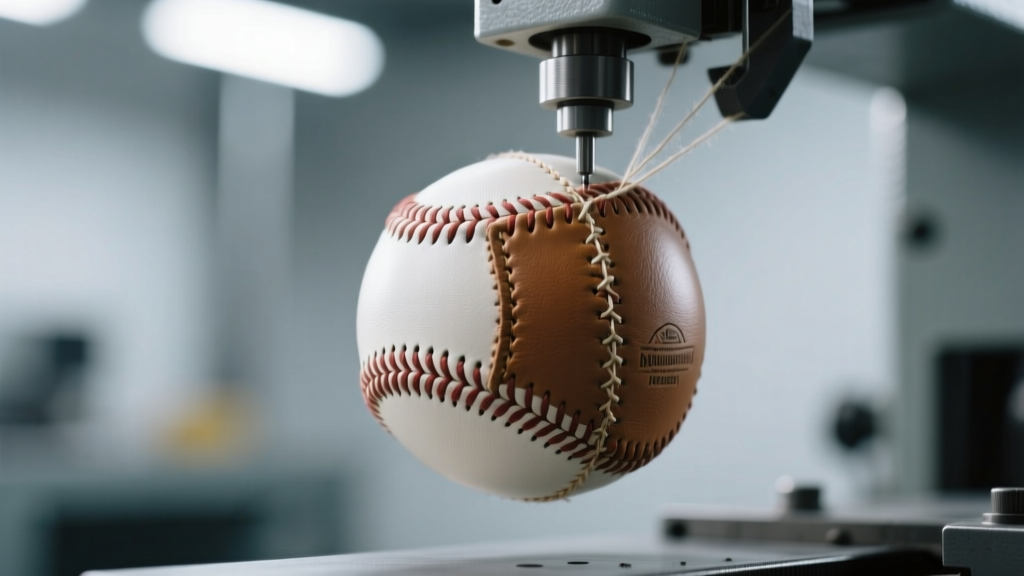
How Baseballs Are Manufactured: Inside the Process
Baseballs are manufactured through a precise, multi-layered process involving a cork center, rubber coatings, wool and cotton yarn windings, and a leather cover stitched by hand, ensuring consistency and performance for professional play.
How Baseballs Are Made: A Step-by-Step Breakdown
The manufacturing of a baseball is a highly standardized process designed to meet strict specifications set by Major League Baseball (MLB). Each ball must maintain uniform weight, size, and resilience to ensure fair and consistent gameplay.
Core Construction
The core of a baseball begins with a small sphere made of cork. This cork center is then coated with two layers of rubber—first a black rubber layer, followed by a red rubber layer—to provide bounce and structural integrity.
- Cork center: approximately 0.75 inches in diameter
- Black rubber coating: adds durability and rebound
- Red rubber coating: enhances liveliness and compression response
Yarn Windings
After the rubberized core is formed, it undergoes multiple layers of winding using different types of wool and cotton yarn. These layers are critical for shock absorption and maintaining shape during high-impact use.
- First layer: tight wool winding for elasticity
- Second layer: alternating wool blends for firmness
- Final layer: cotton winding to secure the base for stitching
Leather Covering and Stitching
The outer shell consists of two figure-eight shaped pieces of premium cowhide leather, cut and molded around the wound core. The pieces are sewn together with 108 stitches of red waxed thread, done entirely by hand to ensure precision.
- Leather type: U.S.-sourced cowhide, tanned for durability and grip
- Stitch count: exactly 108 double stitches (216 needle punctures)
- Stitching method: hand-stitched using a saddle stitch technique
Materials and Specifications Behind MLB Baseballs
Major League Baseball enforces rigorous standards on ball construction. Every batch is tested for coefficient of restitution (COR), circumference, weight, and seam height to ensure compliance.
| Property | Specification | Tolerance |
|---|---|---|
| Diameter | 2.86–2.94 inches (7.26–7.47 cm) | ±0.04 in |
| Circumference | 9.00–9.25 inches (22.9–23.5 cm) | ±0.125 in |
| Weight | 5.00–5.25 oz (142–149 g) | ±0.125 oz |
| Seam Height | 0.041–0.050 inches | ±0.005 in |
| Compression Test (COR) | Rebounds 54–58% of drop height | ±2% variation |
The data shows that MLB baseballs are engineered within extremely tight tolerances. Consistency in seam height and weight directly affects pitch movement and batter performance, making manufacturing precision essential for competitive fairness.
Manufacturing Locations and Quality Control
Rawlings, the official supplier of MLB baseballs since 1977, produces game balls at its factory in Costa Rica. Each ball is inspected multiple times during production, and random samples undergo lab testing for performance metrics.
- All MLB baseballs are handcrafted by skilled artisans
- Each ball takes about 15 minutes to stitch by hand
- Approximately 100 quality checks occur per ball during production
- Balls rejected for minor flaws are used in minor leagues or practice settings
Frequently Asked Questions About How Baseballs Are Manufactured
How many stitches are on a major league baseball?
A major league baseball has exactly 108 double stitches, resulting in 216 individual needle punctures. These are sewn by hand using red waxed thread for durability and visibility.
What materials are used to make a baseball?
A baseball consists of a cork center, two layers of rubber (black and red), wool and cotton yarn windings, and a cowhide leather cover. The thread used for stitching is waxed polyester or cotton.
Who manufactures official MLB baseballs?
Rawlings Sporting Goods has been the exclusive manufacturer of official MLB baseballs since 1977. Production occurs at their facility in Costa Rica under strict supervision.
Why are baseballs hand-stitched instead of machine-made?
Hand-stitching ensures even tension and superior control over seam consistency, which is crucial for pitcher grip and ball aerodynamics. Machines cannot replicate the precision required for professional play.
How long does a baseball last in a game?
An average baseball lasts only a few pitches in an MLB game—typically less than six. Balls are replaced frequently due to scuffs, dirt, or home runs to maintain visibility and fairness.
More Articles
 Who Was the First Wrestler in WWE? | WWE Origins
 How Much Is It to Bowl at Main Event?
 Who Played in the Super Bowl in 2007? Full Breakdown
 Super Bowl MVP: Winners, History & Voting Process
 Broncos Super Bowl Wins: 3 Titles Explained
 When Were Tennis Shoes Invented? The Complete History
 Oldest MLB Player Ever: Records & Longevity Facts
 DIY Archery Target: Build a Durable Practice Setup
 What Year Did Colts Win Super Bowl? Answer & Details
 How Tall Is a Badminton Net? Official Height Explained