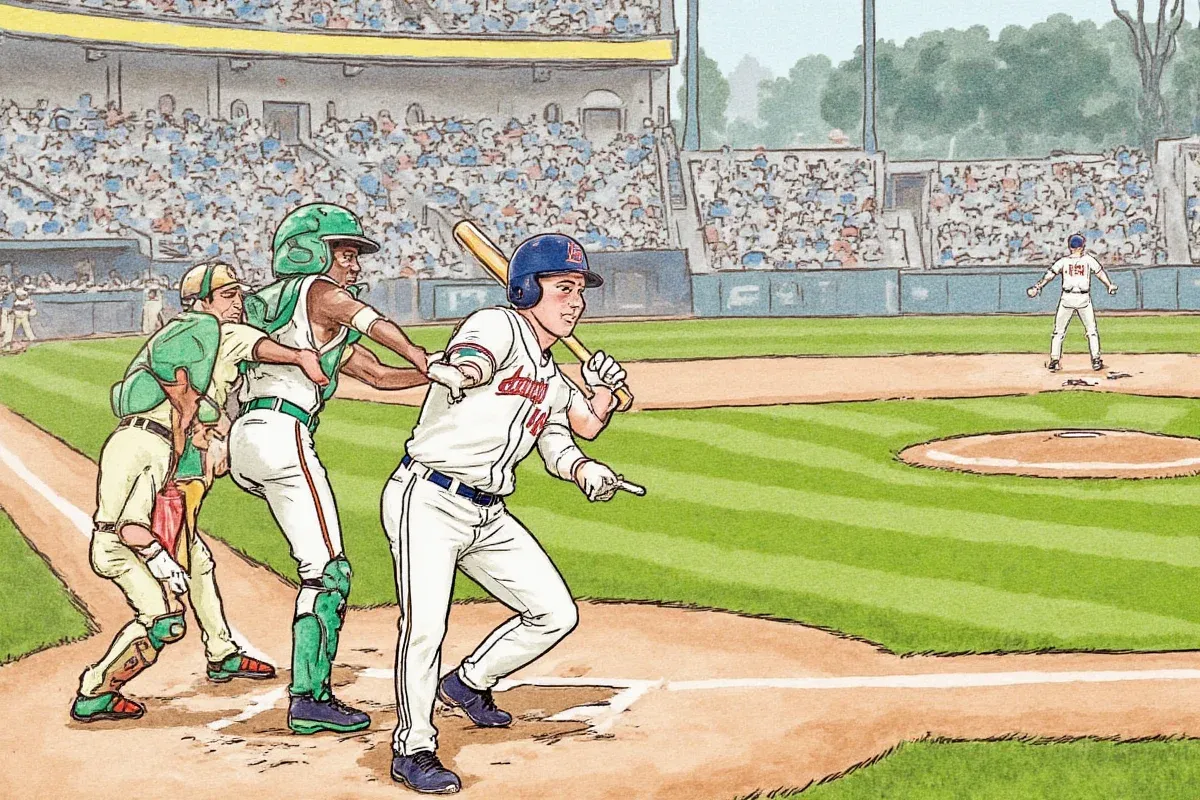
Who Bats First in Baseball? Explained with Data
In baseball, the visiting team bats first in each inning, while the home team bats second. This structure gives the home team a strategic advantage by allowing them to respond to the visiting team's performance in the final inning.
Understanding the Order of Play in Baseball
Baseball follows a structured turn-based system where two teams alternate between batting and fielding across nine innings. The team listed as the visitor in the official lineup bats during the top half of each inning, while the home team bats during the bottom half.
Why the Visiting Team Bats First
- The tradition dates back to early organized baseball in the 19th century.
- It provides a built-in advantage to the home team, which can react last in close games.
- Home-field advantage includes familiarity with the park, crowd support, and batting last.
Strategic Implications of Batting Order
Batting first does not imply a disadvantage per se, but statistically, the home team wins slightly more often due to late-inning pressure and tactical flexibility.
Key Advantages for the Home Team
- They know exactly how many runs they need to win or tie in the final at-bat.
- No need to bat in the bottom of the ninth if leading.
- Pitching changes and defensive shifts can be optimized based on the visiting team’s actions.
| Season | Home Team Win % | Total Games | Average Runs (Home) | Average Runs (Visitor) |
|---|---|---|---|---|
| 2021 | 53.8% | 2,430 | 4.72 | 4.21 |
| 2022 | 54.1% | 2,430 | 4.81 | 4.26 |
| 2023 | 53.6% | 2,430 | 4.75 | 4.23 |
| 2024 | 53.9% | 2,430 | 4.79 | 4.25 |
The data shows that home teams win approximately 53.6% to 54.1% of games annually, indicating a consistent advantage. They also score more runs on average, likely due to batting last and maintaining offensive momentum in critical situations.
Common Rules and Exceptions
While the visiting team always bats first, there are rare exceptions such as neutral-site games (e.g., World Series games hosted at predetermined locations) or international play, where pre-game agreements may alter traditional roles. However, even in these cases, one team is designated as the 'home' team for scoring purposes.
Frequently Asked Questions About Who Bats First in Baseball
Does the home team always bat last?
Yes, the home team always bats in the bottom half of each inning, meaning they bat second in every inning, including the ninth or extra innings.
Can the visiting team have the last at-bat?
Only if the home team is ahead after the top of the ninth inning. In that case, the bottom half is not played, so the visiting team technically has the last at-bat in the eighth or earlier.
Why doesn’t the home team bat first to set the pace?
Batting last offers a competitive edge, especially in tight games. Knowing the exact number of runs needed in the final inning allows for better strategic decisions, such as bunting or stealing bases.
Is batting first a disadvantage?
Statistically, yes—home teams win more often. However, other factors like pitching strength, defense, and ballpark dimensions play larger roles than batting order alone.
How is the home team determined in playoffs or neutral sites?
In postseason games, home-field advantage alternates or is determined by regular-season records or league-specific rules (e.g., All-Star Game result in past years). For neutral sites, a coin toss or prearranged agreement assigns home and visitor roles.
More Articles
 How Old Is Djokovic the Tennis Player in 2025?
 Did Troy Aikman Win a Super Bowl? Yes, 3 Times
 Highest Belt in Taekwondo: 9th-Degree Black Belt Explained
 LSU Baseball Today: Live Stream & TV (2026)
 Why Are Golf Clubs So Expensive? Explained
 How Long Is an Inning in Baseball? Time & Factors Explained
 How Many Super Bowl Rings Does Eli Manning Have?
 How Many Overs in T20 World Cup? Full Breakdown
 How Much Does It Cost to Open a Bowling Alley?
 When Does Golf Season Start? By Region & Skill Level