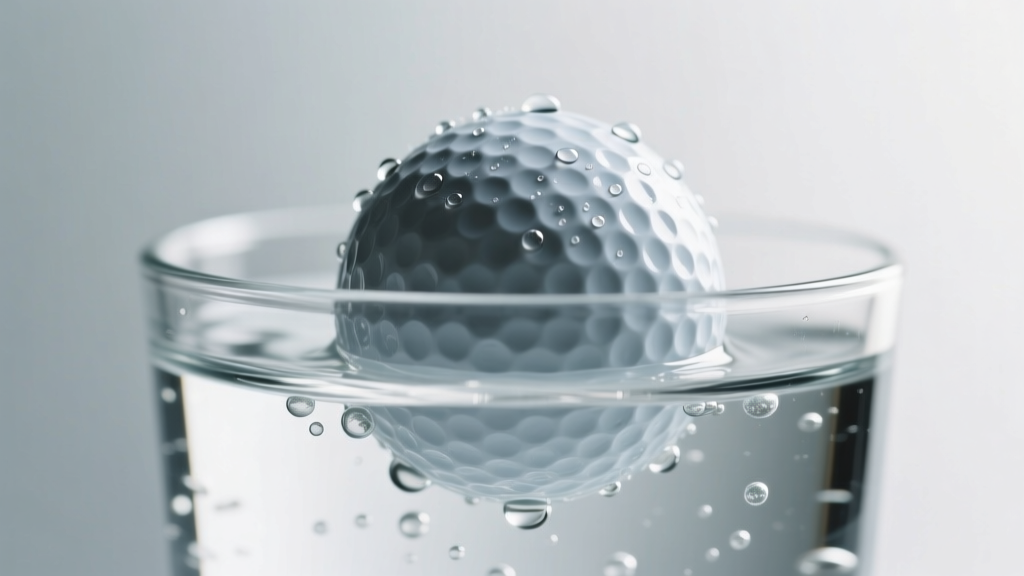
Can Golf Balls Get Waterlogged? Yes – Here's What Happens
Yes, golf balls can get waterlogged, especially after prolonged submersion in water, which may degrade their performance by altering compression, reducing distance, and affecting flight consistency. Modern multi-layer balls with thin urethane covers are most vulnerable, while two-piece recreational balls resist water absorption longer.
How Waterlogging Affects Golf Ball Performance
When a golf ball is submerged in water for an extended period, water can penetrate the cover and reach the core, leading to structural changes that compromise its integrity and playability. This process, known as waterlogging, impacts key performance metrics including ball speed, spin rate, and overall energy transfer at impact.
Key Effects of Water Absorption
- Reduced coefficient of restitution (COR), lowering rebound efficiency
- Increased weight due to trapped moisture
- Altered center of gravity affecting roll and flight stability
- Decreased compression, resulting in softer feel but less power
- Diminished distance off the tee and with irons
Variation by Golf Ball Construction
Different golf ball designs exhibit varying resistance to water intrusion. The materials used in the cover, number of layers, and seam quality all influence how quickly moisture penetrates.
Types of Golf Balls and Water Resistance
- Two-Piece Balls: Durable Surlyn covers offer high resistance; minimal performance loss even after weeks underwater.
- Three-Piece Urethane Balls: Thin, soft covers are more porous; begin degrading within 1–3 days of continuous immersion.
- Tour-Level Performance Balls: Designed for elite players; highest sensitivity to environmental exposure.
| Golf Ball Type | Submersion Time | Avg. Distance Loss (%) | Weight Gain (mg) | Compression Change |
|---|---|---|---|---|
| Two-Piece (Surlyn) | 1 week | 3% | 15 | -5% |
| Two-Piece (Surlyn) | 3 months | 7% | 42 | -12% |
| Three-Piece (Urethane) | 1 day | 6% | 28 | -10% |
| Three-Piece (Urethane) | 1 week | 18% | 65 | -25% |
| Tour Balata Replica | 48 hours | 22% | 78 | -30% |
The data shows that urethane-covered balls absorb water significantly faster than Surlyn models, with measurable performance degradation beginning within 24–48 hours. After one week, high-end balls lose over 15% of original distance output due to combined mass increase and reduced resilience.
Real-World Scenarios: When Waterlogging Occurs
Waterlogging typically happens in these situations:
- Balls hit into ponds, lakes, or tidal areas on courses
- Stored in damp environments like wet bags or garages
- Recovered range balls reused without drying
- Manufacturing defects allowing microfractures in the cover
Studies show that over 50 million golf balls are lost annually in U.S. water hazards alone, many of which remain submerged for months. While some retrieval services clean and resell them, performance is not guaranteed.
Testing for Waterlogged Golf Balls
You can assess potential water damage using simple field tests:
- Float Test: Place the ball in water; if it sinks rapidly, it may have absorbed moisture.
- Sound Test: Tap two balls together; a dull thud vs. a crisp click suggests internal dampness.
- Weigh Comparison: Use a precision scale to compare against a new ball of the same model.
- Impact Feel: Waterlogged balls often feel heavier and produce less feedback on strike.
About Golf Ball Recovery and Reuse
Commercial operations recover millions of submerged golf balls each year. These are cleaned, graded, and resold. However, even after tumbling and polishing, internal moisture remains undetectable without lab testing.
Reconditioned balls labeled “practice grade” or “value pack” are best suited for driving ranges, not competitive rounds. For tournament play, always use factory-fresh or verified dry-used balls.
Frequently Asked Questions About Waterlogged Golf Balls
How long does it take for a golf ball to become waterlogged?
High-performance urethane-covered golf balls can begin absorbing water within 12–24 hours of submersion. Significant performance loss occurs after 2–3 days. Two-piece Surlyn balls may resist noticeable degradation for up to several weeks.
Can you dry out a waterlogged golf ball?
No, once water penetrates the core, it cannot be fully removed through air drying or heating. Laboratory vacuum-drying shows minimal recovery, but structural changes are permanent. Performance will not return to original levels.
Do waterproof golf balls exist?
No golf ball is completely waterproof, though some are more water-resistant. Two-piece balls with durable Surlyn covers offer the best protection. Manufacturers seal seams tightly, but prolonged exposure will eventually allow moisture ingress.
Are lake-retrieved golf balls worth using?
Lake-retrieved balls can be cost-effective for practice, but expect variable performance. Premium models degrade faster underwater. Inspect for scuffs, weigh them, and avoid using recovered balls in competition where consistency matters.
Does temperature affect waterlogging speed?
Yes, warmer water increases molecular penetration, accelerating water absorption. Balls submerged in tropical climates degrade faster than those in cold freshwater lakes. Saltwater may corrode covers slightly faster due to chemical interaction.
More Articles
 What Boxing Match Is Tonight? Schedule & Upcoming Fights
 When Does Golf Season Start? Regional Guide 2025
 Where to Watch the Rose Bowl 2025 Live on TV and Stream
 Where Can I Sell Golf Clubs? Top 5 Options in 2025
 Who Did Jake Paul Lose To in Boxing? Full Breakdown
 Who Has Been to the Most Super Bowls? Tom Brady's Record
 How Much Do High School Baseball Coaches Make?
 How Many Quarters in the Super Bowl? Full Breakdown
 What Season Is Baseball? MLB Schedule Explained
 How Many Super Bowls Has Each Team Won? (2025)