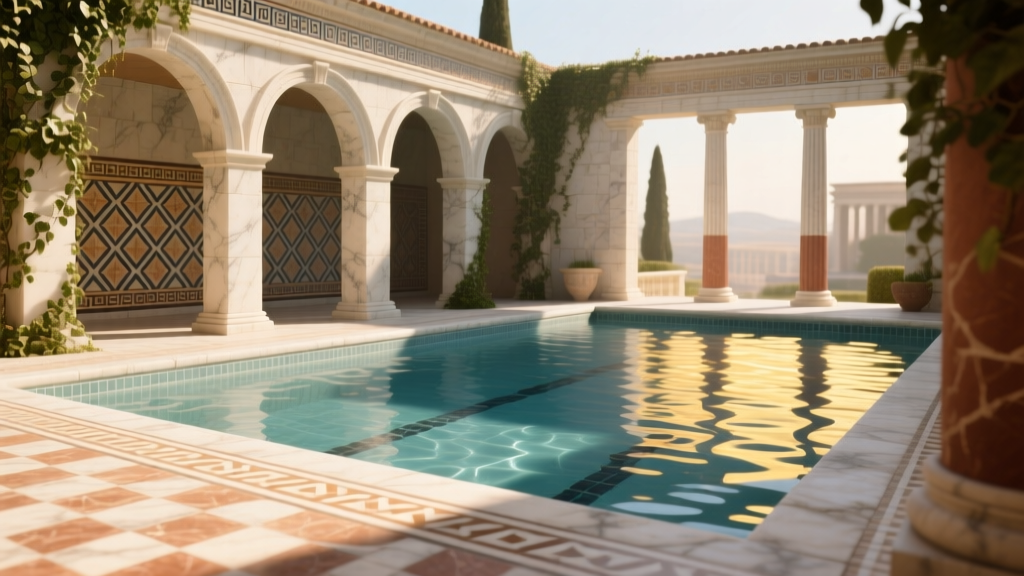
Who Invented the Swimming Pool? Ancient Origins Revealed
Invented by the ancient civilizations of the Indus Valley around 2600 BCE, the first known swimming pool—the Great Bath of Mohenjo-Daro—is recognized as the earliest public water tank designed for ritual bathing and communal use, marking the origin of engineered swimming pools.
The Origins of Swimming Pools: A Historical Overview
The concept of a swimming pool dates back over 4,000 years. The earliest known example is the Great Bath of Mohenjo-Daro, located in present-day Pakistan. Built around 2600 BCE during the Indus Valley Civilization, this structure is considered the world's first purpose-built water tank used for ceremonial and social purposes, laying the foundation for modern swimming pools.
Why Was the First Pool Built?
- To serve religious or spiritual purification rituals
- To provide a communal space for social gatherings
- To demonstrate advanced urban planning and water management
Evolution of Swimming Pools Through History
After the decline of the Indus Valley Civilization, other cultures adopted and refined the idea of constructed water basins for recreation, hygiene, and sport.
Ancient Civilizations and Early Water Structures
Civilizations such as the Greeks and Romans expanded on the concept:
- Greeks: Used natural bodies of water; later built training pools for athletes
- Romans: Constructed elaborate public baths (thermae) with heated pools, showcasing engineering prowess
- Mayans: Had ceremonial pools integrated into temple complexes
Modern Innovations in Pool Design
The 19th and 20th centuries saw rapid advancements in sanitation, filtration, and construction techniques that transformed swimming pools into recreational and competitive facilities.
Key Developments in Modern Pool Technology
- 1837 – First public indoor municipal swimming pool opens in London (St. George's Baths)
- 1924 – Olympic-sized pools standardized at 50 meters by FINA
- 1950s – Fiberglass and vinyl-lined pools become affordable for residential use
- 2000s – Energy-efficient pumps, saltwater chlorination, and smart controls dominate
| Civilization/Period | Year | Location | Purpose | Notable Feature |
|---|---|---|---|---|
| Indus Valley | 2600 BCE | Mohenjo-Daro, Pakistan | Ritual bathing | Watertight brick lining, drainage system |
| Roman Empire | 1st century CE | Rome, Italy | Public hygiene, leisure | Hypocaust heating, marble tiling |
| Victorian Era | 1837 | London, UK | Municipal recreation | First indoor public pool |
| Olympic Standard | 1924 | Paris, France | Competition | 50m length, 8 lanes |
| Modern Residential | 2020 | Global | Recreation, fitness | Smart automation, energy efficiency |
The data highlights how swimming pools evolved from sacred structures to standardized competition venues and widespread residential amenities. Notably, technological innovation accelerated after the 19th century, coinciding with urbanization and public health reforms.
Frequently Asked Questions About Who Invented the Swimming Pool
Who invented the first swimming pool?
The first known swimming pool was built by the Indus Valley Civilization around 2600 BCE in Mohenjo-Daro (modern-day Pakistan). It is called the Great Bath and is considered the earliest engineered public water tank used for ritual and communal purposes.
When was the first modern swimming pool built?
The first modern indoor public swimming pool opened in 1837 in London, known as St. George's Baths. It marked the beginning of regulated, hygienic swimming environments accessible to the public.
Did the Romans invent swimming pools?
No, the Romans did not invent swimming pools, but they significantly advanced their design. Roman thermae (public baths) featured large heated pools for socializing and hygiene, influencing later European bathhouse culture.
How did swimming pools become popular in homes?
Swimming pools became popular in residential settings in the 1950s and 1960s, especially in the United States. Advances in construction materials like fiberglass and vinyl liners, along with suburban expansion, made backyard pools more affordable and desirable.
What role did the Olympics play in standardizing swimming pools?
The Olympics played a crucial role in standardizing pool dimensions. Since the 1924 Paris Games, FINA has required Olympic competition pools to be 50 meters long, 25 meters wide, and at least 2 meters deep, with eight lanes—setting the global benchmark for competitive swimming.
More Articles
 How Long to Jump Rope for Cardio: Optimal Duration
 What Muscles Does a Rower Work? Full-Body Breakdown
 How Many Calories Does Ice Skating Burn?
 How Fast Can a Jet Ski Go? Top Speeds Revealed
 What to Wear at a Rock Climbing Gym
 How Much Is Ice Skating? Full Cost Breakdown 2025
 Which Florida Springs Can I Swim In? Top 6 Spots
 Where to Buy Swim Goggles: Best Online & In-Store Options
 How Fast Do F1 Cars Go? Top Speed & Acceleration Explained
 How Many Hurdles in the 100m Hurdles? 10 Explained