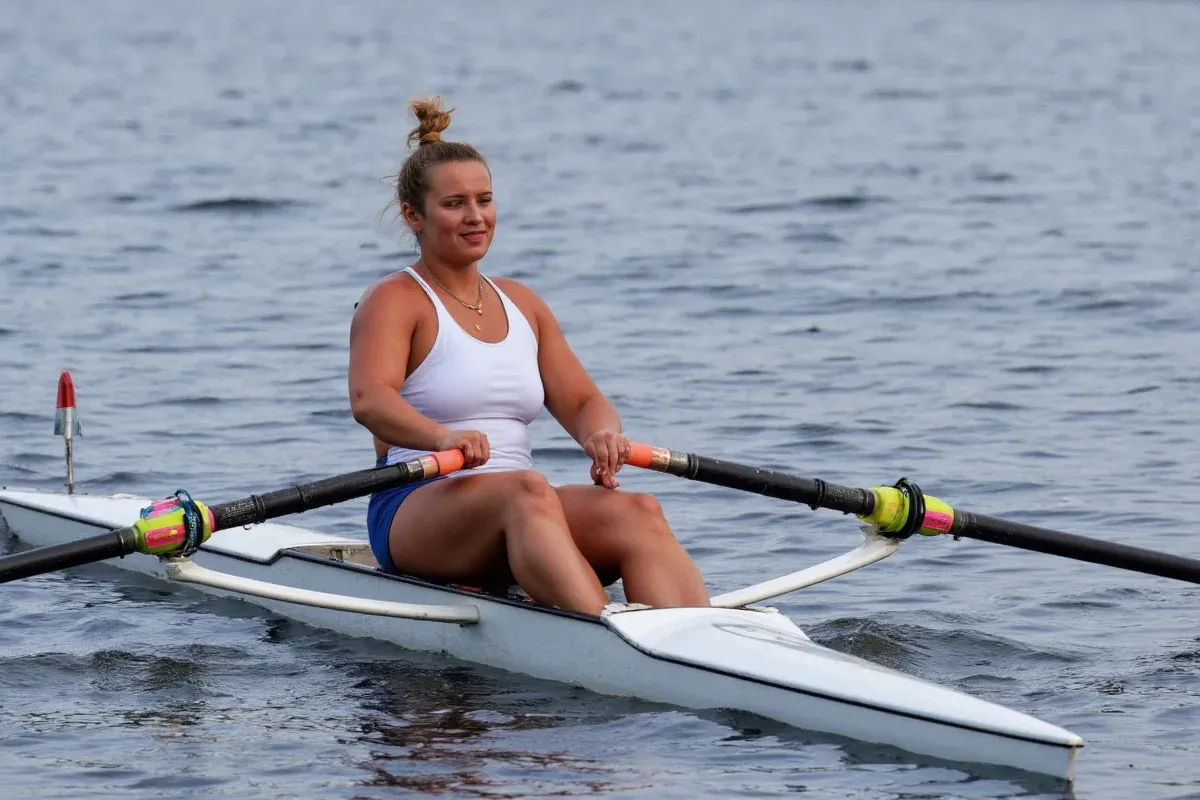
What Muscles Does a Rower Work? Full-Body Breakdown
A rowing machine provides a full-body workout, engaging approximately 86% of the body's major muscle groups. The primary muscles worked include the latissimus dorsi, rhomboids, trapezius, quadriceps, hamstrings, glutes, core stabilizers, and biceps, with power generation distributed as 60% lower body, 20% core, and 20% upper body.
The Biomechanics of Rowing: How Muscles Work Together
Rowing is a compound exercise that follows a four-phase stroke cycle: catch, drive, finish, and recovery. Each phase activates specific muscle groups in a coordinated sequence to maximize efficiency and power output.
Primary Muscle Groups Activated During Rowing
- Quadriceps and Hamstrings: Drive phase propulsion from the legs
- Gluteus Maximus: Hip extension during the drive
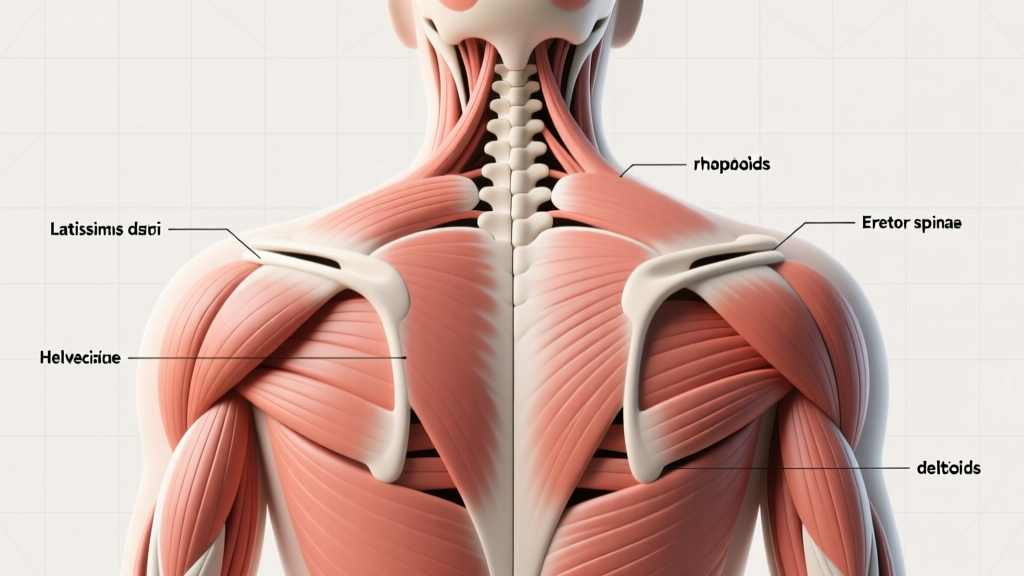
- Latissimus Dorsi: Back engagement for arm pull and torso stabilization
- Rhomboids and Trapezius: Scapular retraction and upper back strength
- Erector Spinae: Spinal stabilization throughout the stroke
- Abdominals (Rectus Abdominis & Obliques): Core stability and posture control
- Biceps Brachii: Arm flexion during the finish phase
Muscle Activation by Stroke Phase
Different phases of the rowing stroke emphasize distinct muscular contributions. Understanding this helps optimize form and training focus.
Catch Phase
In this starting position, muscles are preloaded. Key engaged muscles include:
- Quadriceps (eccentric contraction)
- Hamstrings (lengthened, ready for activation)
- Tibialis anterior (ankle dorsiflexion)
- Latissimus dorsi (pre-tensioned)
Drive Phase
This is the most powerful part of the stroke. Leg drive initiates movement, followed by hip extension and arm pull.
- Glutes and quads generate initial force
- Core muscles stabilize the spine
- Lats and rhomboids engage as arms pull toward the torso
Finish Phase
At full handle pull, the back and arm muscles peak in activation.
- Biceps reach maximum contraction
- Rhomboids retract scapulae
- Lower abs prevent hyperextension
Recovery Phase
Muscles lengthen in controlled motion. Eccentric loading prepares for next stroke.
- Hamstrings lengthen under tension
- Core maintains postural control
- Deltoids assist in forward reach
Comprehensive Muscle Engagement Table
| Muscle Group | Activation Level (%) | Primary Role | Stroke Phase Peak |
|---|---|---|---|
| Quadriceps | 95 | Leg drive initiation | Drive |
| Gluteus Maximus | 90 | Hip extension | Drive |
| Latissimus Dorsi | 88 | Arm pull, back power | Finish |
| Rhomboids | 85 | Scapular retraction | Finish |
| Hamstrings | 80 | Knee flexion, eccentric control | Recovery |
| Rectus Abdominis | 75 | Core stability | All phases |
| Biceps Brachii | 70 | Elbow flexion | Finish |
| Erector Spinae | 78 | Spinal support | All phases |
The data shows that lower body muscles contribute the highest activation levels during rowing, particularly the quadriceps and glutes. However, sustained engagement of back and core muscles across all phases highlights rowing’s effectiveness for integrated strength training. Upper body muscles like biceps show moderate but critical peak activation at the finish.
Frequently Asked Questions About Muscles Worked in Rowing
Does rowing work your abs?
Yes, rowing strongly engages the rectus abdominis and obliques to stabilize the torso during each stroke. While not a direct crunch motion, the constant postural demand creates isometric core activation throughout the workout.
Is rowing good for building back muscles?
Absolutely. The latissimus dorsi, rhomboids, and trapezius are heavily recruited during the drive and finish phases. Consistent rowing can improve back strength, posture, and muscular endurance, especially when proper form emphasizes scapular retraction.
Do rowing machines build leg muscles?
Yes. Up to 60% of the power in a rowing stroke comes from the legs. The quadriceps, hamstrings, and glutes experience significant resistance, making rowing an effective low-impact way to build lower body strength and endurance.
Can you get ripped from just rowing?
Rowing contributes significantly to muscle tone and fat loss due to its high caloric burn and full-body engagement. However, achieving a 'ripped' appearance typically requires combining rowing with resistance training and proper nutrition to maximize muscle hypertrophy and definition.
Why do my arms hurt when I row?
Arm pain during rowing often results from improper technique—specifically pulling too much with the arms instead of driving through the legs first. Over-gripping the handle or initiating the stroke with the upper body can strain biceps and forearms. Focus on sequencing: legs, then hips, then arms.
More Articles
 Where Can You Go Bungee Jumping? Top Spots Worldwide
 How Fast Do MotoGP Bikes Go? Top Speeds & Records
 Where to Buy a Go-Kart: Best Options in 2025
 Who Created Water Polo? The True Origin Story
 How Many Laps in a Formula 1 Race? Full Breakdown
 Bungee Jumping Safety: 1 in 500,000 Death Rate (2026)
 Who Invented Ice Hockey? The True Origin Story
 Field Hockey Match Duration: Official Times (2026)
 What Muscles Do Rows Work? Back Anatomy Explained
 How Much Is a Formula 1 Car? Full Cost Breakdown 2025