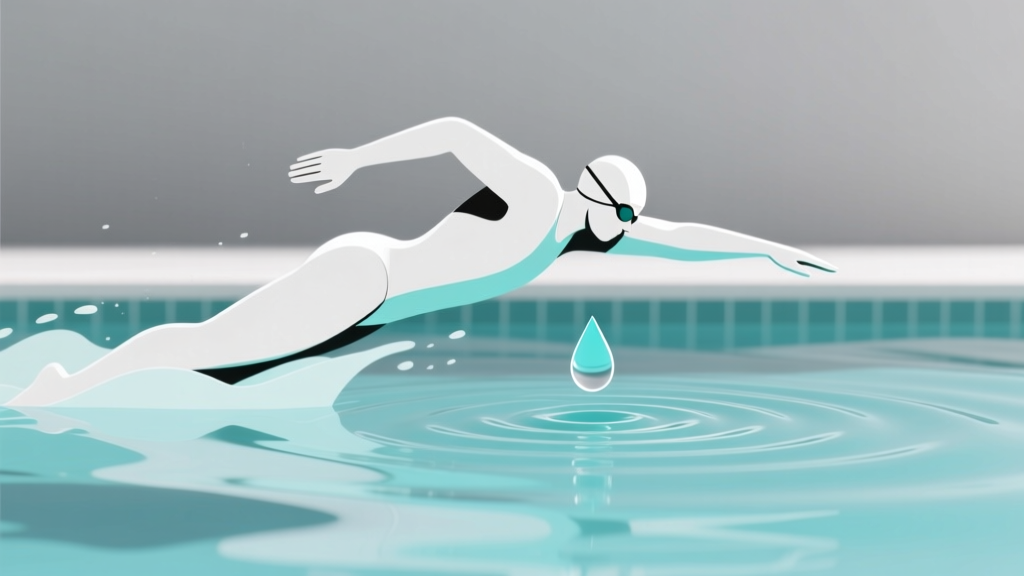
What Does IM Mean in Swimming? Explained
IM in swimming stands for Individual Medley, a race format where a single swimmer completes all four competitive strokes in the following order: butterfly, backstroke, breaststroke, and freestyle. IM events test a swimmer’s versatility, technique, and endurance across all disciplines.
What Is Individual Medley (IM) in Swimming?
The term IM in swimming refers to the Individual Medley, one of the most challenging and comprehensive events in competitive swimming. Unlike medley relays, where each swimmer performs one stroke, IM requires one athlete to swim all four strokes in a single race.
Key Features of IM Events
- Swum by a single athlete
- Four strokes performed in fixed sequence: butterfly, backstroke, breaststroke, freestyle
- Equal distances for each stroke (e.g., in a 400m IM, each stroke is 100m)
- Strict technical rules govern turns and stroke transitions
Common IM Race Distances
IM races are offered in various lengths depending on the competition level and pool size. The most common include:
- 100-yard/meter IM (typically youth or short course)
- 200-yard/meter IM
- 400-yard/meter IM (most demanding)
The 400 IM is considered a hallmark event, testing both technical skill and aerobic capacity.
Rules and Stroke Order in IM
Understanding the what does IM mean in swimming question also involves knowing the official stroke sequence and rules enforced by FINA (Fédération Internationale de Natation).
Mandatory Stroke Order
- Butterfly
- Backstroke
- Breaststroke
- Freestyle (must not be butterfly, backstroke, or breaststroke)
Each stroke must be completed for one-fourth of the total race distance. Swimmers must adhere to the technical rules of each stroke, including turn regulations and underwater phases.
IM vs. Medley Relay: Key Differences
While both involve all four strokes, there are critical distinctions:
| Feature | Individual Medley (IM) | Medley Relay |
|---|---|---|
| Number of Swimmers | 1 | 4 |
| Stroke Order | Butterfly, Backstroke, Breaststroke, Freestyle | Backstroke, Breaststroke, Butterfly, Freestyle |
| Event Examples | 200 IM, 400 IM | 4x100 Medley Relay |
| Governing Body | FINA, NCAA, USA Swimming | FINA, NCAA, USA Swimming |
The table highlights that while both events use all four strokes, the IM places greater demand on individual adaptability. Notably, the medley relay starts with backstroke to allow the first swimmer to push off from the wall, unlike IM which begins with butterfly from the starting block.
Top Performers in IM Events
Elite swimmers who excel in IM events often have exceptional technical mastery across all strokes. Recent standout performers include:
- Leon Marchand (France): World record holder in 400m IM (4:02.50, set in 2023)
- Katie Ledecky (USA): Competitive in 200m and 400m IM at elite levels despite being known for freestyle
- Michael Phelps (USA): Former world record holder and Olympic gold medalist in 200m and 400m IM
Marchand’s dominance in the 400 IM showcases how modern training emphasizes balanced stroke development and efficient transitions.
Training for IM: What It Takes
Preparing for an IM event requires a multifaceted approach:
- Technique drills for all four strokes
- Transition practice between strokes during sets
- Endurance work, especially for 400 IM
- Pacing strategies to avoid early burnout
Coaches often structure IM training around stroke-specific sessions combined with full-distance time trials to simulate race conditions.
Frequently Asked Questions About IM in Swimming
What does IM stand for in swimming?
IM stands for Individual Medley, a swimming event where one swimmer performs all four competitive strokes in the order: butterfly, backstroke, breaststroke, and freestyle.
Why is the stroke order different in IM vs. medley relay?
In medley relays, backstroke comes first so the swimmer can start in the water safely. In IM, the race begins with butterfly from the starting block, followed by backstroke, breaststroke, and freestyle.
Can you swim any stroke for the freestyle leg in IM?
Yes, but it cannot be butterfly, backstroke, or breaststroke. The freestyle leg must be a stroke not already used, typically front crawl.
What are the most common IM distances in competition?
The most common IM distances are 200 meters/yards and 400 meters/yards. Shorter 100 IM events are often used in youth or high school meets.
How do swimmers train for the 400 IM?
Swimmers train with stroke-specific drills, endurance sets, and full IM time trials. Emphasis is placed on pacing, smooth transitions, and maintaining technique when fatigued.
More Articles
 How Long to Wait to Swim After Eating: Expert Advice
 Best Running Shoes for Marathon Training: Cushion, Support, and Durability Guide
 When Was Ice Hockey Invented? Origins & History
 How Many Calories Does Rock Climbing Burn?
 How Fast Do MotoGP Bikes Go? Top Speeds & Records
 Where Can I Go Swimming Near Me? Top 2025 Spots
 Where to Buy Go Karts in 2025: Top Retailers & Deals
 Olympic Shot Put Weight: Men's & Women's Specs
 Don Hume Rower: 1936 Olympic Coxswain & Legacy
 How Many Players Are on the Ice in Hockey?