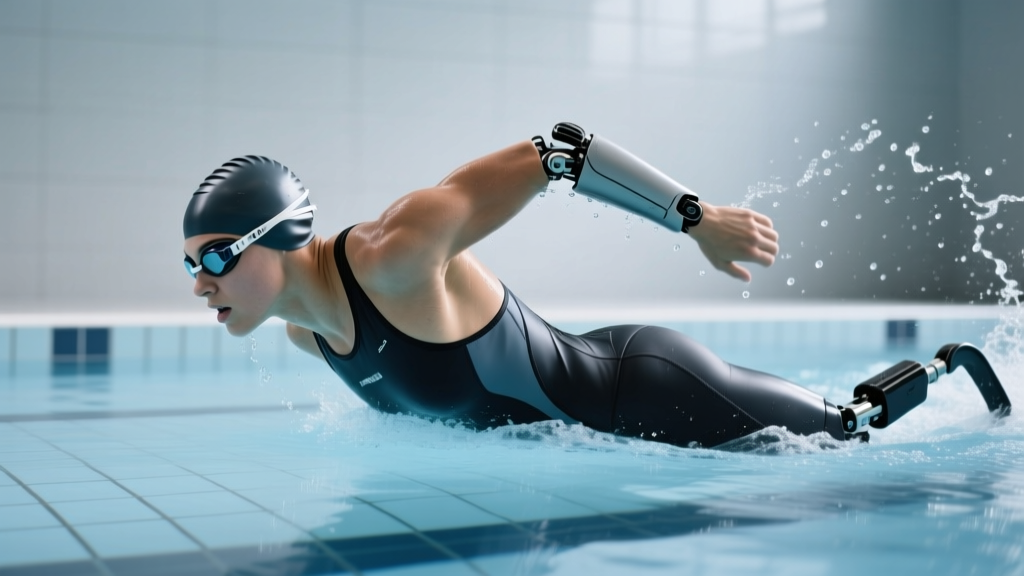
Para Swimming Classification Explained
Para swimming classification is a functional system used by World Para Swimming to group athletes based on their physical, visual, and intellectual impairments, ensuring fair competition. Swimmers are classified into numbered classes (1–14), with lower numbers indicating greater activity limitation: classes 1–10 for physical impairments, 11–13 for visual impairments, and 14 for intellectual impairment. Each class is assessed through physical and technical evaluations to assign the most accurate category.
Understanding Para Swimming Classification
Para swimming classification ensures equitable competition by grouping athletes according to how their impairments affect swimming performance. Unlike able-bodied sports, where competitors are grouped by age or weight, para sports use a science-based, sport-specific system to level the playing field.
What Is the Purpose of Classification?
- To ensure fairness in competition
- To minimize the impact of impairments on outcome
- To allow athletes to compete against others with similar functional abilities
- To uphold integrity and credibility in para sports
Who Oversees the System?
The International Paralympic Committee (IPC), through World Para Swimming (WPS), governs the classification rules. National federations implement these standards under IPC supervision, with trained classifiers conducting evaluations.
Classification Categories and Classes
Swimmers are placed into one of ten disability types across three main categories: physical, visual, and intellectual impairments. Each category corresponds to a range of classes:
| Class | Impairment Type | Description |
|---|---|---|
| S1–S10 | Physical Impairment | Includes limb deficiencies, hypertonia, ataxia, athetosis, impaired muscle power, or range of movement. S1 indicates highest level of impairment. |
| S11–S13 | Visual Impairment | S11: Blind; S12/S13: Partial vision. All use blackout goggles during evaluation for consistency. |
| S14 | Intellectual Impairment | Affects pattern recognition, reaction time, and race strategy. Requires clinical diagnosis and sport-specific assessment. |
Prefixes like "S" (freestyle, butterfly, backstroke), "SB" (breaststroke), and "SM" (individual medley) denote event-specific classifications, as impairments may affect strokes differently.
Types of Eligible Impairments
- Impaired muscle power (e.g., spinal cord injury)
- Limb deficiency (amputation or dysmelia)
- Short stature (e.g., achondroplasia)
- Hypertonia (e.g., cerebral palsy)
- Ataxia (coordination deficits)
- Athetosis (involuntary movements)
- Visual impairment (from partial sight to blindness)
- Intellectual impairment (IQ below 75 with adaptive behavior limitations)
How Athletes Are Classified
Classification involves a multi-step process conducted by certified classifiers, including medical and technical assessments.
Steps in the Classification Process
- Eligibility Screening: Confirm presence of an eligible impairment.
- Physical Assessment: Evaluate strength, coordination, joint mobility, and limb function.
- Technical Evaluation: Observe swimmers in all four strokes to assess propulsion, balance, and turn efficiency.
- Observation in Competition: Monitor performance under real race conditions.
- Classification Decision: Assign class and issue a status (Confirmed, Review, Provisional).
Classification Status Types
- Confirmed: Permanent classification after consistent results.
- Review: Athlete may be reassessed if improvement suggests reclassification.
- Provisional: Temporary status for new athletes unable to attend in-person evaluation.
| Class | Number of Competitors | Percentage of Field |
|---|---|---|
| S1–S5 | 68 | 9.2% |
| S6–S7 | 92 | 12.5% |
| S8–S9 | 145 | 19.7% |
| S10 | 138 | 18.7% |
| S11–S13 | 102 | 13.8% |
| S14 | 118 | 16.0% |
| Total | 763 | 100% |
Data from the 2024 Paris Paralympics shows that nearly 39% of swimmers competed in classes S8–S10, indicating a high concentration of athletes with mild to moderate physical impairments. Meanwhile, S1–S5 athletes, who face the most severe physical challenges, made up just over 9% of the field. The strong representation of S14 swimmers (16%) highlights growing inclusion and competitive depth in intellectual impairment categories.
Challenges and Evolving Standards
Classification systems face scrutiny regarding consistency, transparency, and athlete stress. Misclassification can lead to unfair advantages or disqualification. To address this, World Para Swimming has introduced:
- Standardized testing protocols
- Classifier certification programs
- Video review appeals process
- Anti-gaming measures to prevent athletes from exaggerating impairments
In recent years, increased focus on evidence-based classification has improved reliability. Research using biomechanical analysis and swim performance modeling continues to refine the system.
Frequently Asked Questions About Para Swimming Classification
What does S10 mean in para swimming?
S10 is the least impaired class within physical disability categories. Athletes typically have minimal weakness in one limb or joint restrictions but maintain near-full trunk and leg function. They often excel in starts and turns due to strong core stability.
Can a swimmer compete in multiple classes?
No. Each swimmer receives one S, SB, and SM class based on functional ability. For example, a swimmer might be S9, SB8, SM9 if their impairment affects breaststroke more due to leg propulsion requirements.
Do para swimmers get different pool rules?
No. Competition follows FINA rules with minor adaptations. For instance, visually impaired swimmers (S11) use tappers — assistants with soft poles — to signal wall contact during turns and finishes.
How often are athletes reclassified?
Athletes with Review or Provisional status may be reclassified before major events. Confirmed status holders are rarely reassessed unless a significant change in condition occurs.
Are there gender differences in classification?
No. Classification is impairment-based, not gender-based. Men and women with identical functional profiles receive the same class. However, they compete in separate events.
More Articles
 Rowing Machine Muscles Worked: Full-Body Breakdown
 Where Can I Rent Jet Skis Near Me? Top Spots & Tips
 How Much Is It to Rent a Jet Ski? (2025 Rates)
 Where to Go Go-Karting Near Me: Best Tracks & Tips
 Stats vs Complete Data: Performance Tracking
 How Many Calories Does Rock Climbing Burn?
 Swimming Strokes Guide: Freestyle, Backstroke, Breaststroke, and Butterfly
 When Does MotoGP Start in 2025? Full Schedule & Key Dates
 What Does Icing Mean in Ice Hockey?
 How Far Is the English Channel Swim?