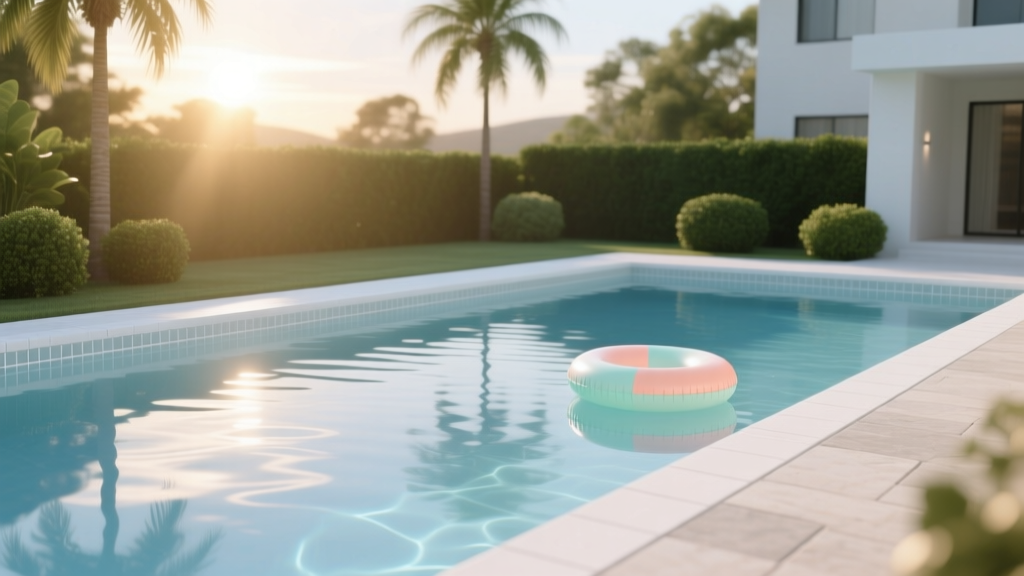
How Much Water to Put in a Swimming Pool
If you're wondering how much water to put in a swimming pool, the answer depends on your pool's size and shape. On average, a standard residential in-ground pool (16' x 32') holds about 13,500 to 15,000 gallons (51,000–57,000 liters), while above-ground pools typically range from 3,000 to 8,000 gallons. Proper water volume is essential for chemical balance, filtration efficiency, and overall swim safety.
Understanding Pool Water Volume Basics
Knowing how much water your swimming pool requires is critical for maintenance, chemical dosing, heating, and equipment selection. Whether you're filling a new pool or topping off after evaporation, miscalculations can lead to wasted resources or unsafe swimming conditions.
Why Accurate Water Volume Matters
- Ensures proper chlorine and pH balance
- Optimizes filter and pump performance
- Reduces chemical waste and cost
- Improves energy efficiency for heaters
- Prevents structural stress from overfilling
How to Calculate Water Volume by Pool Type
Different pool shapes require different formulas. Use these standard calculations to estimate your pool's capacity.
Rectangular Pools
Volume (gallons) = Length × Width × Average Depth × 7.48
Example: 32' × 16' × 5' avg depth × 7.48 = ~19,150 gallons
Circular Pools
Volume (gallons) = π × Radius² × Average Depth × 7.48
Example: 24' diameter (12' radius), 4.5' depth: 3.14 × 144 × 4.5 × 7.48 ≈ 15,200 gallons
Oval Pools
Volume (gallons) = Length × Width × Average Depth × 5.9
Example: 15' × 30' × 4.5' × 5.9 = ~11,980 gallons
Freeform Pools
Estimate using average length, width, and depth, then multiply by 7.0 for irregular shapes. Professional survey tools like laser mapping offer higher accuracy.
| Pool Type | Average Dimensions | Average Depth | Water Volume (Gallons) | Water Volume (Liters) |
|---|---|---|---|---|
| In-Ground Rectangular | 16' x 32' | 5.5' | 15,000 | 56,780 |
| Above-Ground Round | 24' diameter | 4.5' | 15,200 | 57,540 |
| Intex Easy Set | 12' x 30" | 2.5' | 2,100 | 7,950 |
| Lap Pool | 10' x 50' | 6' | 22,400 | 84,800 |
| Residential Oval | 15' x 30' | 4.5' | 12,000 | 45,425 |
| Plunge Pool | 8' x 10' | 6' | 3,600 | 13,630 |
The table shows typical residential pool sizes and their water capacities. In-ground pools generally hold 15,000+ gallons, while smaller above-ground or plunge pools use significantly less. Larger lap pools may exceed 20,000 gallons, demanding more robust filtration and chemical management.
Factors That Affect How Much Water to Put in a Swimming Pool
- Pool Shape: Irregular shapes need customized calculations.
- Sloped Bottoms: Varying depths affect average depth measurement.
- Overflow Systems: Infinity pools or negative edges may require continuous water feed.
- Local Codes: Some municipalities regulate fill levels for safety.
- Climate: Hot, dry areas lose more water to evaporation (up to 1/4 inch per day).
Best Practices for Filling Your Pool
Step-by-Step Guide
- Check local water regulations and utility costs.
- Use a garden hose with a filter to reduce sediment.
- Fill to the midpoint of the skimmer opening (ideal level).
- Avoid overfilling, which can damage equipment during heavy use.
- Test water chemistry immediately after filling.
Tips for Water Conservation
- Use a pool cover to reduce evaporation by up to 95%.
- Consider rainwater harvesting systems in eco-conscious builds.
- Recycle backwash water where permitted.
Frequently Asked Questions About How Much Water to Put in a Swimming Pool
How full should I fill my swimming pool?
Your pool should be filled to the midpoint of the skimmer opening. This ensures optimal water flow and prevents strain on the pump. If the water is too low, the skimmer can't function properly; if too high, debris may not be captured effectively.
Can I overfill my swimming pool?
Yes, overfilling can cause water to spill into electrical equipment or erode surrounding surfaces. During heavy rain or snowmelt, excess water should be drained to maintain safe levels. Keep water at the recommended skimmer midline height.
How long does it take to fill a swimming pool?
With a standard garden hose (flow rate ~9-12 GPM), a 15,000-gallon pool takes 12–20 hours. Municipal hydrant fills are faster but may require permits. Always monitor the process to avoid overflow.
Does the type of water matter when filling a pool?
Yes. Well water may contain high minerals (iron, calcium), requiring pre-treatment. City water is usually safer but contains chlorine. Test total dissolved solids (TDS) before adding chemicals to avoid imbalances.
How often should I add water to my pool?
Pools typically lose 1/4 to 1/2 inch of water per week due to evaporation and splash-out. Top off as needed, ideally weekly. Sudden drops may indicate leaks and should be inspected by a professional.
More Articles
 NASCAR Cup Race Today: Start Time & TV Channel
 What Does Icing Mean in Ice Hockey?
 How Many Laps Is 1500m Swim? Pool-by-Pool Breakdown
 Best Baseball Gloves for Youth Players: 2026 Sizing and Fit Guide
 Field Hockey Match Duration: Official Times (2026)
 How Is Long Jump Measured in Competition?
 How Deep Is a Water Polo Pool? Official Depth Explained
 Snowboard Bindings on a Budget
 When Did Michael Phelps Start Swimming? Key Facts
 Best Cricket Bats for Beginners: Complete Guide to Choosing Your First Bat