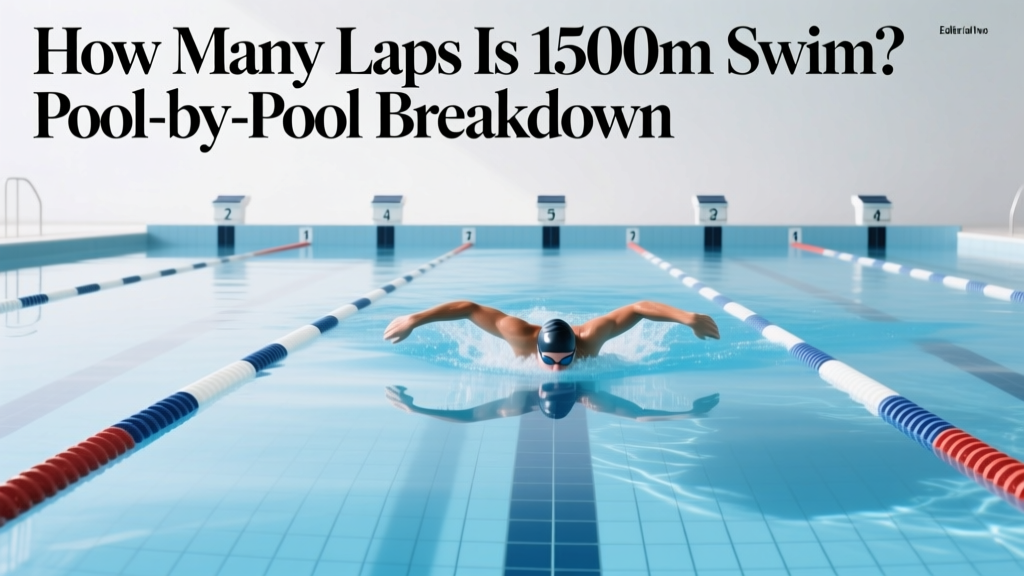
How Many Laps Is 1500m Swim? Pool-by-Pool Breakdown
In a standard 25-meter pool, swimming 1500 meters requires completing 60 laps (30 lengths), as one lap equals two lengths. In a 25-yard pool, it takes approximately 66 laps (33 lengths) due to the shorter yard measurement. This distance is commonly swum in competitive freestyle events and is often referred to as the 'metric mile.'
Understanding the 1500m Swim Distance
The 1500-meter swim is one of the longest pool events in competitive swimming and is frequently called the 'metric mile' because it closely approximates a mile in length (1609 meters). Knowing how many laps make up this distance is essential for training, race strategy, and tracking progress.
What Defines a Lap vs. a Length?
A common source of confusion is the difference between a lap and a length. In swimming terminology:
- Length: Swimming from one end of the pool to the other (e.g., 25 meters).
- Lap: Swimming from one end to the other and back (i.e., two lengths or 50 meters in a 25m pool).
This distinction is crucial when calculating total laps for any given distance.
How Pool Size Affects Total Laps
The number of laps required to complete 1500 meters depends on the size of the pool. The most common pool lengths used in competitions are 25 meters (short course meters), 25 yards (short course yards), and 50 meters (long course meters).
Standard Pool Configurations
- 25-meter pool (SCM): 60 laps (120 lengths)
- 50-meter pool (LCM): 30 laps (60 lengths)
- 25-yard pool (SCY): Approximately 66 laps (132 lengths)
| Pool Type | Pool Length | Total Lengths for 1500m | Total Laps for 1500m | Equivalent Distance in Miles |
|---|---|---|---|---|
| Long Course (Olympic) | 50 meters | 30 | 15 | 0.93 miles |
| Short Course Meters | 25 meters | 60 | 30 | 0.93 miles |
| Short Course Yards | 25 yards (~22.86 meters) | 66 | 33 | 0.93 miles |
The table shows that while the number of laps varies significantly across pool types, the actual distance remains consistent at 1500 meters. Swimmers must adjust their pacing and turn count based on pool length, with shorter pools requiring more turns and potentially faster times due to increased push-offs.
Training for the 1500m Swim
Successfully completing 1500 meters requires endurance, technique, and pacing. Competitive swimmers often train using interval sets and distance builds to prepare for this event.
Common Training Strategies
- Distance Builds: Start with 400m and gradually increase by 200–400m per set until reaching 1500m continuously.
- Interval Training: Swim 10 x 150m at goal pace with short rest to simulate race conditions.
- Pacing Drills: Practice negative splits—swimming the second half faster than the first.
- Turn Efficiency: Focus on streamlined push-offs in short course pools where turns play a bigger role.
Competition Insights: The 1500m Freestyle Event
The 1500m freestyle is a staple in both Olympic and World Championship events. It tests aerobic capacity and mental resilience. Since 2021, women also compete in the 1500m at the Olympics, aligning with men's events.
Notable Records (as of 2025)
- Men's World Record: 14:30.67 – Ahmed Hafnaoui (TUN), 2023
- Women's World Record: 15:20.31 – Katie Ledecky (USA), 2022
- Olympic gold medalists typically finish within 14:40–15:30 range depending on gender.
Frequently Asked Questions About the 1500m Swim
How many laps is 1500 meters in a 25m pool?
In a 25-meter pool, 1500 meters equals 60 lengths or 30 laps (where one lap is down and back). Each length is 25 meters, so you need 60 lengths to reach 1500 meters.
How many laps is 1500 meters in a 25-yard pool?
In a 25-yard pool, 1500 meters is approximately 1650 yards, which equals 66 lengths or 33 laps. This is why the '1650-yard freestyle' is the American equivalent of the 1500m.
Is the 1500m swim the same as a mile?
No, but it's close. A mile is 1609 meters, so the 1500m is about 93% of a mile. It's often called the 'metric mile' in swimming circles due to its proximity in distance.
How long does it take to swim 1500 meters?
Elite swimmers complete 1500m in 14–16 minutes. Age-group swimmers may take 25–40 minutes, while beginners could take 45+ minutes depending on fitness and stroke efficiency.
What is the best way to pace a 1500m swim?
The optimal strategy is even pacing or negative splitting—starting slightly slower than goal pace and gradually increasing speed. Avoid going out too fast, as fatigue accumulates over such a long distance.
More Articles
 How Far Is the English Channel Swim?
 Olympic Swimming Pool Size: Exact Dimensions 2025
 What Muscles Does a Rower Work? Full-Body Breakdown
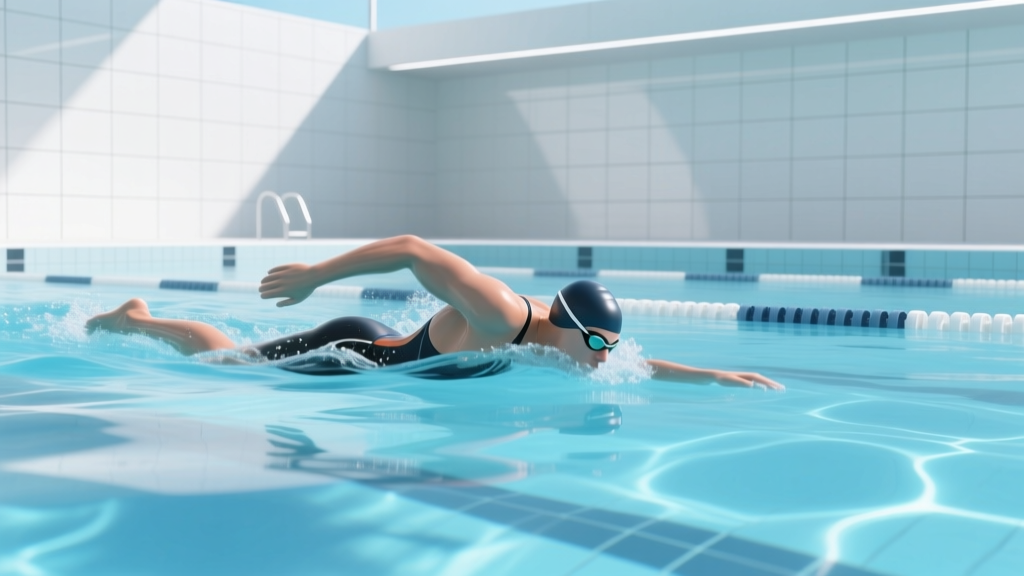 How Many Laps Is 800m Swim?
 Swimming Breathing Techniques: How to Breathe While Swimming Freestyle (2026)
 What Swimming Pools Are Open Near Me Today?
 How Many Periods in Field Hockey? 4 Quarters Explained
 How Long Is a Sprint? Distances and Durations Explained
 Why No Swimming at Apollo Beach? Safety Explained
 Who Created Field Hockey? Origins & History