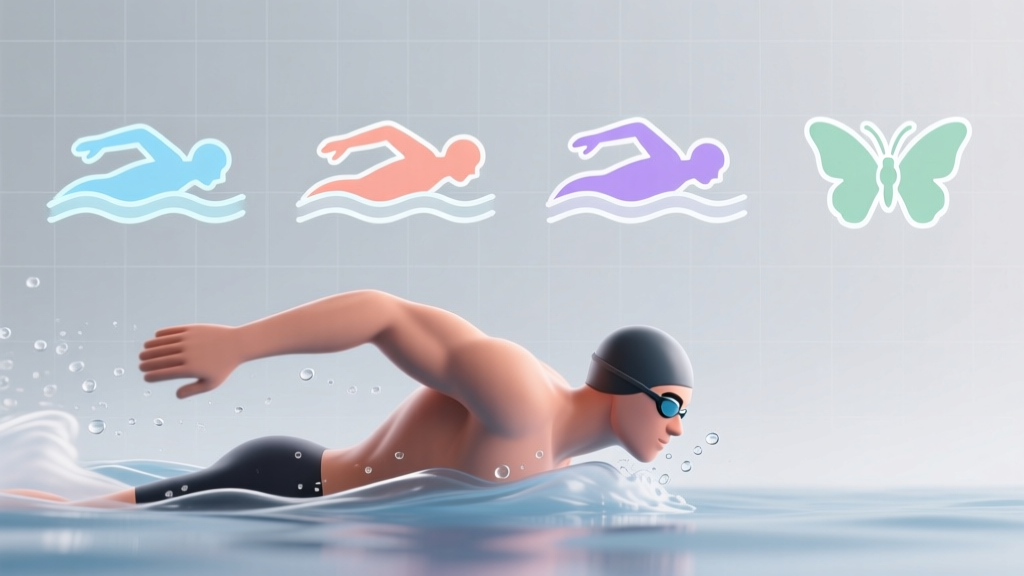
Calories Burned Swimming by Stroke (2026)
Swimming is one of the most effective full-body workouts for burning calories, with an average adult burning between 400 and 700 calories per hour depending on stroke, intensity, and body weight. For example, a 155-pound person can burn approximately 500 calories during an hour of freestyle swimming at a moderate pace, while vigorous butterfly may exceed 700 calories. This makes swimming highly efficient for weight loss and cardiovascular fitness.
How Swimming Burns Calories
Swimming engages nearly every major muscle group, requiring significant energy to propel the body through water, which is about 800 times denser than air. This resistance naturally increases calorie expenditure compared to land-based exercises.
Factors That Influence Calorie Burn in Swimming
- Body Weight: Heavier individuals burn more calories due to increased effort needed for movement.
- Swimming Stroke: Different strokes vary in energy demand—butterfly being the most intense, followed by breaststroke, backstroke, and freestyle.
- Intensity and Speed: Faster laps and interval training significantly increase calorie burn.
- Duration: Longer sessions naturally accumulate more total calories burned.
- Technique Efficiency: Skilled swimmers may burn slightly fewer calories at the same speed due to better hydrodynamics.
Calories Burned by Stroke and Intensity
To provide precise estimates, researchers have measured oxygen consumption and metabolic equivalents (METs) across various swimming styles. The table below shows average calories burned per hour based on body weight and stroke type.
| Stroke / Intensity | 130 lbs (59 kg) | 155 lbs (70 kg) | 180 lbs (82 kg) | MET Value |
|---|---|---|---|---|
| Freestyle – Moderate | 410 | 490 | 570 | 7.0 |
| Freestyle – Vigorous | 600 | 710 | 830 | 10.0 |
| Butterfly | 650 | 780 | 910 | 11.0 |
| Breaststroke – Recreational | 360 | 430 | 500 | 5.3 |
| Breaststroke – Vigorous | 500 | 590 | 690 | 8.0 |
| Backstroke | 320 | 380 | 440 | 5.0 |
| Treading Water – Vigorous | 470 | 560 | 650 | 8.0 |
The data shows that higher body weight and more intense strokes like butterfly and vigorous freestyle lead to substantially greater calorie expenditure. Treading water vigorously also ranks high, comparable to running at 6 mph, making it a powerful alternative for low-impact conditioning.
Maximizing Calorie Burn While Swimming
To get the most out of your swim workout, consider these proven strategies:
Use Interval Training
Alternate between high-intensity sprints and low-intensity recovery laps. For example: 1 minute fast freestyle followed by 1 minute easy backstroke, repeated for 20–30 minutes. This boosts afterburn effect (EPOC), increasing total calorie burn post-exercise.
Focus on Technique and Resistance
Improving stroke efficiency allows you to swim faster with less drag. Use tools like paddles or fins to add resistance and build strength, which elevates energy demand.
Extend Swim Duration Gradually
Aim for at least 30–60 minutes of continuous swimming. Even at moderate intensity, longer sessions result in significant calorie burn over time.
Combine Multiple Strokes
Varied strokes prevent adaptation and engage different muscle groups, keeping metabolism elevated throughout the session.
Common Questions About Calorie Burn in Swimming
How many calories does 30 minutes of swimming burn?
A 155-pound person can burn between 250 and 350 calories in 30 minutes of swimming, depending on stroke and intensity. Moderate freestyle burns about 245 calories, while vigorous butterfly can exceed 350 calories in the same timeframe.
Does swimming burn more calories than running?
At similar intensities, running typically burns more calories per minute due to higher impact and heart rate. However, swimming allows longer durations with less joint stress, so total session burn can be comparable. For example, 30 minutes of running at 6 mph burns about 350 calories for a 155-pound person, while vigorous swimming comes close at 350–400 calories per hour.
Which swimming stroke burns the most calories?
The butterfly stroke burns the most calories due to its explosive nature and full-body engagement. It averages around 780 calories per hour for a 155-pound swimmer, surpassing other strokes in energy demand.
Can swimming help lose belly fat?
Swimming contributes to overall fat loss, including belly fat, when combined with a healthy diet and consistent training. While spot reduction isn't possible, regular swimming reduces visceral and subcutaneous fat over time due to its high caloric burn and cardiovascular benefits.
How accurate are fitness trackers for measuring swimming calories?
Most wrist-based fitness trackers struggle with accuracy in water due to motion interference and lack of GPS underwater. Chest strap monitors and swim-specific smartwatches offer better estimates by tracking heart rate more reliably. However, even advanced devices may overestimate by 10–20%, so use them as general guides rather than exact measurements.
More Articles
 Best Base Stats: How Brands Measure Performance
 Why Swimming in a Quarry Is Dangerous
 Should I Exhale Immediately While Swimming? Yes — Here's Why
 What Does Icing Mean in Ice Hockey?
 Go-Kart Steering Wheel Bolt Pattern Explained
 How Much Is a MotoGP Bike? Cost Breakdown 2025
 Don Hume Rower: 1936 Olympic Coxswain & Legacy
 Road Cycling Safety: 15 Essential Tips to Avoid Accidents (2026)
 Where Can You Buy a Go Kart? Top 2025 Sources
 How Much Does a Formula 1 Car Cost? (2025 Data)