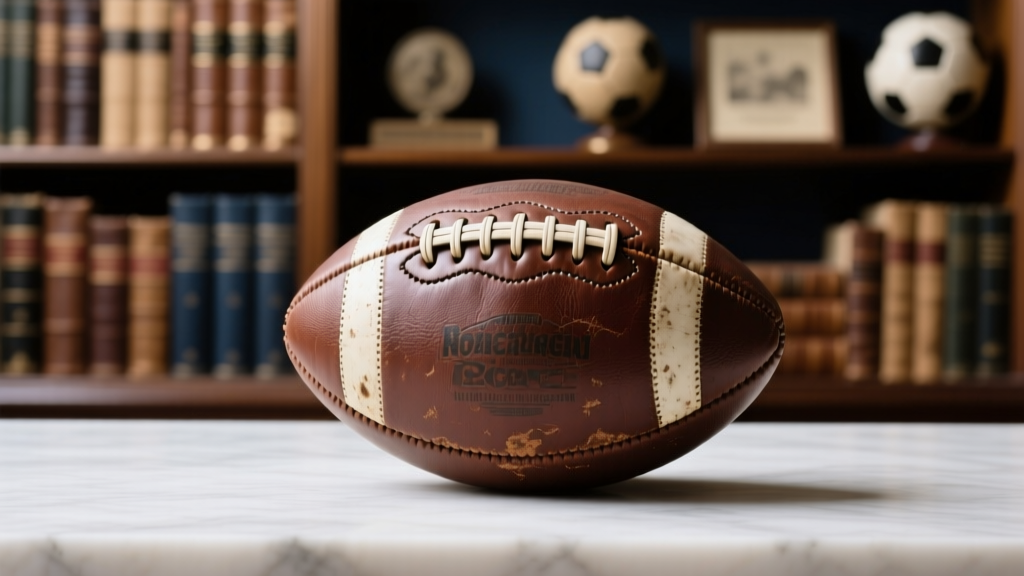
Who Invented the Football Ball? The True Story
In 1862, Englishman Richard Lindon invented the modern football ball, developing the first oval-shaped leather ball with a rubber bladder, which replaced dangerous pig's bladders and standardized the design used in rugby and early association football.
The Origins of the Football Ball
The invention of the football ball is closely tied to the evolution of organized football sports in 19th-century England. Before standardized balls existed, players used inflated animal bladders wrapped in leather, often from pigs—giving rise to the term "pigskin." These early versions were inconsistent in shape, prone to bursting, and difficult to control.
Why Was a New Football Needed?
- Animal bladders were unreliable and decayed quickly.
- Balls varied widely in size and shape, making fair play difficult.
- Rugby and association football needed consistent, durable equipment.
- Safety concerns arose due to sharp stitching and unpredictable bounce.
Richard Lindon: The True Inventor
Richard Lindon, a bootmaker from Rugby, England, revolutionized the football in the 1850s–1860s. Partnering with his wife, who tragically died from lung damage after inflating bladders orally, Lindon sought a safer alternative. By 1862, he introduced a rubber inner bladder and a hand-stitched leather outer casing, creating the first reliable, mass-producible football.
Key Innovations by Lindon
- Invented the rubber bladder (patented after 1862).
- Developed the brass hand pump for safe inflation.
- Created the oval shape preferred in rugby.
- Pioneered lacing systems to secure the cover.
Evolution of Football Design
From Lindon’s invention, footballs evolved through several key phases:
Timeline of Football Ball Development
- Pre-1800s: Animal bladders with leather wraps.
- 1862: Lindon’s rubber-bladder ball introduced.
- 1872: The Football Association standardizes ball size (27" circumference).
- 1892: Rubber inner tubes become common.
- 1930s: Water-resistant leather coatings introduced.
- 1970: Adidas Telstar debuts synthetic materials and 32-panel design in World Cup.
- 2000s: Fully synthetic, seamless balls dominate.
| Year | Innovator/Company | Material | Shape/Circumference | Key Advancement |
|---|---|---|---|---|
| 1862 | Richard Lindon | Leather, rubber bladder | Oval, ~27 inches | First safe, consistent football |
| 1895 | William Gilbert | Heavy leather | Oval, rugby-style | Official supplier to Rugby School |
| 1930 | FIFA | Water-absorbent leather | Spherical, 27–28 inches | First World Cup ball |
| 1970 | Adidas | Synthetic leather, latex bladder | Spherical, 27 inches | Telstar: 32-panel, waterproof |
| 2010 | Adidas | Thermally bonded polyurethane | Spherical, 69 cm (27.2 in) | Jabulani: Controversial for flight instability |
| 2022 | Adidas | Recycled materials, textured surface | Spherical, FIFA-standard | Al Rihla: Fastest World Cup ball ever tested |
The data shows a clear shift from natural to synthetic materials, improving durability and performance. Modern balls are lighter, more water-resistant, and aerodynamically refined. Lindon’s 1862 design laid the foundation for all future innovations, proving pivotal in sports history.
Common Questions About Who Invented the Football Ball
Who actually invented the football ball?
Richard Lindon, an English bootmaker from Rugby, invented the modern football ball in 1862 using a rubber bladder and leather casing, replacing unsafe animal bladders.
Did Charles Goodyear invent the football ball?
No, Charles Goodyear invented vulcanized rubber in 1839, which enabled later football innovations, but he did not create the football ball itself.
Why is Richard Lindon not widely known as the inventor?
Lindon never patented many of his inventions due to cost, and his rival William Gilbert received more commercial recognition, leading to historical oversight despite Lindon’s documented contributions.
What was the first official football ball used in competition?
The first standardized football ball was used in the 1872 FA Cup Final, based on Lindon’s design and regulated to a 27-inch circumference by the Football Association.
How has the football ball changed since Lindon’s invention?
Since 1862, footballs have transitioned from hand-stitched leather to synthetic, waterproof, and aerodynamic designs, with advancements in shape consistency, weight control, and flight stability driven by brands like Adidas and Nike.
More Articles
 Who Has the Most National Championships in College Football?
 Where to Buy Football Cleats: Best Stores & Tips
 Where to Watch South Carolina vs Wofford Football Live
 How Long Does an American Football Game Last?
 Which Football Teams Are Playing Today? Match Schedule 2025
 Who Is the Best Football Player in the World in 2025?
 What Football Conference Is Nebraska In? (2025)
 When Was the Last NCAA Football Video Game Released?
 Where Does Vanderbilt Play Football? Home Stadium Info
 When Does College Football Practice Start? 2025 Dates