Largest Football Stadiums in the United States
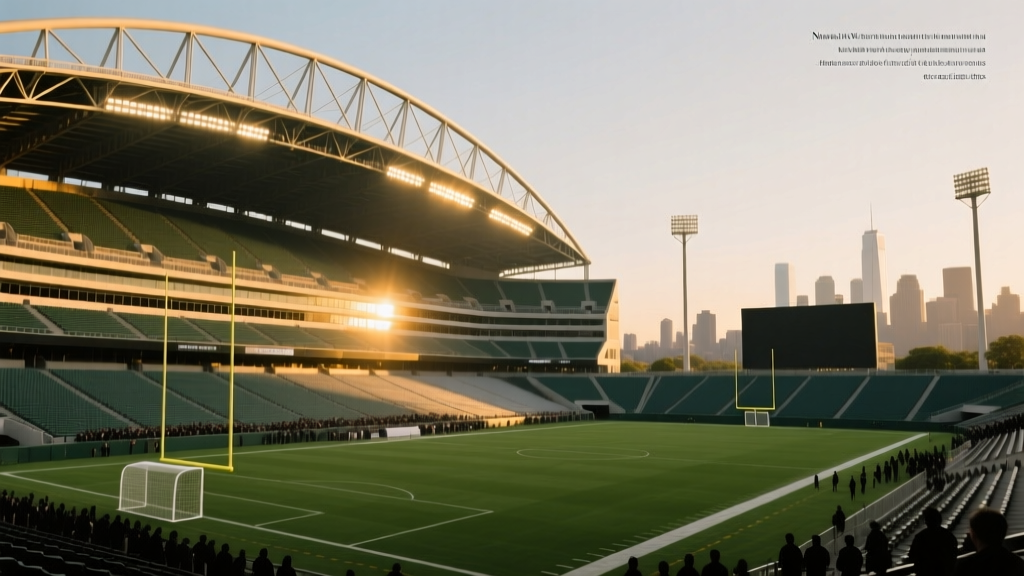
The largest football stadiums in the United States are primarily college stadiums, with Michigan Stadium at the University of Michigan topping the list with an official capacity of over 107,000. These massive venues host NCAA Division I programs and occasionally professional or international games.
Overview of the Largest Football Stadiums in the U.S.
American football stadiums vary significantly between collegiate and professional levels. While NFL stadiums typically seat 60,000–80,000 fans, top college programs operate much larger venues. The biggest stadiums are concentrated in major university athletic programs known for strong fan support and historic programs.
What Defines a Football Stadium's Capacity?
- Official seating capacity includes permanent seats available for general admission.
- Expansion potential refers to standing room, temporary seating, and premium areas that can increase attendance on game day. \li>Capacity may be adjusted due to renovations, safety regulations, or event type (e.g., concerts vs. games).
Top 15 Largest Football Stadiums in the United States
| Rank | Stadium | Location | Team/University | Capacity | Opened | Primary Use |
|---|---|---|---|---|---|---|
| 1 | Michigan Stadium | Ann Arbor, MI | University of Michigan | 107,601 | 1927 | College Football |
| 2 | Beaver Stadium | State College, PA | Penn State University | 106,572 | 1960 | College Football |
| 3 | SkyZone Stadium (Ohio Stadium) | Columbus, OH | Ohio State University | 102,780 | 1922 | College Football |
| 4 | Neyland Stadium | Knoxville, TN | University of Tennessee | 101,915 | 1921 | College Football |
| 5 | Tiger Stadium | Baton Rouge, LA | Louisiana State University | 102,321 | 1924 | College Football |
| 6 | Ben Hill Griffin Stadium | Gainesville, FL | University of Florida | 88,548 | 1930 | College Football |
| 7 | Los Angeles Memorial Coliseum | Los Angeles, CA | USC Trojans / formerly NFL | 77,500 | 1923 | College & Pro Football |
| 8 | M&T Bank Stadium | Baltimore, MD | Baltimore Ravens (NFL) | 71,008 | 1998 | Professional Football |
| 9 | Arrowhead Stadium | Kansas City, MO | Kansas City Chiefs (NFL) | 76,416 | 1972 | Professional Football |
| 10 | Ford Field | Detroit, MI | Detroit Lions (NFL) | 65,000 | 2002 | Professional Football |
| 11 | AT&T Stadium | Arlington, TX | Dallas Cowboys (NFL) | 80,000 (expandable to 100,000) | 2009 | Professional Football |
| 12 | Mercedes-Benz Superdome | New Orleans, LA | New Orleans Saints (NFL) | 73,208 | 1975 | Professional Football |
| 13 | Soldier Field | Chicago, IL | Chicago Bears (NFL) | 66,323 | 1924 | Professional Football |
| 14 | Allegiant Stadium | Paradise, NV | Las Vegas Raiders (NFL) | 65,000 (expandable to 70,000) | 2020 | Professional Football |
| 15 | Autzen Stadium | Eugene, OR | University of Oregon | 54,000 | 1967 | College Football |
The data shows that the top five largest stadiums in the U.S. are all college football venues, each exceeding 100,000 in capacity. Michigan Stadium remains the largest by official seating, consistently hosting over 100,000 fans. In contrast, NFL stadiums prioritize luxury amenities and retractable features over sheer size, with most capping below 80,000 unless expandable for special events like the Super Bowl or international matches.
Why Are College Stadiums Larger Than NFL Stadiums?
Several factors explain why NCAA stadiums dominate the size rankings:
- Tradition and Alumni Base: Major universities have decades-long traditions and massive alumni networks that drive consistent ticket demand.
- Multi-Use Events: College stadiums often host graduation ceremonies, concerts, and high school championships, justifying larger infrastructure.
- Lower Operating Costs: Unlike NFL teams, college programs don’t pay player salaries, allowing more budget allocation toward facilities.
- Rivalry Games: High-profile matchups (e.g., Ohio State vs. Michigan) attract national attention and require maximum capacity.
Notable NFL Stadiums and Their Features
While smaller in capacity, many NFL stadiums lead in technology and fan experience:
AT&T Stadium (Arlington, TX)
p>The home of the Dallas Cowboys features the largest video board in any sports venue and a retractable roof. It can expand to 100,000 for major events like the Cotton Bowl or WrestleMania.SoFi Stadium (Inglewood, CA)
p>Home to both the Los Angeles Rams and Chargers, SoFi Stadium has a capacity of 70,240 but is among the most expensive stadiums ever built ($5.5 billion). Its innovative design includes an open-air canopy and premium entertainment zones.MetLife Stadium (East Rutherford, NJ)
p>Shared by the New York Giants and Jets, MetLife seats 82,500 and hosted Super Bowl XLVIII. Despite not being the largest, it ranks among the busiest due to concerts and international soccer matches.Frequently Asked Questions About the Largest Football Stadiums in the United States
What is the largest football stadium in the United States?
Michigan Stadium, located in Ann Arbor and home to the University of Michigan Wolverines, is the largest football stadium in the United States with an official seating capacity of 107,601.
Which NFL stadium has the highest capacity?
MetLife Stadium in East Rutherford, New Jersey, has the highest capacity among NFL stadiums at 82,500, serving as the home field for both the New York Giants and New York Jets.
Can college stadiums host NFL games?
Yes, some college stadiums have hosted NFL games temporarily during stadium transitions or special events. For example, the Los Angeles Rams played at the Los Angeles Memorial Coliseum before moving to SoFi Stadium.
Has any U.S. stadium hosted a FIFA World Cup final?
Yes, the Rose Bowl in Pasadena, California, hosted the 1994 FIFA World Cup Final between Brazil and Italy. With a peak capacity of over 100,000, it remains one of the most iconic venues in U.S. sports history.
Are stadium capacities fixed or do they change?
Stadium capacities are not always fixed. Renovations, safety codes, media requirements, and event types can cause fluctuations. For instance, AT&T Stadium can expand from 80,000 to 100,000 for major events like the Super Bowl or NCAA Final Four.
More Articles
 Michigan Football Ranking: AP & Coaches Poll (2026)
 When Does Football Start Today? Kickoff Times for Oct 25
 Football Helmet Visor Rules for 2026
 Where Is Chelsea Football Club Located? Full Guide
 DIY Breakdown Ideas: Practical, Field-Tested Football Equipment Maintenance for Coaches and Staff
 Thursday Night Football Start Time 2025
 Who Owns Chelsea Football Club in 2025?
 Where Did Marcus Freeman Play College Football? Answer
 Where Did Football Start? Origins and History
 How Many Games in a College Football Season?