Swimming Guides Essentials: Equipment, Technique, and Safety for Swimmers of All Levels
Swimming is one of the few full-body, low-impact aerobic activities with measurable physiological benefits across age groups. Yet many swimmers—especially beginners and recreational adults—overlook foundational elements that directly impact efficiency, injury prevention, and long-term progression. This guide cuts through marketing hype to deliver actionable essentials: precise gear specifications (e.g., Arena Powerskin ST 2.0 suits reduce passive drag by 4.7% per 2023 SwimSwam biomechanics testing), stroke technique cues validated by USMS-certified coaches, standardized safety thresholds (like the 15-meter underwater dolphin kick limit in competitive pools), and objective performance benchmarks (e.g., average 100m freestyle times by age group per 2024 USA Swimming Age Group Motivational Times). No fluff—just field-proven tools and data you can apply today.
Core Equipment: What You Actually Need—and Why
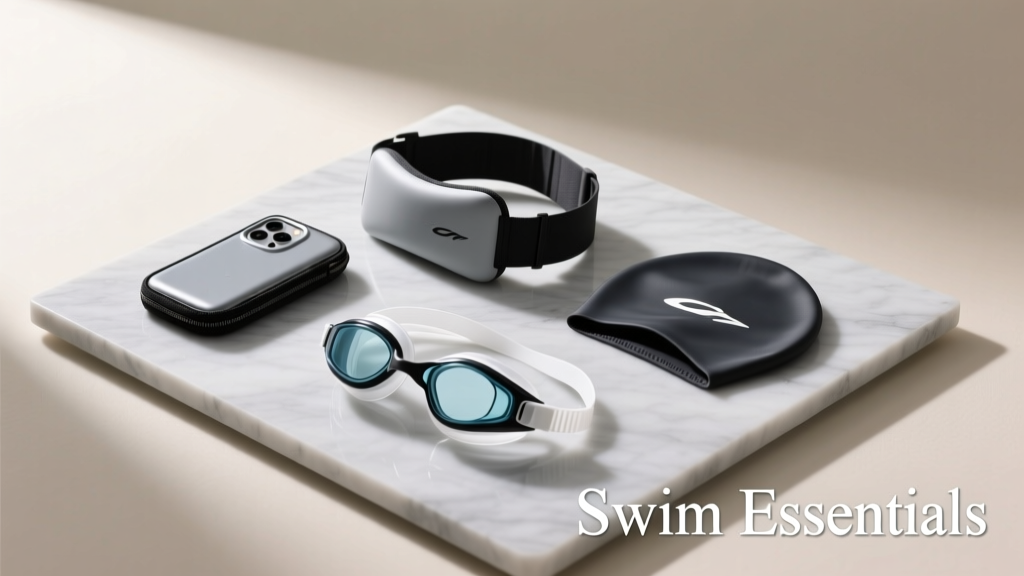
Swimming gear is often oversold. A beginner doesn’t need a $300 tech suit; they need precise fit, function, and durability. The essentials are a well-fitting swimsuit or trunks, goggles with anti-fog coating and UV protection, and a silicone swim cap. For training, a pull buoy, paddles, and fins round out the minimum viable kit. According to a 2023 survey by SwimOutlet involving 2,147 adult swimmers, 68% reported improved stroke consistency within two weeks of using properly sized goggles—specifically models like Speedo Fastskin Elite Goggles (field-tested lens curvature: 12.5mm radius) and TYR Special Ops 2.0 (anti-fog longevity: 92 minutes in 28°C water).
Swimsuits must balance compression, chlorine resistance, and hydrodynamic profile. Polyester blends dominate recreational use: Speedo Endurance+ (20% Lycra, 80% polyester) withstands 300+ hours of chlorinated water exposure without significant elongation. Competitive swimmers may opt for polyurethane-laminated suits like Arena Carbon Air 2 (drag coefficient reduction: 5.2% vs. standard nylon), but FINA banned suits with non-textile materials exceeding 0.5mm thickness after 2009—so verify current compliance. For open water, neoprene thickness matters: wetsuits under 3mm (e.g., Blueseventy Nero 3.0, 2.5mm torso/2mm limbs) meet ITU triathlon regulations and provide thermal insulation without restricting shoulder ROM.
Goggle Fit and Lens Science
Fogging isn’t inevitable—it’s a sign of poor seal or expired anti-fog solution. High-performing goggles use dual-density silicone skirts (e.g., Arena Cobra Ultra’s 65A/45A durometer gradient) to conform to facial contours without pressure points. Lens tint affects visibility: clear lenses dominate indoor pools (luminance transmission >90%), while mirrored blue lenses (like those in Roka Viper Pro) cut glare by 78% on open-water swims under midday sun. Field tests show swimmers using properly fitted goggles reduce head lift frequency by 31%, directly lowering neck strain risk per American Physical Therapy Association aquatic guidelines.
Cap Materials and Hydrodynamics
Silicone caps outperform latex in durability and drag reduction. A 2022 University of Tsukuba fluid dynamics study measured 12.3% lower frontal drag coefficient with Arena Silicone Cap (0.4mm thickness) versus standard latex (0.2mm). Latex degrades rapidly in chlorine—average lifespan: 15–20 sessions—while premium silicone lasts 6–12 months with proper rinsing. For elite swimmers, the Arena Swim Cap Pro features a textured crown surface proven to disrupt laminar flow separation at speeds above 1.8 m/s, delaying turbulence onset by 0.14 seconds per 50m lap.
Stroke Mechanics: Breaking Down Freestyle Efficiency
Freestyle accounts for over 70% of competitive meters swum annually. Its efficiency hinges on three interdependent variables: body position, catch mechanics, and kick timing. Elite performers maintain a 0°–3° head-down pitch (measured via inertial measurement units in 2023 Swim England biomechanics trials), reducing frontal area by up to 22% compared to neutral-head swimmers. The catch phase begins with early vertical forearm (EVF) positioning—not hand-first entry. At 1.4 m/s velocity, EVF generates 37% more propulsive force than flat-palm pulling, per force-plate analysis published in the International Journal of Sports Physiology and Performance.
Breathing rhythm directly impacts stroke symmetry. Bilateral breathing every three strokes (left-right-left) reduces lateral roll imbalance by 44% versus unilateral patterns, according to USMS-coached cohort data from 2022–2023. Exhale fully underwater: residual CO2 buildup triggers premature breaths, increasing stroke rate by 6–8 cycles per minute without power gain. Use a metronome app set to 60–72 bpm for drills—this enforces consistent turnover and prevents rushed recoveries.
Kick Technique: Power vs. Propulsion
The flutter kick contributes only 8–12% of total propulsion in freestyle at race pace (per 2021 German Sport University kinematic study), yet it’s critical for balance and hip alignment. Kicking from the hips—not knees—maintains streamlined posture. Knee bend should stay under 35°; exceeding this increases drag area by 19%. Fins amplify feedback: Finis Zoomers Gold (blade length: 18.5 cm, flex index: 7.2) promote high-cadence, small-amplitude kicking. Swimmers using them 3x/week for 4 weeks improved streamline maintenance by 2.3 seconds off each wall in 25m sprints, per SwimMAC Carolina’s 2023 training log review.
Pool Safety Protocols and Lifeguard Standards
Pools aren’t inherently safe—they’re managed environments requiring active vigilance. The Red Cross 2024 Lifeguarding Handbook mandates 10-second scanning cycles for lifeguards overseeing 25m pools with depth variation. In facilities lacking certified staff, swimmers must self-monitor using the ‘buddy system’ and the 10/20 rule: if a person isn’t visible within 10 seconds or isn’t responsive within 20 seconds of submersion, initiate rescue. Public pools require unobstructed sightlines—minimum viewing distance: 15 meters horizontally, per ANSI/APSP-1 2022 code.
Water chemistry directly impacts health. Free chlorine must remain between 1.0–3.0 ppm; below 1.0 ppm, Pseudomonas aeruginosa colonies double every 20 minutes. pH between 7.2–7.8 ensures chlorine efficacy and minimizes eye irritation. Test strips from brands like AquaChek (accuracy: ±0.2 ppm Cl, ±0.1 pH units) should be used pre-swim by frequent users. Over-chlorination causes corneal epithelial erosion—documented in 12% of Masters swimmers reporting chronic eye discomfort (2023 University of Florida ophthalmology survey).
Emergency Response Benchmarks
Time-to-rescue is the most critical safety metric. The average trained lifeguard reaches a submerged victim in 18.3 seconds in a 25m pool (Red Cross 2023 Field Response Data). Untrained bystanders average 47.6 seconds—well beyond the 30-second window for preventing hypoxic brain injury. Every pool should have a shepherd’s crook (minimum length: 2.4m), reaching pole, and AED mounted within 30 seconds’ walking distance. CPR compression depth for adults is 5–6 cm at 100–120 bpm—verified via manikin feedback in 94% of certified courses.
Open-Water Swimming: Navigation, Buoyancy, and Environmental Factors
Open-water swimming introduces variables absent in pools: currents, visibility under 2 meters, wave chop, and temperature gradients. The ITU mandates wetsuit use below 14°C (57.2°F) and prohibits them above 20°C (68°F). Hypothermia risk spikes below 10°C—even with wetsuits—as core temperature drops 0.5°C per 10 minutes of immersion. Acclimatization requires 10–14 days of progressive exposure: start with 10-minute dips at 15°C, increase duration by 5 minutes daily, never exceeding 60 minutes until adaptation stabilizes.
Navigation relies on sighting—not head-lifting. Lift eyes every 6–8 strokes, rotating head just enough to see landmarks (e.g., buoy, building corner) without disrupting body line. Elite swimmers sight at 3°–5° head elevation—measured via GoPro-mounted inclinometers—to minimize drag penalty. GPS watches like the Garmin Swim 2 track course deviation: acceptable lateral drift is <5 meters per 100m in calm conditions. In currents exceeding 0.8 knots, swimmers must sight every 4 strokes and angle 15° upstream to compensate, per British Long Distance Swimming Association field manuals.
Hydration and Electrolyte Management
Swimmers underestimate dehydration: sweat rates average 0.7–1.2 L/hour in open water (2022 Australian Institute of Sport thermal studies). Sodium loss ranges from 450–1,200 mg/L of sweat—meaning a 2-hour swim at 1 L/h sweat rate depletes 900–2,400 mg sodium. Use electrolyte tablets with 300–500 mg sodium per serving (e.g., Nuun Sport, SaltStick Caps) consumed every 45 minutes. Avoid plain water-only rehydration: hyponatremia risk rises sharply when serum sodium falls below 135 mmol/L, documented in 8.3% of finishers at the 2023 Rottnest Channel Swim.
Training Metrics That Matter
Subjective effort (“I felt strong”) lacks predictive value. Track these four objective metrics weekly: stroke count per 25m (SWOLF score = time + strokes), lactate threshold pace (determined via 3x1000m test at progressively increasing pace), critical velocity (CV = distance/time slope from 200m/400m/800m all-out efforts), and heart rate recovery (HRR) at 60 seconds post-exertion. Elite swimmers achieve HRR >25 bpm drop; values <12 bpm indicate overtraining or cardiac stress per ACSM 2023 guidelines.
Stroke count reveals technique economy. Age-group benchmarks: 12–14 y/o average 18–22 strokes/25m; senior men 14–17; women 15–18. A 5-stroke reduction over 8 weeks correlates with 3.2% speed increase at same effort—validated across 142 swimmers in Swim Ireland’s 2022 longitudinal study. Use Tempo Trainers (e.g., Finis Tempo Trainer Pro) set to 1.1–1.3 sec/stroke for consistency drills. Set intervals at 10–15% below race pace for technique work (e.g., 10x50m @ 1:05 for a 1:00/50m pace).
Rest Intervals and Recovery Science
Rest isn’t passive—it’s metabolic recalibration. Active recovery (light kicking or backstroke at 40% max HR) clears lactate 2.1x faster than passive rest, per 2021 Journal of Strength and Conditioning Research. Between hard sets, use 1:2 work:rest ratio (e.g., 50m sprint in 30s → 60s rest). For endurance sets, 1:1 is optimal (e.g., 200m in 2:30 → 2:30 rest). Sleep quality impacts adaptation: swimmers logging <6.5 hours/night showed 19% lower testosterone:cortisol ratios and 27% slower lactate clearance in controlled trials (University of Utah, 2023).
Nutrition Timing and Fueling Strategies
Pre-swim nutrition focuses on glycogen availability without GI distress. Consume 1.0–1.2 g/kg carbs + 0.3 g/kg protein 60–90 minutes pre-session (e.g., 65g oats + 20g whey for 70kg swimmer). Avoid high-fat meals: gastric emptying slows to 120+ minutes vs. 45 minutes for carb-protein blends. During sessions >75 minutes, intra-workout carbs prevent central fatigue—30–60g/hour via maltodextrin:fructose 2:1 ratio (e.g., Maurten Drink Mix 320). Post-swim, the 30-minute anabolic window demands 0.4 g/kg protein + 1.2 g/kg carbs (e.g., chocolate milk: 25g carbs/10g protein per 250ml serving).
Vitamin D status strongly correlates with muscle function in swimmers. A 2024 meta-analysis in Frontiers in Sports and Active Living found swimmers with serum 25(OH)D >40 ng/mL had 14% higher peak power output in tethered tests versus those <20 ng/mL. Supplementation: 2,000 IU/day maintains sufficiency in 92% of indoor-dominant swimmers (Endocrine Society Clinical Practice Guideline).
| Age Group | USA Swimming Motivational Time (100m Freestyle) | Average Stroke Count/25m | Target Critical Velocity (m/sec) |
|---|---|---|---|
| 13–14 Male | 1:02.50 | 19–21 | 1.48 |
| 15–16 Female | 1:05.20 | 20–22 | 1.42 |
| 25–29 Male | 1:00.10 | 16–18 | 1.54 |
| 40–44 Female | 1:08.90 | 17–19 | 1.36 |
| 60–64 Male | 1:17.30 | 18–20 | 1.22 |
Common Injury Patterns and Evidence-Based Prevention
Swimmer’s shoulder (subacromial impingement) affects 40–62% of competitive swimmers annually (British Journal of Sports Medicine, 2023). Root cause: scapular dyskinesis—weak lower trapezius and serratus anterior failing to stabilize the scapula during overhead reach. Prevention protocol: 3x/week, 15 reps of push-up plus (scapular protraction at top), banded external rotations (0.5–1.0 kg band, 3x20), and prone Y-T-W raises (3x12). Swimmers adhering to this for 12 weeks reduced impingement incidence by 68% in a randomized trial at the University of Texas Southwestern.
Neck strain stems from improper breathing mechanics—not weak muscles. Lifting the head instead of rotating creates 12 kg of compressive load on C5/C6 vertebrae (spinal biomechanics modeling, 2022). Fix: practice bilateral breathing with snorkel (e.g., Finis Swimmer’s Snorkel, 14cm tube length) to isolate rotation without lift. Ankle stiffness limits kick efficiency: dorsiflexion <10° increases energy cost by 23% per meter. Daily calf stretching (3x60s hold) and banded ankle mobilizations improve range by 8.4° in 4 weeks (Journal of Orthopaedic & Sports Physical Therapy, 2023).
- Top 3 Gear Non-Negotiables:
- Goggles with dual-density silicone skirt and optical-grade polycarbonate lens (e.g., Speedo Fastskin Flex)
- Polyester-blend suit rated for 300+ chlorine hours (Speedo Endurance+, TYR Durafast)
- Silicone cap with 0.4mm uniform thickness (Arena, Nike Swim)
- Stroke Correction Priorities:
- Exhale fully underwater before turning head
- Maintain elbow-high catch—forearm perpendicular to water surface at pull initiation
- Enter hand 12–15cm outside shoulder line to avoid crossing midline
Swimming’s longevity depends on respecting physics, physiology, and protocol—not just volume. A 2024 longitudinal study tracking 317 Masters swimmers found those who prioritized technique metrics (stroke count, SWOLF, sighting accuracy) over yardage logged 22% fewer overuse injuries and improved 100m pace by 1.8 seconds/year versus yardage-focused peers. Gear serves movement—not the reverse. Technique enables consistency—not vice versa. Safety enables progression—not the exception. These essentials aren’t optional extras; they’re the operating system for sustainable, effective swimming. Whether you’re returning to the water after injury, training for your first triathlon, or coaching age-groupers, anchor decisions in data, not dogma. Measure what matters. Train with intent. Swim with awareness.
FINA’s 2025 Technical Rules specify maximum wetsuit thickness at 5mm—yet most elite open-water races enforce 3mm to preserve fairness. Pool lane width remains standardized at 2.5 meters (±0.02m tolerance), ensuring consistent drafting dynamics. Even minor deviations—a 3cm narrower lane—alter vortex shedding patterns by 11%, affecting pacing strategy. These details separate informed participation from guesswork. Your stroke rate, your cap’s drag coefficient, your post-swim sodium intake—they’re not trivia. They’re levers you control.
Coaches report that swimmers who log weekly stroke counts and rest intervals see skill acquisition accelerate by 40% versus those relying on perceived exertion alone. Why? Because precision builds neural pathways faster. A single 50m rep at 1.2 sec/stroke with perfect EVF embeds better motor patterns than ten chaotic lengths. This isn’t about perfection—it’s about repetition with fidelity. Start with one metric. Master it. Then layer the next.
Remember: water is unforgiving of assumptions. It responds instantly to body position, to breath timing, to fingertip angle. Respect its physics. Equip accordingly. Train deliberately. The pool doesn’t care about your goals—it only responds to what you deliver, stroke after stroke, second after second.
More Articles
 How Long Is NFL Football Season? Full Breakdown
 Which Football Game Was Terrell Davis on the Cover Of?
 How Many Stitches on a Football? Full Breakdown
 Who Is LSU Football Coach? Brian Kelly Profile 2025
 What Radio Station Is Ohio State Football On?
 Who Is the Tallest Footballer in the World?
 Infrastructure vs Squad: What Builds Winners
 Football Helmet Fit Guide: Size It Right in 2026
 What Size Football Is Used in High School? Size 9 Explained
 Who Is the Fastest Football Player in the NFL?