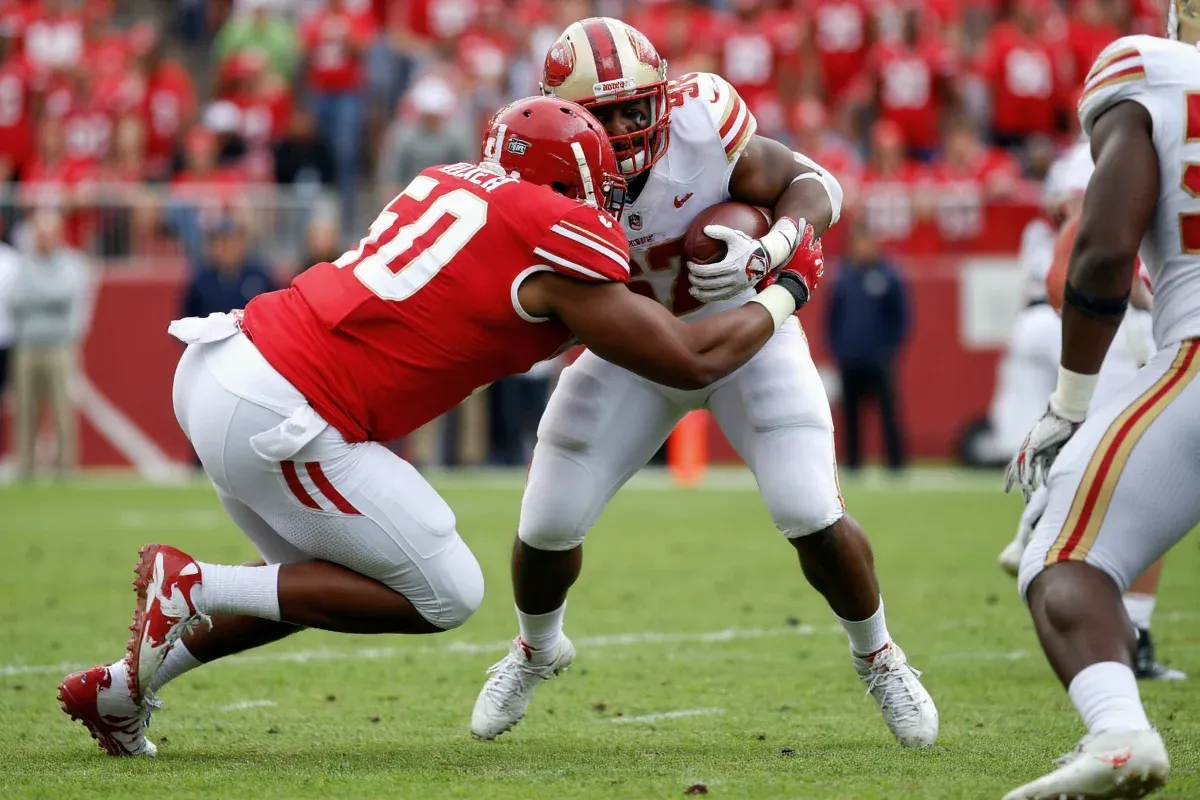
How College Football Overtime Works Explained
College football overtime works by giving each team a possession from the opponent's 25-yard line, starting in sudden death format if tied after regulation. If the game remains tied after both teams have had a possession, it continues with alternating possessions until one team scores more in a round.
How College Football Overtime Rules Work
The NCAA college football overtime system ensures a winner is determined without relying solely on ties (except in rare cases like bowl games or conference decisions). Unlike the NFL, college football does not use sudden death in the first overtime period. Instead, both teams get at least one possession from the opponent’s 25-yard line.
Key Features of College Overtime
- Each team gets a possession starting at the opponent’s 25-yard line
- No sudden death in the first overtime period
- If the score remains tied after both possessions, additional overtime periods are played
- Starting with the second overtime, teams must attempt a 2-point conversion after a touchdown
- From the third overtime onward, teams alternate 2-point conversion attempts
Overtime Format by Period
The rules evolve as the game progresses through multiple overtimes to increase scoring pressure and encourage resolution.
First Overtime Rules
In the initial overtime, each team receives one possession. The team that scores more points during their possession wins. If still tied, the game moves to a second overtime.
Second Overtime and Beyond
Beginning in the second overtime, if a team scores a touchdown, they must attempt a 2-point conversion. This rule aims to accelerate resolution by increasing strategic risk.
Third Overtime and Alternating 2-Point Attempts
From the third overtime onward, teams no longer start from the 25-yard line. Instead, they alternate 2-point conversion attempts from the 2-yard line. This format significantly increases excitement and reduces game length.
| Overtime Period | Starting Position | Touchdown Conversion Rule | Notes |
|---|---|---|---|
| 1st OT | Opponent's 25-yard line | Extra point kick or 2-point try allowed | Both teams get possession |
| 2nd OT | Opponent's 25-yard line | 2-point conversion required after TD | Still alternating possessions |
| 3rd OT+ | N/A – 2-point attempts only | Alternating 2-point tries from 2-yard line | No more offensive drives |
The table illustrates how NCAA overtime progressively intensifies. By eliminating full possessions after the second overtime, the format pressures teams to succeed on high-leverage 2-point plays, reducing physical strain and extending game time.
Common Scenarios in College Football Overtime
Understanding common outcomes helps fans and analysts predict strategy. Coaches must decide whether to go for touchdowns or settle for field goals, especially in early overtimes.
- Field Goal Response: If Team A kicks a field goal, Team B may choose to play conservatively and match with another field goal, forcing a second overtime.
- Go-For-Broke Touchdown Drives: Some coaches opt to attempt a touchdown on first down rather than risk losing on a field goal.
- Defensive Stops: A turnover or stop on downs can end the game immediately if the opposing team failed to score.
- 2-Point Strategy: In the second overtime, failing a 2-point conversion after a touchdown often leads to instant loss if the opponent scores any points.
Frequently Asked Questions About College Football Overtime
How does the possession order work in college football overtime?
The team that won the pregame coin toss chooses to either receive the ball or defend a specific end zone at the start of overtime. The loser of the toss gets the opposite choice in the next overtime period, ensuring fairness across multiple overtimes.
Can a college football game end in a tie?
No, in regular season and most postseason games, college football cannot end in a tie. The overtime rules ensure a winner is declared. However, some neutral-site bowl games or special circumstances may allow ties under unique agreements, though this is extremely rare since the adoption of overtime rules in 1996.
When did college football start using overtime?
College football introduced overtime in 1996 for regular-season games. Before that, games could end in ties. The change was implemented to improve fan experience and ensure decisive outcomes. Conference championships and bowl games adopted overtime shortly afterward.
What happens if both teams miss their 2-point conversions in the third overtime?
If both teams fail their 2-point attempts in the same round, they repeat the process with another set of alternating attempts. This continues until one team succeeds and the other fails in the same round, determining the winner.
Are there any differences between FBS and FCS overtime rules?
No significant differences exist between FBS and FCS overtime rules. Both divisions follow the same NCAA-established overtime format, including the shift to 2-point conversion attempts starting in the third overtime. All subdivisions of NCAA football use consistent overtime procedures.
More Articles
 Where Do the Patriots Play Football? Gillette Stadium Guide
 When Was the Last NCAA Football Video Game Released?
 Hope Football Hut Twitter: Youth Football & Social Impact
 Who Has Most Rushing Yards in College Football History?
 Bo Nix College Football: Where He Played
 De La Salle High School Football: Legacy & Stats
 Patriots Game Today? Next Match & Schedule 2025
 Football Start Time Today: Oct 25 Kickoff Schedule
 Football Testing: Performance Standards and Data
 When Does NCAA Football Begin in 2025? Full Schedule Dates