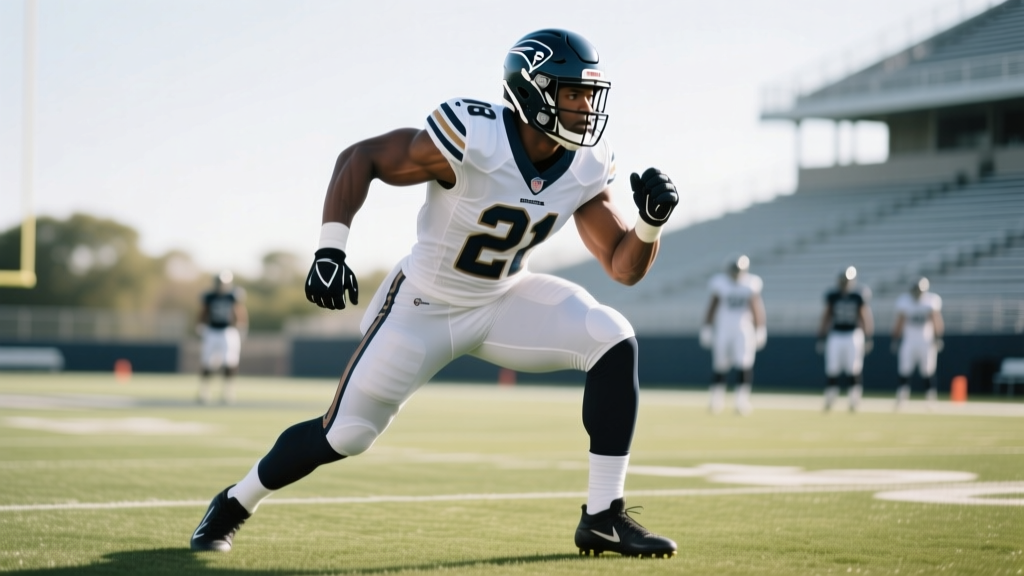
What Does a Fullback Do in Football? Role Explained
In American football, a fullback (FB) is primarily a blocking back who protects the halfback, executes lead blocks, and occasionally carries the ball or catches passes in short-yardage situations. Known for strength and physicality, the fullback plays a crucial role in both run and pass protection schemes.
What Is a Fullback in Football?
The fullback is a position in American football typically found in traditional offensive formations like the I-formation or wishbone. Though less common in modern spread offenses, the fullback remains vital in specific game situations due to their power and versatility.
Core Responsibilities of a Fullback
- Lead blocking for the primary running back
- Short-yardage rushing attempts (e.g., goal-line or third-and-short)
- Pass protection for the quarterback on play-action or rollout plays
- Occasional receiving out of the backfield
- Special teams contributions
Evolution of the Fullback Role Over Time
Historically, the fullback was the primary ball carrier in early football systems like the single-wing. However, as offenses evolved toward more passing and speed-oriented schemes, the role shifted from featured runner to a strategic, power-based support player.
From Ball Carrier to Blocker
In the mid-20th century, fullbacks like Jim Brown dominated as rushers. Today, only a handful of NFL teams regularly feature a fullback, with most offenses using tight ends or H-backs to fulfill similar roles. The shift reflects broader trends toward pace, space, and three-receiver sets.
Key Skills and Attributes of a Successful Fullback
Fullbacks are evaluated based on physical and mental traits essential for their high-impact, low-visibility role.
Physical and Mental Requirements
- Size and Strength: Typically 6'0"–6'2", 240–250 lbs, built to absorb and deliver contact
- Blocking Technique: Mastery of angle, timing, and leverage in run and pass protection
- Football IQ: Understanding defensive alignments and blitz pickups
- Reliability: Trusted in critical downs without drawing significant attention
Fullback vs. Halfback: Understanding the Differences
While both are running backs, the fullback and halfback (or tailback) serve distinct roles.
| Attribute | Fullback (FB) | Halfback (HB) |
|---|---|---|
| Average Weight (NFL, 2024) | 245 lbs | 215 lbs |
| Average Rushing Yards per Season (2023) | 89 yards | 742 yards |
| Carries per Game (2023 avg.) | 2.1 | 16.3 |
| Receptions per Game (2023 avg.) | 1.4 | 3.2 |
| Primary Role | Blocker / Short-Yardage Runner | Feature Ball Carrier |
The data shows that modern fullbacks have minimal offensive touches compared to halfbacks, emphasizing their role as blockers rather than primary weapons. Despite fewer stats, their contribution to offensive line success and short-yardage efficiency remains measurable in win probability models.
Notable Fullbacks in NFL History
Certain players have defined the position through excellence and adaptability.
- Jim Brown (Cleveland Browns): A rare fullback who was also a dominant rusher in the 1950s–60s
- Mike Alstott (Tampa Bay Buccaneers): Six-time Pro Bowler known for power running and receiving
- Leonard Weaver (Philadelphia Eagles): One of the last elite dual-threat fullbacks before the position declined
- John Kuhn (Green Bay Packers): Key contributor in Super Bowl XLV, excelling in goal-line packages
Frequently Asked Questions About Fullbacks in Football
What does a fullback do in football?
A fullback primarily serves as a blocker for the halfback, leads on running plays, and may carry the ball in short-yardage or goal-line situations. They also contribute in pass protection and special teams.
Is a fullback the same as a running back?
All fullbacks are running backs, but not all running backs are fullbacks. The term "running back" includes halfbacks/tailbacks and fullbacks, with the latter focusing more on blocking and power runs.
Why don't teams use fullbacks as much today?
Modern NFL offenses prioritize speed, spacing, and multiple wide receiver sets, reducing the need for traditional fullbacks. Their role has been absorbed by versatile tight ends and H-backs in many systems.
Can a fullback throw the ball?
Yes, though rarely. A fullback can legally throw the ball if they are behind the line of scrimmage. Trick plays like reverses or screen passes may involve a fullback as a passer.
Who are some current NFL fullbacks?
As of 2025, notable active fullbacks include Patrick Ricard (Baltimore Ravens), Michael Burton (New Orleans Saints), and Tory Carter (Minnesota Vikings). These players are mainly used in blocking and special teams roles.
More Articles
 Who Is in the Big 10 Football? Full 2025 Team List
 Who Is Playing in the NFL Game Tonight? Chiefs vs Chargers
 What Does Play Action Mean in Football?
 Best Football Boots 2026: Data-Driven Picks
 Where to Watch NFL Football Today: Live Streams & TV Guide
 What Position Did Deion Sanders Play in Football?
 Quarterback Protection in Football: Key Roles Explained
 Largest Football Stadiums in the United States
 How Many Games in NCAA Football Season?
 What Does First Down Mean in Football?