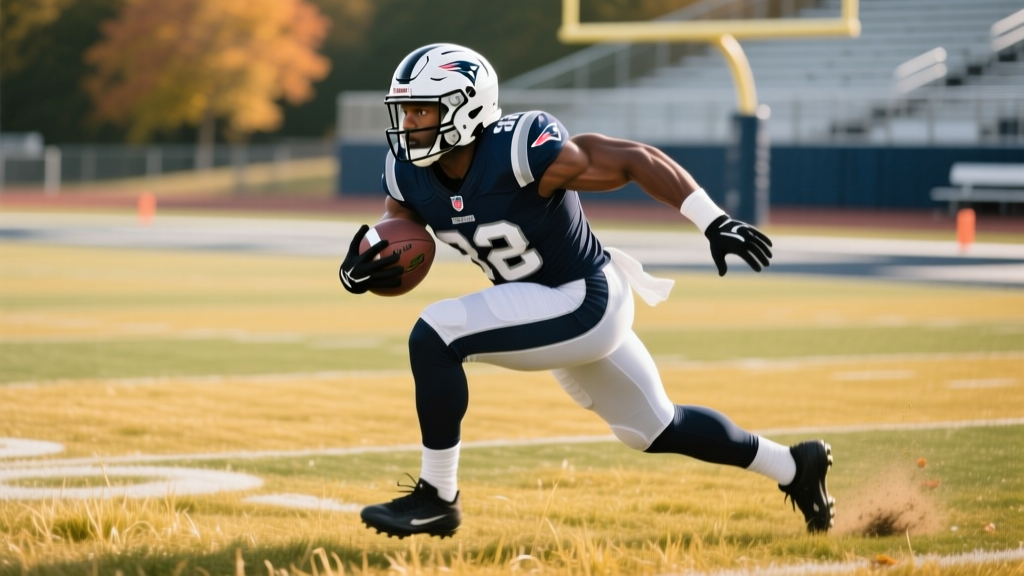
What Does a Tight End Do in Football? Key Roles Explained
A tight end in football is a hybrid position that combines the responsibilities of an offensive lineman and a wide receiver, primarily lining up next to the offensive tackle to block defenders and catch passes from the quarterback.
What Is a Tight End in Football?
The tight end (TE) is a key offensive player in American football who lines up on the line of scrimmage, typically adjacent to an offensive tackle. This dual-role position must excel both as a blocker and as a pass catcher, making it one of the most versatile roles on offense.
Tight ends are often larger and stronger than wide receivers but faster and more agile than offensive linemen. Their unique physical profile allows them to contribute significantly in both the running and passing game.
Key Responsibilities of a Tight End
Tight ends perform multiple critical functions during offensive plays. Their duties vary depending on the play design, defensive alignment, and team strategy.
Blocking
- Engages with defensive ends or linebackers to protect the quarterback during passing plays.
- Creates running lanes by sealing the edge or leading the ball carrier downfield. \li>Often assigned to chip block elite pass rushers before releasing into a route.
Receiving
- Runs precise pass routes such as slants, seams, and outs to get open.
- Serves as a safety valve for the quarterback when primary targets are covered.
- Exploits mismatches against slower linebackers or smaller cornerbacks in the middle of the field.
Route Running and Yards After Catch
Modern tight ends are expected to have reliable hands, good footwork, and the ability to gain yards after the catch (YAC). Elite TEs like Travis Kelce and George Kittle consistently rack up YAC due to their agility and physicality.
Evolution of the Tight End Position
Historically, tight ends were primarily blockers. However, over the past two decades, the role has evolved into a major receiving threat. Offensive schemes like the West Coast offense and modern spread systems have increased the demand for athletic, pass-catching tight ends.
Teams now look for tight ends who can:
- Line up in-line, in the slot, or even split out wide.
- Win contested catches in traffic.
- Stretch the field vertically while still providing solid run blocking.
| Player | Team (2024) | Receptions | Yards | Touchdowns | Yards per Game |
|---|---|---|---|---|---|
| Travis Kelce | Kansas City Chiefs | 110 | 1,338 | 12 | 83.6 |
| George Kittle | San Francisco 49ers | 98 | 1,174 | 8 | 73.4 |
| Mark Andrews | Baltimore Ravens | 96 | 1,081 | 10 | 67.6 |
| T.J. Hockenson | Minnesota Vikings | 86 | 954 | 7 | 59.6 |
| Dallas Goedert | Philadelphia Eagles | 75 | 798 | 6 | 49.9 |
The table above highlights top-performing tight ends in the 2024 NFL season. Travis Kelce leads in receptions, yards, and touchdowns, demonstrating his dominance as both a volume receiver and red-zone threat. The data shows that elite tight ends average over 70 receiving yards per game, underscoring their growing importance in modern passing attacks.
Famous Tight Ends in NFL History
Certain players have redefined what it means to be a tight end, combining size, speed, and hands to become franchise cornerstones.
- Rob Gronkowski – Known for his dominant blocking and red-zone prowess, Gronk won multiple Super Bowls with Tom Brady.
- Tony Gonzalez – A model of consistency, he holds the record for most career receptions by a TE (1,325).
- Shannon Sharpe – A pioneer of the pass-catching TE role, he amassed over 10,000 career receiving yards.
- Antonio Gates – Undrafted but became one of the most prolific touchdown scorers at the position.
How Teams Utilize Tight Ends Strategically
Coaches leverage tight ends in various formations and play types to exploit defensive weaknesses.
Formation Flexibility
Tight ends can line up in multiple positions:
- In-line (next to tackle)
- Slot receiver
- Backfield (H-back)
- Split out wide
This versatility forces defenses to adjust, often creating favorable matchups.
Mismatches and Play Design
When a tight end faces a linebacker in coverage, their combination of size and speed gives them an advantage. Conversely, if matched against a cornerback, their strength allows them to win contested catches.
Common plays involving tight ends include:
- Seam routes down the middle
- Play-action boots with TE wheel routes
- Red-zone fade or jump-ball concepts
- Drag routes across the formation
Frequently Asked Questions About Tight Ends
What does a tight end do in football?
A tight end blocks defenders on running plays and acts as a receiver on passing plays. They line up next to offensive tackles and must be skilled in both run blocking and route running.
Is a tight end an offensive lineman or a receiver?
A tight end is officially part of the offensive line because they line up on the line of scrimmage, but they are eligible receivers. They blend traits of both linemen and wide receivers.
Who are the best tight ends in the NFL today?
As of 2025, top tight ends include Travis Kelce (Chiefs), George Kittle (49ers), Mark Andrews (Ravens), and T.J. Hockenson (Vikings), all known for their receiving production and blocking ability.
Can a tight end throw the ball?
Yes, any player can throw the ball as long as the pass is behind the line of scrimmage and only one forward pass is thrown per play. While rare, some trick plays feature tight ends throwing passes.
Why is the tight end position so important?
The tight end provides versatility in both blocking and receiving, creates matchup problems for defenses, and is often a quarterback's trusted target in critical situations.
More Articles
 How Many College Football Games in a Season?
 Florida Gators Football Ranking: 2026 AP Poll
 OSU Football Play Time Tomorrow: Kickoff, TV & Streaming
 Don Bosco Football NJ: Program Overview & Stats
 What Does D Mean in Fantasy Football? Explained
 What Happens If You Tie in Fantasy Football?
 How Many Pro Football Teams Are There? (2025 Data)
 Madden NFL 25 Release Date: August 16, 2025
 Oldest NFL Teams: Cardinals and Bears Since 1920
 Why Is Football So Popular? Global Appeal Explained