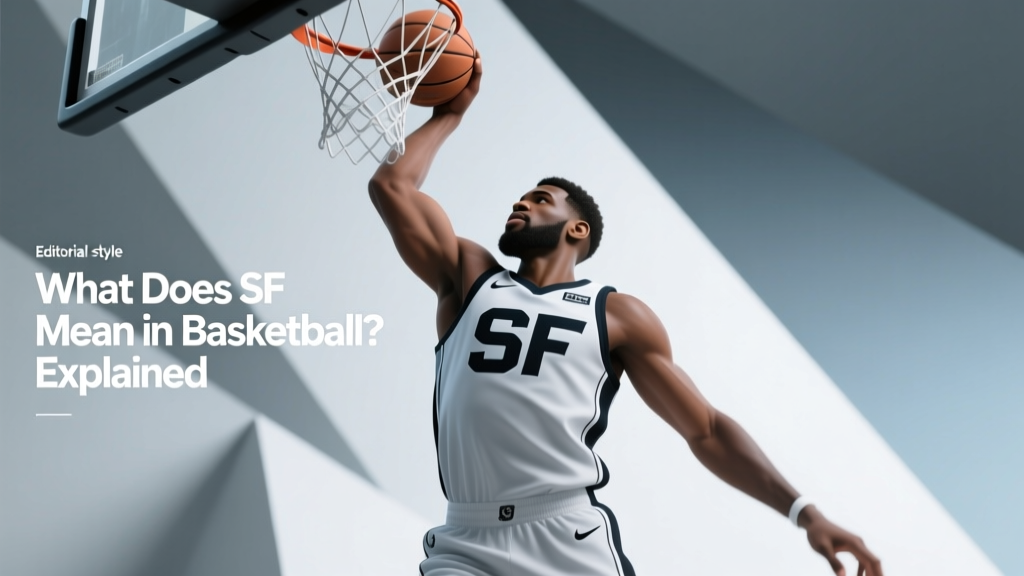
What Does SF Mean in Basketball? Explained
In basketball, 'SF' stands for Small Forward, a key position responsible for scoring, rebounding, and defending. This versatile role often demands athleticism, mid-range and three-point shooting, and the ability to guard multiple positions on defense.
What Is the Small Forward (SF) Position in Basketball?
The Small Forward (SF) is one of the five traditional positions in basketball and is widely considered the most versatile. Typically positioned between the Shooting Guard and Power Forward in size and responsibilities, the SF plays both inside and outside effectively.
Core Responsibilities of a Small Forward
- Scoring from multiple levels: drives, mid-range jumpers, and three-pointers
- Defending multiple positions due to size and agility
- Rebounding, especially on the defensive end
- Facilitating offense when needed
- Transition play—often among the first down the court after a steal or rebound
Why Is the Small Forward So Important?
The Small Forward often acts as a team's primary offensive weapon or secondary scorer. Their versatility allows coaches to use them in various roles depending on game situations.
Attributes of an Elite Small Forward
- Size: Usually 6'6" to 6'9", tall enough to defend bigger players but agile enough to handle the ball like a guard
- Shooting: Reliable from beyond the arc and efficient off the dribble
- Athleticism: Explosive leaping ability and quick lateral movement
- Basketball IQ: Understands spacing, timing, and defensive rotations
- Strength: Can battle in the post and finish through contact
| Player | Team (2024-25) | Height | PPG | RPG | APG | 3P% |
|---|---|---|---|---|---|---|
| LeBron James | Los Angeles Lakers | 6'9" | 24.5 | 7.6 | 8.0 | 36.7% |
| Kevin Durant | Phoenix Suns | 7'0" | 28.2 | 6.5 | 5.3 | 38.5% |
| Paul George | LA Clippers | 6'8" | 22.1 | 6.3 | 5.4 | 40.1% |
| Jimmy Butler | Miami Heat | 6'7" | 21.4 | 5.9 | 5.5 | 34.8% |
| Brandon Ingram | Toronto Raptors | 6'9" | 23.7 | 5.0 | 5.6 | 39.2% |
The table above highlights top-performing Small Forwards in the 2024-25 NBA season. These players demonstrate elite scoring efficiency, solid rebounding, and strong assist numbers, underscoring the SF’s multifaceted impact. Notably, Kevin Durant leads this group in points per game and three-point accuracy, reflecting the modern SF’s perimeter threat.
Evolution of the Small Forward Role
Historically, Small Forwards were primarily scorers and defenders. However, with the rise of positionless basketball, today’s SFs are expected to handle the ball, pass, shoot threes, and switch defensively across all five positions.
Modern Trends Influencing the SF Role
- Three-point revolution: SFs now take more threes than ever before
- Positionless basketball: Many SFs function as point forwards or combo wings
- Switch-heavy defenses: SFs must guard guards and bigs alike
- Load management: High usage leads to rest schedules, especially for veteran SFs
Frequently Asked Questions About SF in Basketball
What does SF mean in basketball?
SF stands for Small Forward, a versatile position known for scoring, rebounding, and defending. It's typically occupied by athletic players who can play both inside and outside.
How is SF different from SG in basketball?
The Small Forward (SF) is usually taller and stronger than the Shooting Guard (SG), with more responsibility in rebounding and post defense. While both score, the SF often takes on tougher defensive assignments and plays a more physical game.
Who are some of the best SFs in NBA history?
Legendary Small Forwards include Larry Bird, LeBron James, Kobe Bryant, Julius Erving, and Scottie Pippen. Modern stars like Kevin Durant and Paul George continue this legacy with elite scoring and versatility.
Can a Small Forward play Point Guard?
Yes, many modern Small Forwards act as secondary or even primary ball-handlers. Players like LeBron James and Jayson Tatum frequently initiate offense, showcasing high basketball IQ and passing skills typical of point forwards.
Is SF the most important position in basketball?
While not always the most important, the Small Forward is often the most versatile. In many championship teams, the SF has been a cornerstone player—such as Kawhi Leonard with the 2014 Spurs or Andre Iguodala with the Warriors—highlighting their strategic value.
More Articles
 How High Is a Basketball Net? Official Height Explained
 Don Haskins Basketball Coach: Legacy & 1966 Championship
 Highest Scoring Basketball Game Ever Recorded
 What Time Is the Basketball Game Tonight? 2025 Schedule
 Best Gear Games: Pro Basketball Training Tools
 When Did Michael Jordan Start Playing Basketball?
 What Channel Is Basketball Tonight? (October 2025)
 What to Do About Neighbors Playing Basketball at Night
 How Big Is a Half Court Basketball Court?
 Next Duke Basketball Game: Date, Time, TV & Tickets