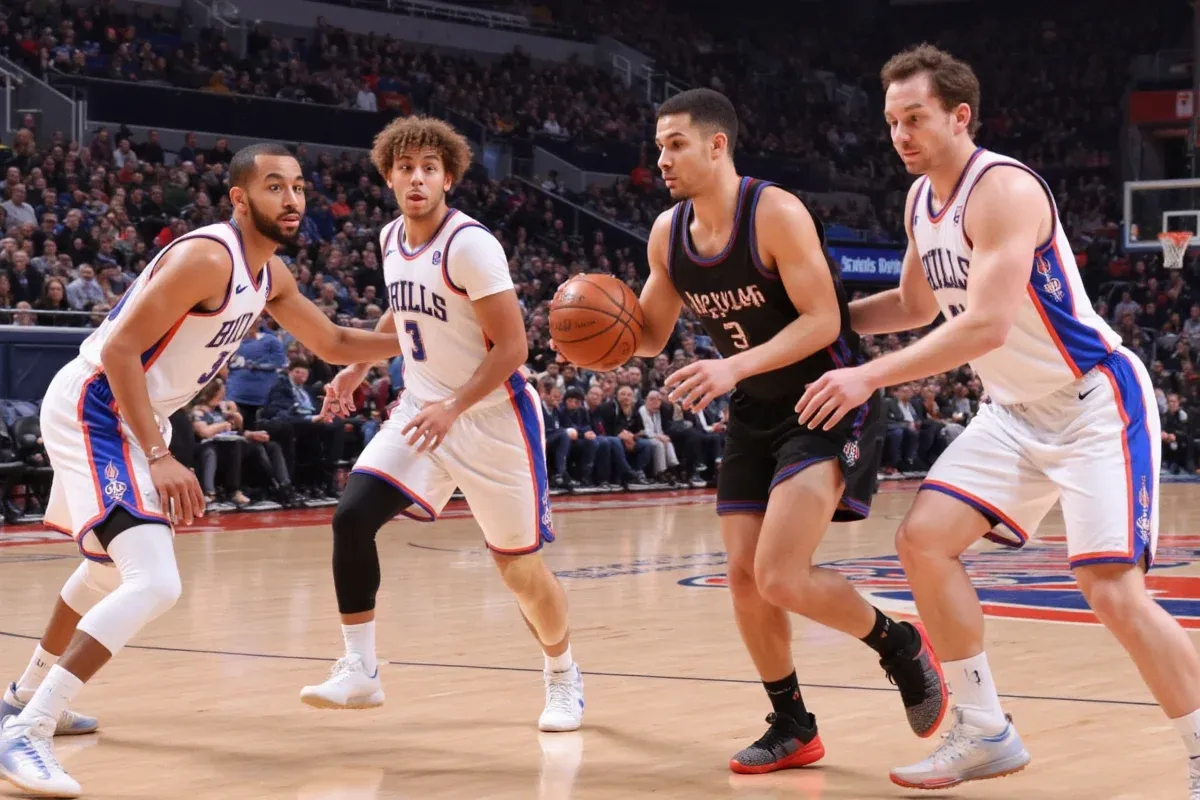
What Counts as an Assist in Basketball?
An assist in basketball is credited to a player who passes the ball to a teammate in a way that directly leads to a made basket. The passer must enable the scorer to score with minimal additional effort, such as one dribble or a layup after receiving the pass. Officially recognized by leagues like the NBA and FIBA, assists are a key metric for evaluating playmaking ability and team ball movement.
What Is an Assist in Basketball?
In basketball, an assist reflects a player's ability to create scoring opportunities for teammates. It is awarded when a pass directly results in a field goal. The official scorer determines whether the final actions before the basket were significantly influenced by the pass.
Key Criteria for an Assist
- The pass must lead directly to a score.
- The receiver should not need more than one dribble or a significant move to score.
- No defensive disruption (e.g., steal or block) should occur between the pass and the basket.
- The scorer should not face excessive pressure that nullifies the value of the pass.
NBA vs. FIBA Assist Rules
While both the NBA and FIBA recognize assists, their criteria differ slightly:
| Criteria | NBA Standard | FIBA Standard |
|---|---|---|
| Pass leading to dunk/layup | Assist awarded | Assist awarded |
| Pass followed by >1 dribble | Rarely counted | Sometimes counted if move is continuous |
| Pass after screen (no touch) | May be counted | Not counted unless pass touches player |
| Offensive rebound converted | Never an assist | Never an assist |
| Free throws following a pass | Never an assist | Never an assist |
The table highlights subtle but meaningful differences in how assists are recorded internationally. The NBA tends to be more liberal in awarding assists, especially on post-entry passes or handoffs, while FIBA enforces stricter continuity requirements. These variations affect player stats across competitions.
Examples of Assisted Baskets
Valid Assists
- A point guard drives and dishes to a cutting wing for a layup.
- A post player receives a skip pass and scores immediately with a turnaround jumper.
- A pick-and-roll where the ball handler passes to the roller finishing at the rim.
Non-Assist Situations
- A player receives a pass, takes three dribbles, and hits a jump shot.
- A player secures an offensive rebound and puts it back in.
- A player creates space with a crossover before making a shot, even after receiving a pass.
Why Assists Matter in Player Evaluation
Assists are central to assessing a player’s court vision, decision-making, and unselfishness. High assist totals often correlate with elite point guards and primary ball handlers. Metrics like assist-to-turnover ratio and assists per game are used to evaluate playmaking efficiency.
Advanced analytics now include secondary assists (hockey assists) and potential assists, which measure passes that lead to shots, even if missed. These metrics offer deeper insight into offensive contribution beyond traditional box score stats.
Common Questions About Assists in Basketball
Does a pass before a foul count as an assist?
No. If a player is fouled while shooting and makes the basket (and-1), no assist is awarded. Similarly, free throws resulting from a foul do not generate an assist, even if the initial pass led to the scoring opportunity.
Can you get an assist on a dunk?
Yes. A pass that leads directly to a dunk—such as an alley-oop—is considered a valid assist as long as the dunk occurs immediately after receiving the pass without additional dribbling or defensive interference.
Is an assist given on a catch-and-shoot three-pointer?
Yes, provided the shooter does not take more than one dribble and the shot is taken in rhythm. Catch-and-shoot threes off crisp passes are among the most common assisted baskets in modern NBA offenses.
Do deflections affect assist eligibility?
If a pass is deflected by a defender but still reaches the teammate, who then scores, an assist may still be awarded if the pass remains under control and leads directly to the basket. However, if the deflection alters the play significantly, the official may withhold the assist.
Who holds the record for most assists in a single NBA game?
Scott Skiles holds the NBA record with 30 assists in a single game, achieved on December 30, 1990, playing for the Orlando Magic against the Denver Nuggets. This remains one of the most dominant playmaking performances in league history.
More Articles
 Where Do the Duke Blue Devils Play Basketball?
 When Does USA Play Basketball? 2025 Schedule & Events
 How Tall Is a Basketball Ring? Official Height Explained
 What Year Did Michael Jordan Retire From Basketball?
 Michigan Basketball Score Today: Final Result & Analysis
 Who Won 2025 NCAA Basketball Championship?
 What Does 'Mean' Mean in Basketball? Explained
 What Does Double Double Mean in Basketball?
 Who Is Playing Basketball Today? Top Players & Stats
 How Many Basketball Teams Are There? NBA & Global Leagues