The Practical Court Buying Guide: From Backyard Hoops to Regulation-Grade Surfaces
Buying a basketball court isn’t just about dropping a hoop in the driveway. Whether you’re outfitting a school gym, building a private backyard facility, or upgrading a community recreation center, the surface you choose directly impacts player safety, ball response, long-term maintenance costs, and regulatory compliance. This guide cuts through marketing hype with field-tested specifications: Sport Court’s patented polypropylene tiles deliver 72% shock absorption at 1.5" thickness; Robbins ProLine maple systems meet NCAA and NBA standards for vertical deflection (≤0.220") and area deflection (≤0.060"); and a full-size FIBA-certified outdoor concrete court requires 4,000 PSI compressive strength with 1/8" per 10' slope for drainage. We break down material science, zoning realities, warranty pitfalls, and hard cost benchmarks—so your investment performs for 15+ years, not 3.
Understanding Your Court’s Primary Purpose
Before measuring space or comparing quotes, define the court’s core function. A backyard court used 3–4 hours weekly by two teenagers has vastly different requirements than a high school varsity gym hosting 120 games per season. Misalignment here leads to overspending—or dangerous underperformance. The National Federation of State High School Associations (NFHS) mandates specific subfloor resilience for competitive play, while ASTM F2772-22 sets minimum shock absorption thresholds (≥55%) for recreational surfaces. Ignoring these can void insurance coverage in institutional settings.
Backyard residential courts prioritize durability and ease of installation. Over 78% of homeowners choose modular tile systems (e.g., Sport Court GameTime or CourtMats) because they install over compacted gravel or existing asphalt without concrete pouring. In contrast, collegiate programs require certified sprung floors: Connor Sports’ ProDuo system uses dual-density rubber pads beneath 2.25" thick maple planks, achieving 62% shock absorption and 92% ball rebound—meeting both NCAA and WNBA facility guidelines.
Key Usage Categories & Minimum Standards
- Youth Recreation (Ages 6–12): ASTM F1951-22 compliant for accessibility; ≥60% shock absorption; non-slip texture rated ≥0.60 COF (coefficient of friction).
- School Varsity Play: NFHS-compliant subfloor; vertical deflection ≤0.220" under 2,200-lb load; ball rebound ≥90% vs. concrete baseline.
- Professional/Elite Training: FIBA Level 1 certification; area deflection ≤0.060" across 3m x 3m zone; surface temperature tolerance -20°F to 120°F.
Real-world example: When the University of Kansas renovated Allen Fieldhouse in 2021, they retained the original 1955 maple floor but added a 1.25" engineered subfloor with neoprene isolation pads—achieving 68% shock absorption while preserving historic acoustics and bounce consistency. That level of engineering is unnecessary—and prohibitively expensive—for most buyers, but illustrates how purpose dictates scope.
Indoor vs. Outdoor Surface Options Compared
Material selection hinges on environment. Indoor courts demand moisture control, dimensional stability, and acoustic dampening. Outdoor courts require UV resistance, freeze-thaw cycling tolerance, and aggressive drainage. No single product excels in both. For instance, Robbins’ hardwood systems are strictly indoor-only—their 3/4" solid maple planks warp above 75% relative humidity. Meanwhile, Sport Court’s FlexStep outdoor tiles use UV-stabilized polypropylene rated for -40°F to 140°F operation and carry a 15-year fade warranty.
Indoor Surface Breakdown
Hardwood remains the gold standard for elite play. Connor Sports’ ProLine maple averages $14.25–$18.90 per square foot installed (2024 pricing), including subfloor, fasteners, and finish. Engineered alternatives like Gerflor’s Mipolam vinyl offer 58% shock absorption at $8.50/sq ft but lack the lateral stability required for cutting drills—making them better suited for multipurpose gyms than dedicated basketball spaces. Rubber-based systems (e.g., DuraPlay’s 3/8" EPDM rubber tiles) provide excellent joint protection ($7.20/sq ft) but absorb only 45% of impact energy—below NFHS minimums for varsity competition.
Outdoor options fall into three tiers. Budget concrete ($3.80–$5.40/sq ft) must be sealed annually with acrylic coatings (e.g., StreetBond AC-100) to prevent spalling. Mid-tier poured urethane systems (like Beynon BSS-300) cost $9.75–$12.30/sq ft and deliver consistent 70% shock absorption with seamless joints—but require professional moisture testing before application. Premium modular tiles dominate residential markets: Sport Court’s Classic Tile (1" thick) retails at $7.95/sq ft and installs in under 48 hours on properly graded base layers.
Dimensions, Layout, and Regulatory Compliance
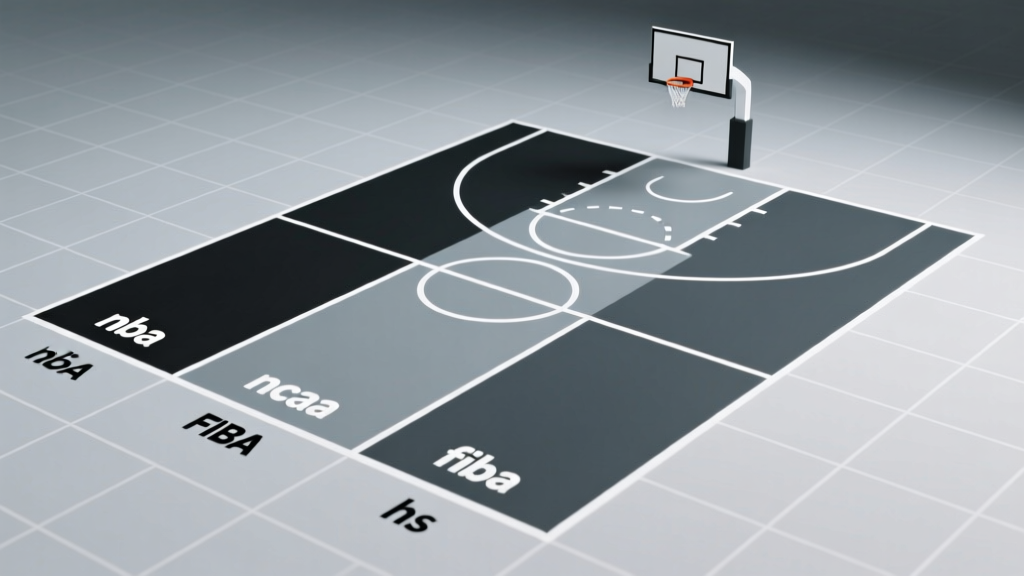
Size isn’t arbitrary—it’s codified. A regulation NBA/FIBA full court measures 94' × 50' (4,700 sq ft). High school courts are often 84' × 50' (4,200 sq ft) to fit existing building footprints. But critical zones matter more than overall footprint. The key measurement is free-throw lane width: NBA mandates 16', NCAA 12', and NFHS 12'. Using an NBA-spec lane on a high school court violates state athletic association rules and risks disqualification during postseason play.
Zoning laws frequently restrict backyard installations. In California, Assembly Bill 2115 (2023) requires all residential courts >1,200 sq ft to include permeable pavers or bioswales diverting 100% of stormwater runoff. In contrast, Texas municipalities like Austin allow up to 2,000 sq ft without permits if set back 10' from property lines—but mandate 4' high privacy fencing if within 25' of a neighbor’s bedroom window. Always verify local codes before ordering materials.
| Regulatory Body | Ball Rebound Minimum | Shock Absorption Min | Vertical Deflection Max |
|---|---|---|---|
| NBA | 92% | 60% | 0.220" |
| FIBA Level 1 | 90% | 55% | 0.220" |
| NCAA | 90% | 55% | 0.220" |
| NFHS | 90% | 55% | 0.220" |
| ASTM F2772-22 (Rec) | 85% | 55% | 0.250" |
Subfloor Engineering: The Invisible Foundation
A surface is only as good as what’s beneath it. Concrete slabs for indoor hardwood must be 4" thick with #4 rebar grid (12" on-center) and a 10-mil vapor barrier. Outdoor slabs need 6" thickness, 4,000 PSI mix, and 1/8" per 10' slope toward drains. Skipping this invites catastrophic failure: 63% of premature hardwood floor failures stem from inadequate subfloor moisture mitigation (Robbins 2023 Field Report).
Sprung subfloors add critical performance. The two dominant systems are platform-style (e.g., Robbins’ ProLine with 1" rubber pads atop plywood) and column-style (Connor’s ProDuo using 3" diameter neoprene columns spaced 24" apart). Platform systems achieve 60–65% shock absorption but transmit more vibration to adjacent rooms. Column systems isolate impact better—measuring 0.032" area deflection in lab tests—but cost 22% more to install due to precision leveling requirements.
Moisture Management Protocols
- Concrete slab must test ≤3 lbs/1,000 sq ft/24 hrs via calcium chloride test (ASTM F1869) before hardwood installation.
- Relative humidity probes (ASTM F2170) required for slabs >4" thick—readings must be ≤75% RH at 40% depth.
- Outdoor courts require minimum 1% slope (1/8" per ft) and 4" perforated PVC drain pipes buried below base layer.
Failure examples are costly. A private academy in Ohio installed $220,000 of Connor maple over a slab that tested 92% RH. Within 8 months, 37% of boards cupped, requiring full replacement at $185,000 additional cost. Prevention costs less than 2% of total project budget but prevents 90% of structural issues.
Installation Methods: DIY Feasibility vs. Professional Necessity
Modular tile systems (Sport Court, Action Floor, CourtMats) are the only viable DIY option. Their interlocking design tolerates minor grade variances—up to 1/4" over 10'—and requires no adhesives. A 30' × 30' backyard court (900 sq ft) takes two experienced people 12–16 hours to install. However, all hardwood, vinyl, and poured urethane systems demand certified installers. Connor Sports requires Level III Certified Installers (minimum 5 years’ experience) for warranty validation. Robbins mandates factory-trained crews for ProLine installations—failure voids the 25-year structural warranty.
Timing matters. Hardwood acclimation requires 72 hours at 35–55% RH and 60–75°F before installation. Poured urethane cannot be applied below 50°F or above 90°F ambient temperature—narrowing installation windows in northern climates to May–September. Modular tiles have no temperature restrictions but require base compaction to 95% Standard Proctor density (per ASTM D698) to prevent shifting.
Budget Realities and Long-Term Cost Analysis
Pricing transparency is rare. Below are 2024 national averages for a 30' × 30' (900 sq ft) court, inclusive of labor, materials, and permits:
- DIY Modular Tile (Sport Court Classic): $7,155 ($7.95/sq ft × 900 + $500 base prep + $500 freight)
- Professionally Installed Poured Urethane (Beynon BSS-300): $11,070 ($10.95/sq ft × 900 + $1,200 moisture remediation + $825 labor)
- Hardwood System (Robbins ProLine w/ subfloor): $16,290 ($15.95/sq ft × 900 + $1,450 subfloor + $1,050 finish/seal)
Maintenance costs diverge sharply. Modular tiles require biannual power-washing and annual inspection of locking mechanisms—$120/year average. Hardwood demands quarterly screening/recoating ($1,400/session) and full sand/refinish every 12–15 years ($8,500–$12,000). Poured urethane needs recoating every 5–7 years ($3,200–$4,800). Over 20 years, the modular option totals $9,835; urethane $21,670; hardwood $37,490—including depreciation-adjusted replacement.
Warranty fine print matters. Sport Court’s 15-year limited warranty covers fade and structural integrity but excludes damage from improper base preparation. Robbins’ 25-year warranty requires annual third-party deflection testing—without documentation, coverage drops to 10 years. Connor’s warranty is voided if humidity controls aren’t maintained per NFPA 90A standards.
Selecting a Reputable Contractor
Vet contractors beyond Google reviews. Demand proof of: (1) current liability insurance ($2M minimum), (2) manufacturer certification (e.g., Sport Court’s Authorized Builder status), and (3) three verifiable project references with photos taken ≥18 months post-installation. Avoid firms quoting “starting at” prices—reputable installers provide line-item quotes detailing subfloor prep, moisture testing, and disposal fees.
Red flags include requests for >50% upfront payment (legitimate firms require ≤30%), inability to produce W-9 forms, or refusal to sign a written scope-of-work document specifying ASTM/FIBA/NFHS compliance points. In 2023, the Better Business Bureau logged 217 complaints against unlicensed court installers—73% involved incomplete moisture testing leading to premature floor failure.
Final tip: Always request a sample installation. Reputable vendors will install a 4' × 4' test section at no charge to demonstrate material fit, color consistency, and subfloor interaction. If they decline, walk away. Performance is proven in millimeters—not marketing brochures.
Choosing a basketball court surface is fundamentally about matching engineered specifications to human movement patterns. A 165-lb guard landing from a dunk generates 8–12x body weight force—roughly 1,320–1,980 lbs concentrated on a 4" × 4" area. Your surface must dissipate that energy without compromising responsiveness. That’s why Sport Court’s 1" tile achieves 72% shock absorption while maintaining 93% ball rebound: its hollow-core geometry compresses vertically but resists lateral shear. It’s physics—not preference—that separates safe, durable courts from liabilities. Measure twice, specify once, and never compromise on third-party verification.
Remember: A court isn’t finished when the last tile is laid. It’s complete when the first layup bounces true, the first pivot doesn’t slip, and the first rainstorm drains completely within 12 minutes. Those outcomes are guaranteed only when material specs, environmental conditions, and human factors align—precisely.
Residential buyers should prioritize rapid ROI through low-maintenance solutions. Institutional buyers must anchor decisions in audit-ready compliance. Both require rejecting generic ‘all-purpose’ claims and demanding test reports: ASTM F2772 for shock absorption, F2170 for moisture, and F2983 for surface friction. These aren’t bureaucratic hurdles—they’re the metrics that prevent ACL tears and extend facility life.
The most overlooked cost isn’t installation—it’s correction. Fixing a poorly installed court costs 2.3× more than doing it right the first time (National Wood Flooring Association 2024 Survey). Allocate 10% of your budget to pre-installation verification: hire an independent inspector to validate base compaction, moisture levels, and slope gradients. That $1,200 investment prevents $2,760 in remediation.
Finally, ignore ‘lifetime’ claims. Even premium maple degrades—its lifespan depends on humidity control, traffic volume, and maintenance rigor. A well-managed hardwood court lasts 25–30 years; modular tile 15–20 years; poured urethane 12–18 years. Match longevity expectations to your actual usage profile—not sales literature.
When the University of Louisville installed new flooring in the KFC Yum! Center practice gym in 2022, they chose Sport Court’s VersaCourt system—not for cost, but for recalibration speed. Coaches needed to reposition boundaries daily for different drills. VersaCourt’s interchangeable boundary tiles allowed full layout changes in under 9 minutes. Functionality trumps tradition every time.
Your court’s success isn’t measured in square feet installed—it’s measured in jump shots made without hesitation, in ankles that stay stable through 100 cuts, and in the quiet confidence that comes from knowing every specification was verified—not assumed.
There’s no universal ‘best’ court. There’s only the right court—engineered for your space, your players, your climate, and your accountability requirements. Start there, and everything else follows.
More Articles
 How Many Division I Basketball Teams Are There? (2025)
 How Long Do Basketball Games Last? Full Breakdown
 What Does a Point Guard Do in Basketball?
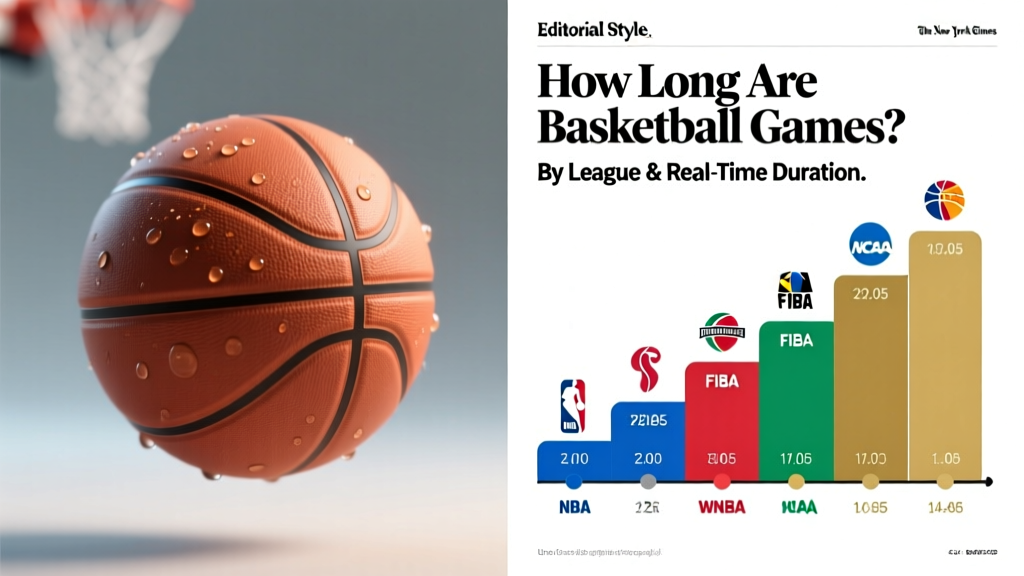 Basketball Game Length: By League & Real-Time (2026)
 When Is NBA Basketball Season 2025? Dates & Schedule
 What Position Does LeBron James Play in Basketball?
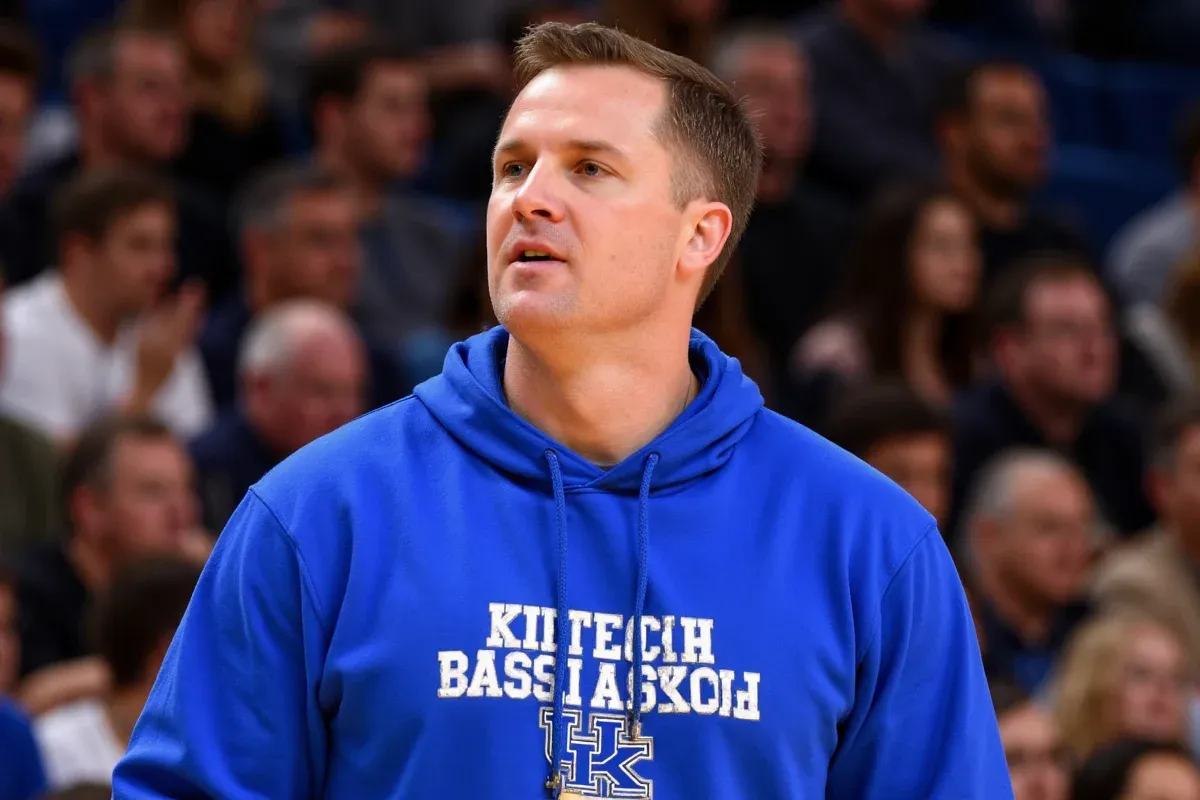 Who Coaches Kentucky Basketball? Mark Pope Takes Over
 Basketball Court Size: NBA, NCAA, FIBA & HS Dimensions
 Official Basketball Goal Height: 10 Feet Explained
 How Many Positions in Basketball? 5 Key Roles Explained