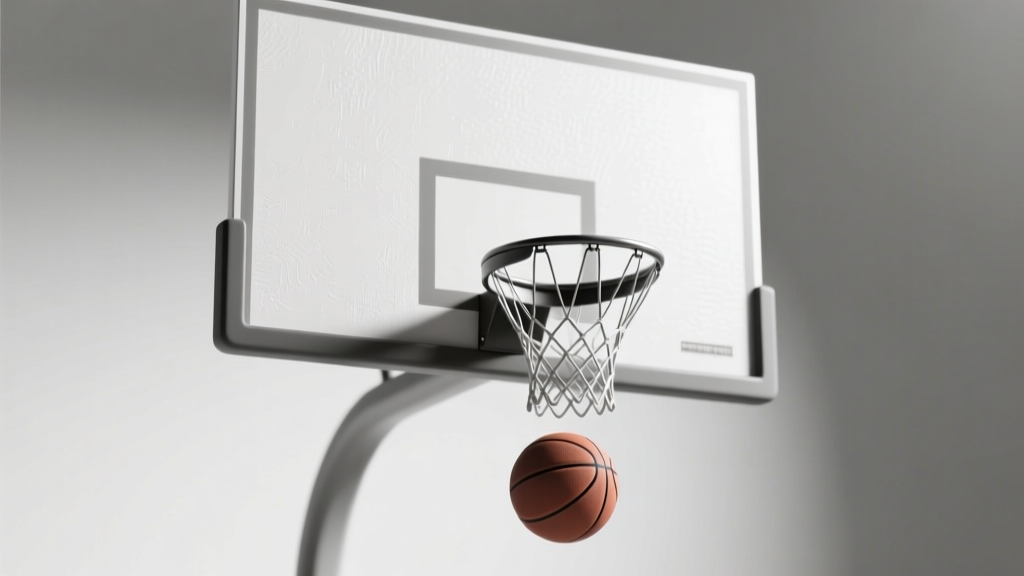
Official Basketball Goal Height: 10 Feet Explained
The official height of a basketball goal is 10 feet (3.05 meters) above the ground, a standard established by the NBA, FIBA, NCAA, and NFHS, and consistently applied across professional, collegiate, high school, and international competitions worldwide.
Understanding the Standard Basketball Goal Height
The universally accepted height for a basketball goal is 10 feet (3.05 meters). This measurement is standardized across major governing bodies including the National Basketball Association (NBA), the International Basketball Federation (FIBA), the National Collegiate Athletic Association (NCAA), and the National Federation of State High School Associations (NFHS). Whether in professional arenas or local gyms, this consistent height ensures fairness and continuity in skill development and gameplay.
Why Is the Basketball Rim 10 Feet High?
The 10-foot standard dates back to the invention of basketball in 1891 by Dr. James Naismith. When he first hung peach baskets on the balcony of a YMCA gym in Springfield, Massachusetts, the balcony was exactly 10 feet above the floor. Although modifications were made over time, the original height remained unchanged to preserve the game’s integrity and challenge.
- The height was not chosen for athletic reasons but due to structural convenience.
- Maintaining consistency allows players to transition seamlessly between levels of play.
- It provides a balance between accessibility and difficulty for shooting and dunking.
Variations Across Age Groups and Leagues
While 10 feet is the official standard for adults and older youth, younger players often use lower rims to support skill development. Adjustable hoops are commonly used in youth programs to match the physical capabilities of growing athletes.
| League / Organization | Basketball Goal Height | Age Group |
|---|---|---|
| NBA | 10 feet (3.05 m) | Professional |
| FIBA | 10 feet (3.05 m) | International Senior |
| NCAA (Men's & Women's) | 10 feet (3.05 m) | College |
| NFHS | 10 feet (3.05 m) | High School |
| USA Basketball (Youth) | 9 feet (2.74 m) | 7–8 years old |
| USA Basketball (Youth) | 8 feet (2.44 m) | 5–6 years old |
| USA Basketball (Youth) | 6 feet (1.83 m) | Under 5 |
The data shows that while elite and adult leagues uniformly adopt the 10-foot standard, youth organizations implement progressive heights to enhance learning and reduce injury risk. Lower rims help young players develop proper shooting mechanics and build confidence before transitioning to regulation height.
Equipment and Installation Standards
To ensure compliance with official regulations, basketball goals must meet specific installation criteria:
- The top of the rim must be precisely 10 feet from the playing surface.
- The rim diameter should be 18 inches (45.7 cm).
- Backboards are typically 72 inches (183 cm) wide by 42 inches (107 cm) tall for professional play.
- Net length ranges from 15 to 18 inches (38–46 cm).
Portable and residential hoops often feature height adjustment mechanisms, allowing users to set the rim from 7.5 to 10 feet, accommodating players of various ages and skill levels.
Impact of Rim Height on Gameplay
The 10-foot height significantly influences scoring dynamics, shot selection, and player athleticism:
- Encourages development of proper shooting arc and form.
- Increases the challenge of finishing at the rim, rewarding vertical leap and coordination.
- Affects defensive strategies, as shot-blocking becomes a valuable skill.
- Promotes consistency in training and performance metrics across venues.
Even slight deviations from the standard height can alter shooting percentages and player development, emphasizing the importance of accurate installation and regular maintenance.
Common Questions About Basketball Goal Height
What is the official height of a basketball hoop in feet and meters?
The official height of a basketball hoop is 10 feet, which is equivalent to 3.05 meters. This standard is used in all professional, college, and international competitions.
Is the basketball rim height the same for men and women?
Yes, the rim height is the same for both men and women at 10 feet (3.05 meters) in professional, collegiate, and international play. Skill differences are not compensated by altering rim height.
Are NBA and college basketball rims the same height?
Yes, both NBA and NCAA basketball rims are set at the official height of 10 feet (3.05 meters), ensuring consistency between professional and collegiate levels.
What height should a basketball hoop be for 10-year-olds?
For 10-year-olds, a recommended height is 9 feet (2.74 meters). Some leagues may still use 8 or 9 feet depending on skill level, with a gradual progression toward the full 10 feet by age 12.
Can you adjust the height of a basketball goal?
Yes, most residential and youth basketball systems are adjustable. Professional and permanent installations typically have fixed rims at 10 feet, but portable goals often allow height changes from 7.5 to 10 feet.
More Articles
 Smart Swim Gear Storage: Organize for Performance
 Where Did Karl Anthony Towns Play College Basketball?
 How Much Do Basketball Players Make Overseas?
 When Does Michigan State Play Basketball? 2025-2026 Schedule
 12 Practical DIY Basketball Games You Can Build in Under 2 Hours
 What NBA Teams Did Michael Jordan Play For?
 Adam Silver Basketball: Did He Play?
 Don Haskins Basketball Legacy and 1966 Championship Impact
 Basketball Weight: Official Sizes & League Standards (2026)
 Where to Buy a Basketball Near Me Today