What Size Yoga Ball Should You Choose?
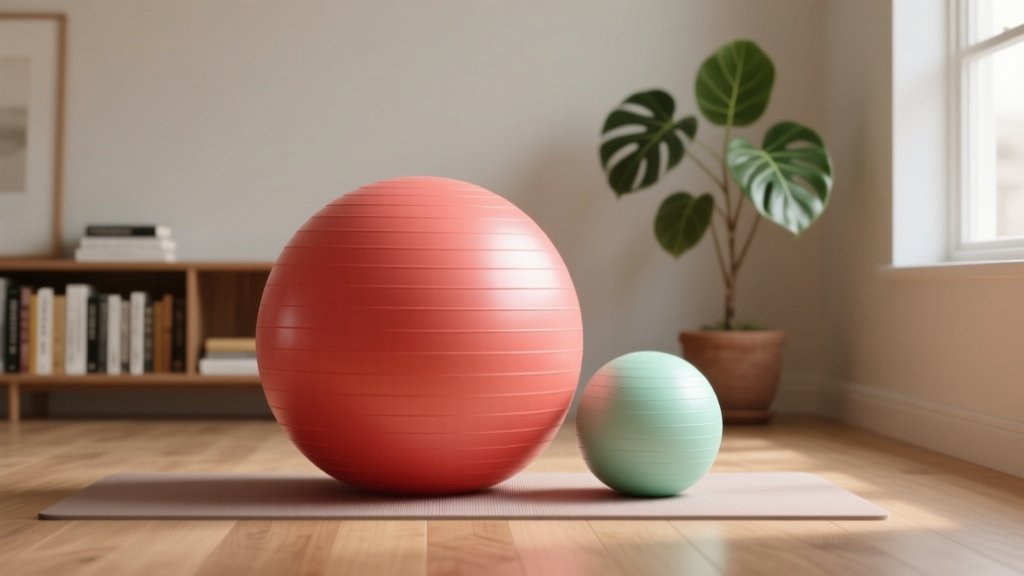
If you're wondering what size yoga ball to choose, the answer depends on your height. Most adults between 5'0" and 5'5" should use a 55 cm ball, those from 5'6" to 6'0" need a 65 cm ball, and individuals over 6'0" should go with a 75 cm ball. Selecting the correct size ensures proper alignment and maximizes exercise effectiveness.
Why Choosing the Right Yoga Ball Size Matters
Selecting the correct yoga ball—also known as an exercise or stability ball—size is essential for safety, posture, and workout efficiency. A ball that's too large or too small can lead to poor spinal alignment, reduced core engagement, and even injury during exercises like ball rolls, wall squats, or seated balance drills.
Key Benefits of Proper Sizing
- Maintains natural spine curvature during seated and exercise positions
- Improves balance and muscle activation in core, glutes, and legs
- Reduces strain on knees and lower back
- Enhances ergonomics when used as a desk chair alternative
How to Measure Your Ideal Yoga Ball Size
The best way to determine what size yoga ball you need is by measuring your height. When seated on the ball, your hips and knees should form 90-degree angles, with feet flat on the floor and thighs parallel to the ground.
Step-by-Step Measurement Guide
- Stand barefoot against a wall and measure your full height.
- Refer to the sizing chart below based on your height range.
- Sit on the ball: thighs should be horizontal, knees bent at 90°.
- Adjust size up or down if needed for comfort and alignment.
| Height Range (ft/in) | Height Range (cm) | Recommended Ball Diameter (cm) | Recommended Ball Diameter (inches) |
|---|---|---|---|
| Under 5'0" | Under 152 cm | 45 cm | 18 inches |
| 5'0" – 5'5" | 152–165 cm | 55 cm | 22 inches |
| 5'6" – 6'0" | 166–183 cm | 65 cm | 26 inches |
| 6'1" – 6'7" | 184–200 cm | 75 cm | 30 inches |
| Over 6'7" | Over 200 cm | 85 cm | 34 inches |
The data shows a clear correlation between user height and optimal ball diameter. Using a correctly sized ball improves biomechanical efficiency during workouts. For example, a 65 cm ball is ideal for most average-height adults, providing balanced support and mobility.
Yoga Ball Sizing for Specific Uses
Beyond height, consider how you plan to use the ball. Different activities may influence your choice in what size yoga ball to buy.
Fitness and Core Training
For Pilates, abdominal crunches, or planks, precise sizing ensures effective muscle engagement. A ball that’s too small reduces range of motion, while one too large can destabilize your base.
Ergonomic Seating
When replacing an office chair with a yoga ball, correct height alignment prevents lower back pain. At a standard desk (29–30 inches), a 65 cm ball fits most users between 5'6" and 6'0".
Physical Therapy and Rehabilitation
Therapists often recommend slightly smaller balls for controlled movements. Always follow professional guidance if using the ball post-injury or for mobility training.
Additional Factors to Consider
While height is the primary factor, other elements affect your final decision on what size yoga ball to purchase.
- Weight Capacity: Most balls support 250–600 lbs. Check manufacturer specs, especially for users over 250 lbs.
- Material Type: Burst-resistant PVC is safest. Look for "anti-burst" or "high-load" labels.
- Inflation: Under-inflate slightly (90%) for stability; fully inflate for dynamic movements.
- Floor Surface: Use on non-slip mats to prevent rolling, especially with larger (75+ cm) balls.
Common Questions About Yoga Ball Sizes
What size yoga ball do I need for my height?
If you're between 5'0" and 5'5", choose a 55 cm (22") ball. For 5'6" to 6'0", go with 65 cm (26"). Taller than 6'0"? Use a 75 cm (30") ball. Those under 5'0" should use a 45 cm (18") ball.
Can a yoga ball be too big?
Yes. A ball that's too big forces your hips above knee level when seated, straining hamstrings and lower back. It also increases fall risk during balance exercises. Always match ball size to your height.
How do I know if my exercise ball is inflated enough?
A properly inflated yoga ball should have slight give when pressed but hold its shape. When seated, it should compress so your knees form a 90-degree angle. Over-inflation increases burst risk; under-inflation reduces stability.
What size yoga ball should I use as a desk chair?
For ergonomic seating, use the same sizing based on height: 55 cm (5'0"–5'5"), 65 cm (5'6"–6'0"), or 75 cm (over 6'0"). Ensure your desk allows elbows to bend at 90° when typing.
Are all yoga balls measured the same way?
Yes, yoga balls are measured by diameter in centimeters and inches. Always check the product specifications before buying. Some brands list size by recommended height, but diameter is the standardized measurement.
More Articles
 Where to Buy Snowboards: Best Retailers 2025
 Where Can I Go Hiking Near Me? Find Trails Fast
 Who Developed CrossFit? The Full Story
 Dates Checklist: Buy, Store, and Use for Max Flavor
 Where to Buy a Ski Mask: Top 2025 Retailers & Picks
 How Many Calories Does Cycling Burn? (By Weight & Speed)
 When Did Surfing Become an Olympic Sport?
 Seasonal Wardrobe Alignment for Athletes
 How to Improve Your Vertical Jump: Science-Based Training Program
 How Often Should I Do Yoga? Optimal Weekly Frequency