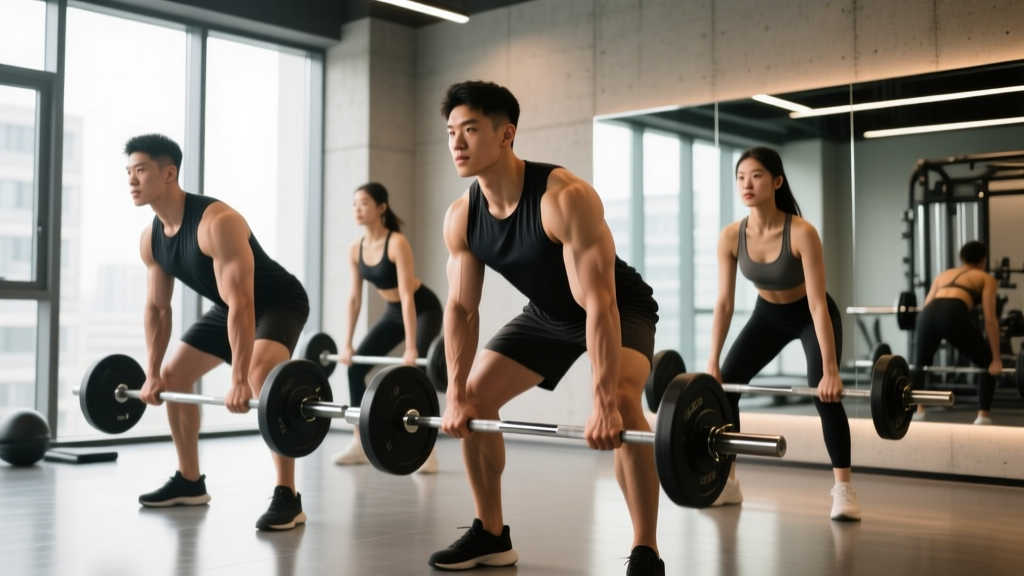
Can Lifting Weights Stunt Growth? Science Says No
Lifting weights does not stunt growth in children or adolescents when done properly under supervision and with correct technique. Scientific evidence shows that resistance training is safe and beneficial for youth, improving strength, bone health, and athletic performance without negatively affecting growth plates or final adult height.
Understanding the Myth: Can Weightlifting Stunt Growth?
The belief that lifting weights stunts growth has persisted for decades, primarily due to concerns about damage to growth plates (epiphyseal plates) in children and adolescents. However, modern research consistently refutes this myth. The American Academy of Pediatrics (AAP), the National Strength and Conditioning Association (NSCA), and other leading health organizations support supervised resistance training for young individuals as a safe and effective practice.
Origins of the Misconception
- The myth likely originated from early 20th-century observations of child laborers in Japan who performed heavy physical labor and exhibited stunted growth—likely due to malnutrition and poor working conditions, not weight training itself.
- Misinterpretation of rare injuries involving growth plate fractures led to generalized fears, despite these cases being linked to improper supervision or excessive loading.
- Confusion between competitive weightlifting (e.g., Olympic lifting) and general resistance training in youth contributes to ongoing misinformation.
Benefits of Resistance Training for Youth
When appropriately structured, resistance training offers numerous health and performance benefits for children and adolescents:
- Increased muscular strength and endurance
- Improved bone mineral density
- Reduced risk of sports-related injuries
- Enhanced coordination, balance, and motor control
- Positive psychological effects, including improved self-esteem and discipline
Key Guidelines for Safe Youth Resistance Training
To ensure safety and effectiveness, experts recommend the following principles:
- Proper supervision by a qualified trainer or coach
- Emphasis on technique and form before increasing load
- Progressive overload tailored to individual development
- Avoidance of maximal lifts (1-repetition maximum) until physical and emotional maturity
- Incorporation of warm-up, cool-down, and flexibility exercises
Risks vs. Reality: Evaluating Injury Data
While any physical activity carries some risk, studies show that resistance training is safer for youth than many common sports when guidelines are followed.
| Activity | Injuries per 1,000 Participant-Years | Primary Injury Type |
|---|---|---|
| Resistance Training (Youth) | 0.06–0.27 | Muscle strain, minor joint discomfort |
| Football (High School) | 4.47 | Concussions, ligament tears |
| Soccer (Youth) | 2.53 | Ankle sprains, knee injuries |
| Basketball (Youth) | 3.12 | ACL tears, finger fractures |
Data shows that injury rates in youth resistance training are significantly lower than in popular team sports. Most injuries occur due to unsupervised training, improper technique, or excessive loading—factors that are preventable with proper programming.
Scientific Consensus and Medical Recommendations
Major health and sports medicine organizations agree on the safety and value of youth resistance training:
- American Academy of Pediatrics (AAP): Supports resistance training for children aged 8+ if they can follow instructions and perform movements correctly.
- National Strength and Conditioning Association (NSCA): Recommends age-appropriate programs starting as early as 7–8 years, focusing on skill acquisition.
- Pediatric Exercise Science Journal: Confirms no evidence of growth plate damage or stunted growth from properly supervised training.
Frequently Asked Questions About Weightlifting and Growth
Does lifting weights stop you from growing taller?
No, lifting weights does not stop you from growing taller when performed correctly. There is no scientific evidence linking supervised resistance training to reduced height or impaired growth. In fact, strength training may support healthy bone development during adolescence.
Is it safe for a 14-year-old to lift weights?
Yes, it is safe for a 14-year-old to lift weights provided the training is supervised, uses proper technique, and avoids maximal lifts. At this age, most adolescents can benefit greatly from structured resistance programs that enhance strength, coordination, and injury resilience.
Can weightlifting damage growth plates in kids?
Growth plate injuries from weightlifting are extremely rare and typically result from improper supervision, excessive loading, or accidents with equipment. When guidelines are followed, resistance training poses less risk than contact sports like football or soccer.
What is the best age to start weight training?
Children can begin bodyweight exercises and skill-based training around ages 7–8. Formal resistance training with light weights can start when a child demonstrates emotional maturity, attention span, and ability to follow instructions—usually around 9–11 years old, depending on the individual.
Are bodybuilding or powerlifting safe for teens?
Bodybuilding and maximal powerlifting are not recommended for most teens due to extreme loads and potential hormonal stress. However, moderate resistance training focused on form, endurance, and gradual progression is both safe and beneficial for adolescent development.
More Articles
 Basketball Essentials: Gear, Rules & Skills
 How Often Should You Do Yoga for Best Results?
 Should I Do Calisthenics Every Day? Expert Advice
 Where to Go Skiing: Top Global Destinations for 2025
 Best Nobull Shoes for CrossFit Women
 Youth Drills vs NCAA Training Compared
 Who Won the Eddie 2024 Surfing? Lucas Chumbo Takes Title
 How High Is Skydiving? Typical Jump Altitudes Explained
 Who Owns CrossFit in 2025? Current Owner and History
 Seasonal Wardrobe Alignment for Athletes