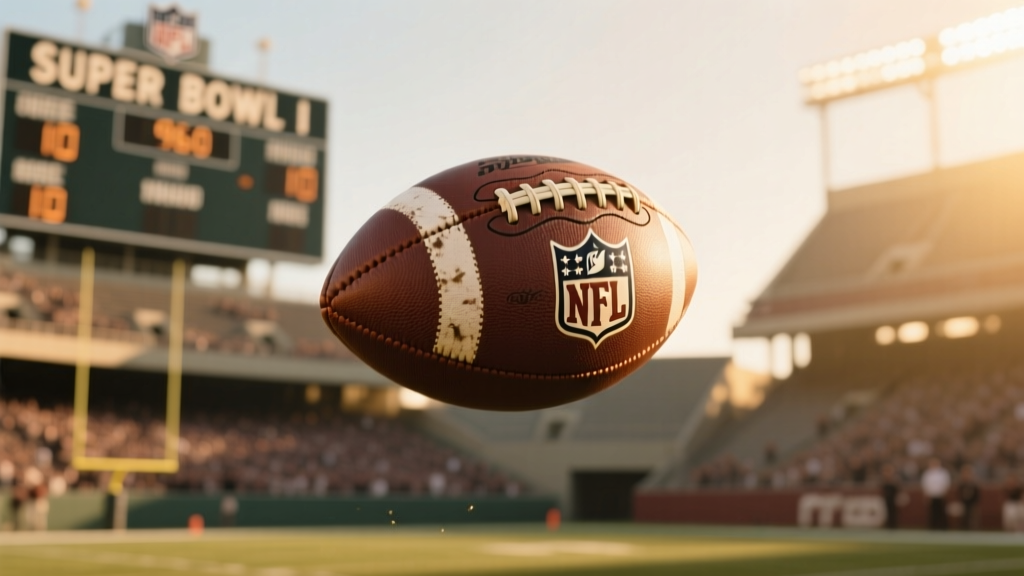
Who Won the First Super Bowl? | Packers vs Chiefs
Who Won the First Super Bowl?
The Green Bay Packers won the first Super Bowl, defeating the Kansas City Chiefs 35–10 on January 15, 1967. Coached by legendary Vince Lombardi, the Packers dominated Super Bowl I, establishing an early benchmark for excellence in professional American football.
Background of the First Super Bowl
Super Bowl I was the inaugural championship game between the National Football League (NFL) and the American Football League (AFL), marking the beginning of the NFL-AFL merger era. Officially known at the time as the "AFL-NFL World Championship Game," it was retroactively dubbed Super Bowl I.
Key Context Leading to the Game
- The NFL and AFL agreed to merge in 1966, with a championship game planned to determine the best team across both leagues.
- The game was played after the conclusion of the 1966 regular season.
- It featured the NFL champion Green Bay Packers against the AFL champion Kansas City Chiefs.
- Vince Lombardi and Hank Stram served as head coaches for the Packers and Chiefs, respectively.
- The game took place at the Los Angeles Memorial Coliseum in front of 61,946 fans.
Game Summary and Performance
The Packers controlled the game from the start, showcasing their superior experience and execution. Quarterback Bart Starr threw two touchdown passes, while running backs Paul Hornung and Elijah Pitts each added rushing touchdowns. The defense held the Chiefs to just one touchdown, effectively neutralizing Len Dawson’s offense.
Notable Performances
- Bart Starr: 16/23 passing, 250 yards, 2 TDs – named MVP.
- Max McGee: Unexpected star with 7 catches for 138 yards and 2 TDs despite minimal practice.
- Willie Wood: Key interception that shifted momentum early in the second half.
- Len Dawson: Threw for 210 yards and 1 TD but was under constant pressure.
| Statistic | Green Bay Packers | Kansas City Chiefs |
|---|---|---|
| First Downs | 19 | 15 |
| Total Yards | 382 | 279 |
| Passing Yards | 263 | 210 |
| Rushing Yards | 119 | 69 |
| Turnovers | 1 | 3 |
| Time of Possession | 35:15 | 24:45 |
The statistical edge clearly favored the Packers, particularly in time of possession and turnover margin. Their ability to sustain drives and capitalize on Chiefs' mistakes underscored their dominance. The 35–10 score reflected both offensive efficiency and defensive discipline.
Legacy and Historical Significance
Super Bowl I laid the foundation for what would become the most-watched annual sporting event in the United States. The Packers' victory validated the NFL's perceived superiority at the time, though the AFL would gain credibility in subsequent years.
Lasting Impacts
- The game was not sold out and was blacked out locally, highlighting its initially modest expectations.
- Only about 51 million viewers watched on CBS and NBC (dual broadcast).
- Vince Lombardi’s leadership became iconic, with the trophy later named in his honor.
- The success of the game ensured the continuation of the Super Bowl tradition.
Frequently Asked Questions About the First Super Bowl
When was the first Super Bowl played?
Super Bowl I was played on January 15, 1967, at the Los Angeles Memorial Coliseum.
Who was the MVP of the first Super Bowl?
Green Bay Packers quarterback Bart Starr was named Most Valuable Player after throwing for 250 yards and two touchdowns.
What was the final score of the first Super Bowl?
The Green Bay Packers defeated the Kansas City Chiefs 35–10 in Super Bowl I.
Why was the first Super Bowl not called the Super Bowl at the time?
The term "Super Bowl" was not officially used until Super Bowl III. The first game was billed as the "AFL-NFL World Championship Game." The name "Super Bowl" originated from a toy bowl used by children and was popularized by media and players.
Where was the first Super Bowl held?
The first Super Bowl was held at the Los Angeles Memorial Coliseum in Los Angeles, California.
More Articles
 Why Is Boxing Called Boxing? Origins Explained
 Who Won Beach Volleyball Olympics 2024? Gold Medal Winners
 What Year Did the Dallas Cowboys Win the Super Bowl?
 Who Created Boxing? Origins & Key Historical Figures
 Taekwondo vs Karate: Which Is Better for You?
 When Is National Volleyball Day? February 9 Explained
 Who Won the Last Ten Super Bowls? Complete List & Stats
 Which City Has Hosted the Most Super Bowls?
 How Much Does a Beer Cost at the Super Bowl 2025?
 Who Won the 2011 World Series? Cardinals vs Rangers