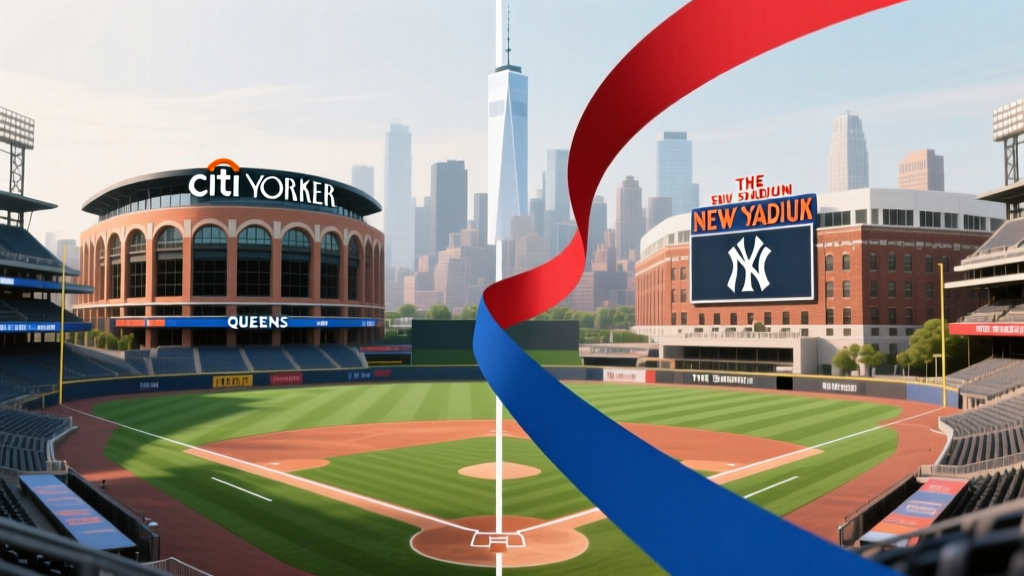
Why Does New York Have Two Baseball Teams?
New York City has two Major League Baseball teams—the Yankees and the Mets—due to its large population, deep baseball history, and dual-league representation that emerged after the departure of earlier National League teams in the late 1950s.
Why New York Has Two MLB Teams
New York City is the most populous city in the United States, making it a natural hub for multiple professional sports franchises. The presence of two baseball teams—the American League's New York Yankees and the National League's New York Mets—stems from historical shifts in Major League Baseball (MLB), particularly the relocation of the Brooklyn Dodgers and New York Giants to California in 1958.
With both National League teams gone, New York was left without NL representation. To fill the void and maintain fan engagement, the Mets were established in 1962 as an expansion team, restoring balance and ensuring the nation's largest market had teams in both leagues.
Historical Background of NYC Baseball Teams
Understanding why New York has two teams requires a look back at the city's rich baseball legacy:
- The New York Yankees joined the American League in 1903 (originally as the Highlanders) and quickly became one of baseball’s most dominant franchises.
- The Brooklyn Dodgers (founded 1883) and New York Giants (founded 1883) were long-standing National League rivals based in New York.
- In 1958, both the Dodgers and Giants relocated—to Los Angeles and San Francisco, respectively—leaving NYC with only the Yankees.
- To restore National League baseball, the New York Mets were created as an expansion team in 1962, reviving competition and fan choice.
The Vacuum Left by Departing Teams
The departure of the Dodgers and Giants was a major blow to New York baseball fans. Their move west marked the first time MLB expanded beyond the Mississippi River. With no NL team remaining, there was strong public and league pressure to bring National League baseball back to the city.
Franchise Comparison: Yankees vs. Mets
The Yankees and Mets differ not only in league affiliation but also in history, branding, and performance. Below is a detailed comparison:
| Attribute | New York Yankees | New York Mets |
|---|---|---|
| League | American League (AL) | National League (NL) |
| Founded | 1903 | 1962 |
| Home Stadium | Yankee Stadium (Bronx) | Citi Field (Queens) |
| World Series Titles | 27 | 2 |
| Notable Players | Babe Ruth, Lou Gehrig, Derek Jeter | Tom Seaver, Mike Piazza, David Wright |
| All-Time Win-Loss Record (as of 2024) | 10,778–8,148 (.569) | 4,728–5,245 (.475) |
The data shows a stark contrast in success: the Yankees are the winningest franchise in MLB history, while the Mets have a below-.500 all-time record. However, both teams enjoy strong fan support due to New York’s massive media market and cultural influence.
Geographic and Cultural Rivalry
The existence of two teams fosters a natural rivalry known as the Subway Series, named for fans traveling between boroughs via subway to attend games.
Key Aspects of the Subway Series
- First held in the early 20th century between the Yankees, Giants, and Dodgers.
- Revived in interleague play starting in 1997.
- Serves as a unifying yet competitive event for NYC baseball fans.
- Boosts ticket sales, TV ratings, and local engagement.
This intracity rivalry enhances the baseball culture in New York and justifies the sustainability of two teams in one metropolitan area.
Frequently Asked Questions About Why New York Has Two Baseball Teams
Why doesn't every city have two baseball teams like New York?
Most cities aren’t large enough to support two MLB franchises. New York’s population, media market size, and historical significance make it unique. Only markets with substantial fan bases and financial capacity can sustain multiple teams.
Are the Yankees and Mets in different leagues?
Yes, the Yankees compete in the American League (AL), while the Mets are part of the National League (NL). This distinction reflects their origins and maintains competitive balance across MLB.
Did New York ever have three baseball teams?
No, but it came close. In the early 20th century, New York had three teams if you count the short-lived Federal League’s Brooklyn Tip-Tops (1914–1915). However, the Yankees, Giants, and Dodgers coexisted in the majors from the 1920s to 1957, creating a de facto three-team system before the Giants and Dodgers left.
How do fans choose between the Yankees and Mets?
Fans often align based on family tradition, geographic location within the city, or personal preference for team history and style. Some prefer the Yankees’ winning legacy, while others support the Mets as a point of differentiation or underdog loyalty.
Could New York get a third MLB team in the future?
It’s highly unlikely. MLB prefers expanding into untapped markets rather than adding teams in existing cities. With two well-established franchises already in place, there’s little incentive or stadium infrastructure to support a third team.
More Articles
 When Is the Super Bowl 2025 Start Time?
 How Many Super Bowls Have the NY Giants Won? (4 Titles)
 When Does the Rose Bowl Start? 2026 Kickoff Time
 Basketball Traveling Rules: What Counts and What Does Not (2026)
 How Many Super Bowl Rings Does Gronk Have? (Answered)
 Australian Open 2025 Dates: When and Where
 When Is Boxing Season? Key Fight Times Explained
 Why Do Baseball Players Wear 42 on April 15?
 Rose Bowl Start Time Today: What Time Is It?
 How Much Is Bowling at Round1? 2025 Prices Explained