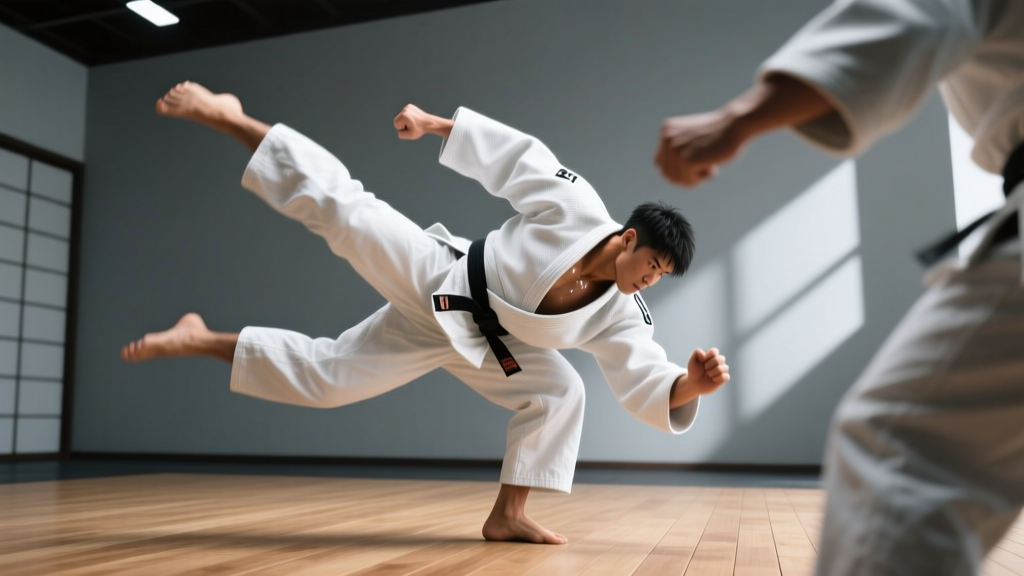
Common Mistakes in Judo Fighting & How to Avoid Them
In judo fighting, common mistakes include poor posture, weak grip control, lack of balance awareness, telegraphing techniques, and improper ukemi (breakfalls), all of which can lead to penalties or loss of advantage during competition.
Key Mistakes in Judo Fighting
Judo is a highly technical martial art where precision, timing, and discipline are essential. Even small errors can result in lost opportunities or direct penalties under International Judo Federation (IJF) rules. Understanding the most frequent mistakes helps athletes refine their technique and strategy.
Common Technical Errors
- Maintaining a high stance instead of a balanced, athletic posture
- Failing to break the opponent’s balance (kuzushi) before executing a throw
- Using excessive force instead of proper biomechanics
- Telegraphing moves through predictable patterns or body language
- Incorrect foot placement during tai-otoshi, seoi-nage, or uchi-mata
Gripping Mistakes
Grip fighting (kumi-kata) is foundational in judo. Poor gripping severely limits offensive options.
- Allowing the opponent to control your sleeve or lapel
- Not adjusting grips based on opponent’s stance (orthodox vs. southpaw)
- Over-gripping, leading to stiffness and slower reactions
- Failing to switch grips dynamically during kuzushi
Strategic and Tactical Errors
- Passivity or hesitation after securing a strong grip
- Repeating unsuccessful attacks without variation
- Ignoring distance management (maai)
- Poor timing in combination with feints
- Focusing only on offense while neglecting counters (kaeshi-waza)
Penalty Frequency by Mistake Type (2024 IJF World Championships)
| Mistake Category | Number of Penalties (Shido) | Average Per Match | Top Offenders (National Teams) |
|---|---|---|---|
| Poor Posture / Passive Defense | 187 | 1.3 | Japan, France, Brazil |
| Grip Violations | 142 | 0.98 | Russia, South Korea, Mongolia |
| Non-combativity (Avoiding Engagement) | 96 | 0.67 | Egypt, Ukraine, Germany |
| Illegal Techniques (e.g., knee reap) | 54 | 0.38 | Turkey, Kazakhstan, Cuba |
| Poor Ukemi (Dangerous Falls) | 23 | 0.16 | Multiple junior athletes |
The data shows that postural and passive defense errors accounted for over 40% of all penalties at the 2024 IJF World Championships. Grip violations remain a persistent issue, especially among elite competitors from traditionally strong judo nations. This indicates that even high-level athletes struggle with consistent grip discipline under pressure.
Consequences of Common Judo Mistakes
Each mistake carries specific competitive risks:
Penalties (Shido System)
- First Shido: Warning
- Second Shido: Additional warning
- Third Shido: Penalty point for opponent
- Fourth Shido: Disqualification (Hansoku-make)
Repeated infractions like stepping out of bounds or passivity quickly accumulate shidos. For example, poor maai management often leads to stepping out, resulting in avoidable penalties.
Injury Risk from Poor Technique
Incorrect breakfall execution increases the risk of shoulder, wrist, or spinal injuries. Beginners often tuck the chin improperly or slap incorrectly, reducing shock absorption.
Losing Competitive Edge
Athletes who fail to adapt grips or tactics are easily countered. Modern judo rewards dynamic movement and unpredictability—those who repeat failed attacks lose rhythm and initiative.
Frequently Asked Questions About Mistakes in Judo Fighting
What is the most common mistake beginners make in judo?
Beginners often stand too upright, compromising balance and making them vulnerable to throws. They also tend to use arm strength instead of hip engagement, reducing throwing efficiency and increasing energy expenditure.
How does poor grip control affect judo performance?
Poor grip control limits kuzushi and prevents effective technique initiation. Without dominant grip positioning, athletes cannot dictate pace or distance, allowing opponents to counter effectively or force penalties.
Why do judokas get penalized for passivity?
The IJF penalizes passivity to encourage active, engaging matches. Remaining motionless or avoiding contact for more than a few seconds results in a shido, promoting continuous tactical interaction and spectator appeal.
Can telegraphing techniques lead to disqualification?
While telegraphing itself isn’t penalized, it often leads to failed attacks and counters. However, repeated failed attacks due to predictability may be interpreted as non-combativity, which can result in shido penalties and eventual disqualification.
How important is ukemi in avoiding mistakes?
Ukemi (breakfalling) is critical for safety and continuity. Poor ukemi not only risks injury but can also result in penalties if a fall is deemed dangerous. Proper breakfalls allow faster recovery and maintain match flow, reducing vulnerability to follow-up techniques.
More Articles
 What Time Is the Baseball Game Today? Start Times Explained
 How Many Players Play Baseball? Full Breakdown
 2026 Celebrity Golf Tournament: Players, Teams, Schedule
 How Much Do Golf Players Make? Earnings Explained
 Where Is the Orange Bowl Played? Venue & History
 Who Is the Heavyweight Boxing Champion Now?
 Which Foot to Lead Off for Bowling: Right or Left?
 Why Chicago Has Two Baseball Teams Explained
 Volleyball Rotation Rules: Complete 2026 Guide
 NFL Teams That Have Never Been to the Super Bowl